
A leading software-as-a-service (SaaS) company found itself in a paradoxical situation. It was a market leader, offering top-tier salaries and generous bonuses, yet its voluntary turnover rate had climbed to an alarming 23%, far above the industry average. Exit interviews revealed a consistent and troubling story: employees appreciated the pay but felt deeply disconnected from the company and their work. Many cited a lack of growth, belonging, or work-life balance. One departing senior engineer summarized the sentiment bluntly: “I’m well paid, but I’m exhausted.”
Leadership began to see a clear pattern. Their highly competitive compensation could attract top talent, but it was failing to keep people engaged and committed for the long term. The organization had to fundamentally rethink how it created value for its people beyond the contents of their paycheck.
The Challenge

Image Source: Selectsoftwarereviews
The company’s culture had long been centered on aggressive performance and rapid delivery. Long hours were often celebrated, and success was almost exclusively measured by hitting quarterly targets. Over time, this intense, single-minded focus created several critical problems that monetary rewards couldn’t solve:
- Widespread Burnout and Fatigue: High performers were rewarded financially but were rarely given the time or psychological space to recover, leading to a cycle of exhaustion.
- A Weak Sense of Purpose: Employees struggled to see how their individual contributions connected to a larger, meaningful mission beyond just revenue goals.
- One-Size-Fits-All Benefits: Generic programs like wellness stipends existed on paper, but few employees used them because they weren’t tailored to their actual needs.
- Limited Flexibility: While remote work was technically allowed, the culture implicitly discouraged it, valuing face-time over output.
This dilemma is increasingly common. Top-tier companies are recognizing that salary is just one piece of the puzzle, and a holistic view of rewards is essential for retention.
| Client Archetype | Business Focus | The Core “Non-Monetary Benefits” Challenge | The Strategic Consequence |
| Enterprise HR Analytics | Compensation & market analytics | Needed to track the whole rewards package, not just salary. | Inability to provide clients with a complete picture of what makes an employer competitive. |
The leadership team realized that while their salaries could buy an employee’s attention, they couldn’t buy their loyalty or well-being.
The Approach
The company reframed its entire people strategy around a simple, powerful goal: make employees feel valued as human beings, not just as workers. This led to a new initiative called “Work Well, Live Fully,” built on four pillars of non-monetary value designed to be deeply embedded in the company’s daily operations:
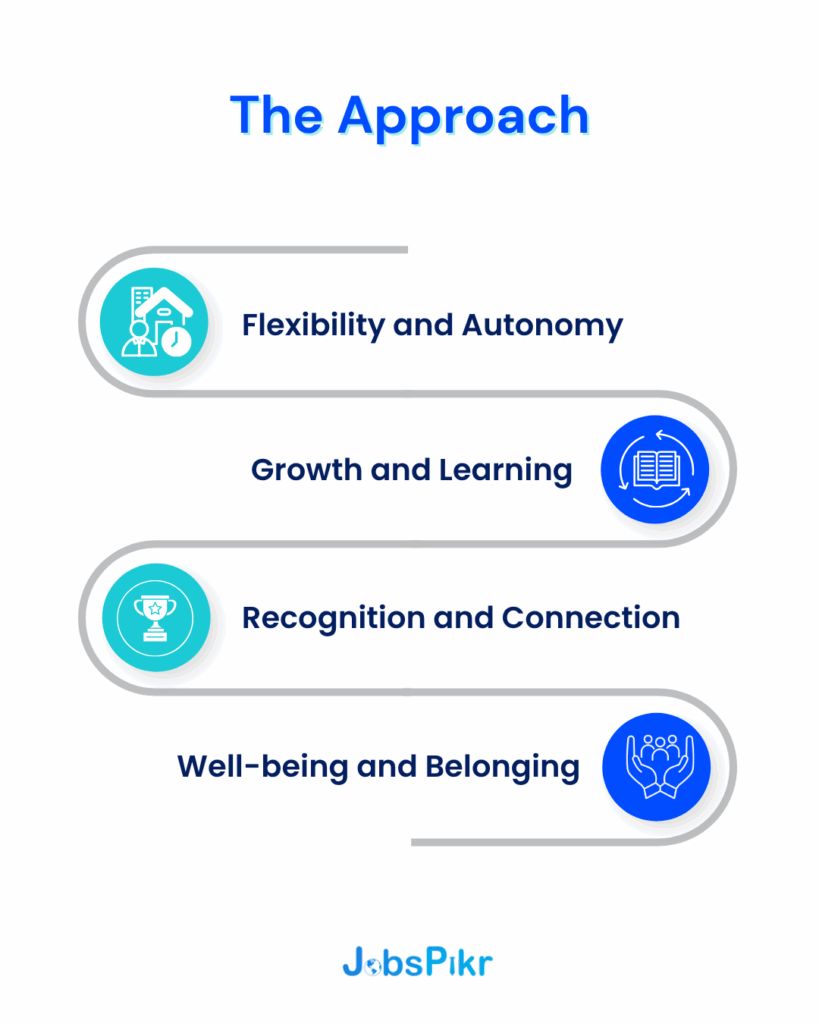
- Flexibility and Autonomy: Employees were given genuine freedom to choose where and when they worked best. Trust replaced policy, and managers were retrained to measure output and impact, not hours at a desk.
- Growth and Learning: The company launched an internal “Growth Academy,” offering free access to professional certifications, career coaching, and opportunities to work on cross-functional projects. Employees were encouraged to dedicate up to 10% of their working time to learning.
- Recognition and Connection: A new peer-to-peer appreciation platform was introduced, allowing colleagues to publicly celebrate each other’s contributions. Leaders also began hosting monthly “open table” sessions where any employee could share ideas or feedback directly.
- Well-being and Belonging: Mental health resources were significantly expanded to include free counseling sessions, company-wide “no-meeting Fridays” once a month, and optional wellness retreats.
Crucially, these were not just perks listed on a website; they became part of the company’s operational DNA. Managers’ performance reviews were updated to include their ability to create psychologically safe and balanced teams.
Implementation
The “Work Well, Live Fully” initiative began with a six-month pilot in the engineering and customer success departments—two high-stress, high-impact functions.
HR conducted baseline surveys to measure engagement, stress levels, and overall satisfaction. They then tracked participation and feedback continuously as the new framework was applied. The company’s internal communications team shared authentic stories of employees using flexible hours to pursue personal goals, learn new skills, or spend more time with their families. These narratives were powerful, helping to shift the internal culture from one of guilt about taking time off to one of pride in achieving a healthy balance.
The pilot’s success was undeniable, and the program was expanded company-wide. An internal marketing campaign, “We win when our people thrive,” reinforced the message that personal well-being and professional success were intertwined.
Lessons Learned
The transformation provided deep, lasting lessons about the modern employer-employee relationship.
- Money Satisfies, but Meaning Retains: A competitive salary sets the baseline, but a sense of purpose, connection, and well-being is what sustains long-term commitment.
- Well-being Must Be Designed, Not Offered: True well-being cannot be an afterthought or a perk meant to offset a stressful culture. It must be intentionally designed into the way work happens every day.
- Flexibility is the New Currency of Loyalty: When you trust people to manage their own time and energy, they deliver more consistent results and stay with the company longer.
- Recognition Should Be Personal and Frequent: A few words of genuine, specific appreciation delivered in the moment often matter more to an employee than a generic bonus paid out once a year.
- Culture is Built Through Leader Behavior, Not Slogans: Non-monetary benefit programs only succeed when leaders actively participate, model healthy behaviors, and champion the importance of balance themselves.
The Role of Data
Data was essential for giving the “soft” benefits initiative “hard” credibility. HR tracked engagement metrics, participation rates in new programs, and wellness indicators before, during, and after implementation.
Predictive analytics helped identify departments that were showing early signs of burnout based on data like absenteeism or low participation in optional programs. This allowed HR to intervene with targeted coaching or workload adjustments before major issues escalated. The company also measured the ROI of these programs by comparing the cost of saved turnover against program expenses. The analysis was compelling: every dollar invested in well-being returned nearly three dollars in reduced attrition and improved performance.
Outcome
The “Work Well, Live Fully” initiative transformed the company’s culture from being purely performance-driven to being people-centered, all without sacrificing its competitive edge. The results were clear and multifaceted.
Voluntary attrition, the initial catalyst for the change, dropped by a remarkable 25% in the first year. Employee engagement scores, measured quarterly, increased by 22 points—the highest single-year jump in the company’s history. The usage of wellness and learning benefits tripled, demonstrating that the new offerings were not just available but actively valued. This cultural shift had a direct impact on the bottom line, as recruitment costs fell sharply due to a surge in high-quality employee referrals. People were not just staying; they were actively recommending the company as a great place to work, not just a place that paid well.
Conclusion
The company successfully proved that non-monetary benefits are not “extras” or perks; they are a core and essential part of the value exchange between an employer and its employees. Employees now view the organization not just as a place to earn a living, but as a partner in their personal growth and well-being. The culture shifted from celebrating burnout to championing balance. This transformation became a cornerstone of the company’s employer brand, demonstrating that in the modern war for talent, the companies that care for their people are the ones that win.