A large digital infrastructure company, critical to the backbone of the internet economy, was facing a quiet but persistent frustration among its most valuable technical employees. The company had ambitious digital transformation goals, but its compensation system hadn’t kept pace. Engineers and analysts who dedicated their time to earning advanced certifications in cloud security, machine learning, and automation were still paid the same as peers who hadn’t upgraded their capabilities.
Promotions were tied to tenure and available openings, not demonstrated skill. The result was predictable: highly skilled employees, feeling undervalued, began to leave. They often accepted lateral moves to other companies for significantly higher pay, simply because those competitors explicitly recognized and rewarded their advanced skills. Leadership realized their traditional, role-based pay model was fundamentally misaligned with the dynamics of a skills-driven workforce.
The Challenge
The company’s compensation framework was rigid and outdated, acting as a brake on talent development. Every position was locked into a specific level and salary band, with pay increases occurring almost exclusively during annual reviews or formal promotions. This created several critical problems in their fast-moving technical environment:
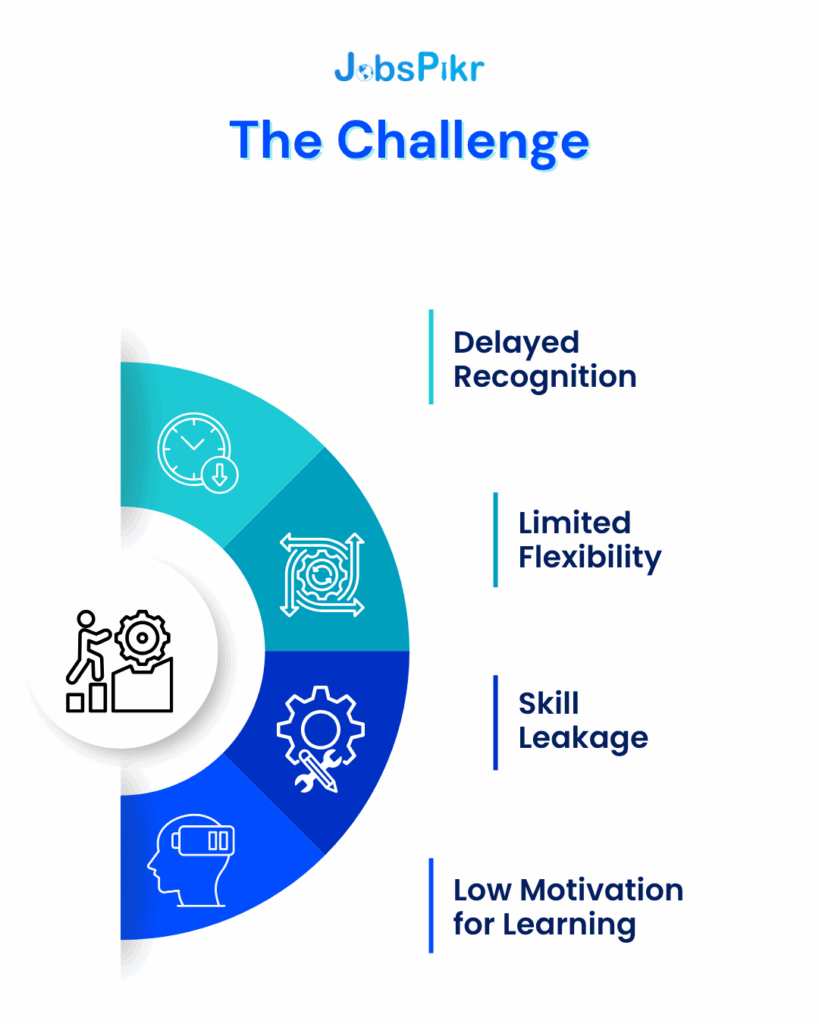
- Delayed Recognition: Employees often waited months, or even years, to see their significant upskilling efforts reflected in their paycheck.
- Limited Flexibility: HR and managers had no systematic way to differentiate in pay between two employees in the same role who had vastly different levels of technical depth and impact.
- Skill Leakage: The company was unintentionally creating a “training ground” for its competitors, as top talent left to monetize their newly acquired skills elsewhere.
- Low Motivation for Learning: Expensive training programs were underutilized because employees saw no clear, tangible connection between learning and earning.
This challenge is a defining one for modern enterprises. The market is shifting from valuing job titles to valuing demonstrable skills, a trend seen clearly in the needs of major HR tech players.
| Client Archetype | Business Focus | The Core “Skills-Based Pay” Challenge | The Strategic Consequence |
| Enterprise HR Analytics | Compensation & market analytics | Needed skill-based segmentation and tagging for their data feeds. | Inability to provide clients with modern, skills-based compensation benchmarks. |
The company knew it needed a new system—one that would reward verified skills as they were gained and foster a culture of continuous, self-driven learning.
The Approach
The HR and Learning & Development teams collaborated to design a new Skills-Based Pay Model that created a direct, transparent link between learning, application, and compensation.
The foundation of this model was a comprehensive skills taxonomy, a structured map of the technical and behavioral competencies crucial for each role family. This was not just an HR exercise; it was developed in close partnership with senior engineering leaders and validated against external market data to ensure every skill was relevant and valued correctly. Each skill was assigned a proficiency level: Foundational, Intermediate, Advanced, or Expert. For every verified step up in proficiency, an employee could earn a defined pay premium. These premiums were “stackable,” meaning an employee could earn increases for multiple skills simultaneously.
For example, a data engineer who became certified in both cloud architecture and advanced automation could add a 5-7% pay increase for each verified skill, even without a change in their job title. To maintain credibility, the skill validation process was rigorous, requiring employees to demonstrate proficiency through recognized industry certifications, successful internal projects, peer reviews, or standardized assessments.
Implementation
The company launched the model as a pilot within its cloud and automation divisions, where skill requirements were evolving most rapidly. The pilot included three hundred employees across four countries. To manage the process, HR created dashboards to track key metrics in real time:
- The number of validated skills per employee.
- Pay progression directly tied to skill acquisition.
- The correlation between new team skills and project outcomes.
A cross-functional review committee was established to ensure fairness and consistency in skill validation across different managers and locations. The cultural impact was almost immediate. Within the first three months, participation in voluntary internal learning programs tripled. Employees began sharing their certification progress in company forums, turning professional development into a visible and celebrated part of the culture. Finance carefully monitored the payroll impact and found that the incremental cost of the skill premiums was more than offset by reduced attrition costs and faster project delivery times.
Lessons Learned
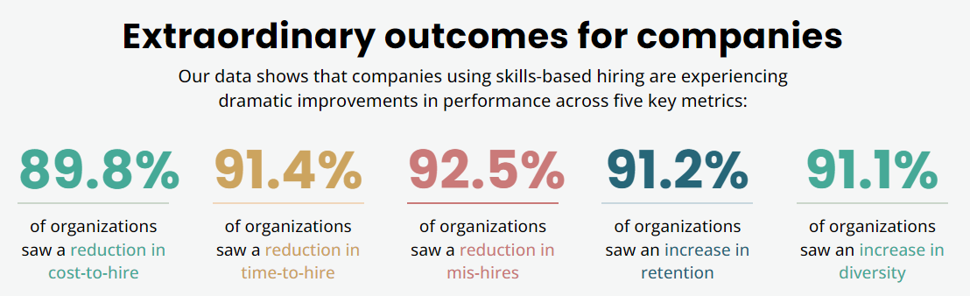
Image Source: manpowergroup
The shift to a skills-based model provided several powerful lessons that reshaped the company’s talent philosophy.
- Skills are the New Currency of Work: In a technical environment, skills—not job titles—are the primary driver of value. A compensation system that directly rewards the acquisition of high-demand skills is essential for attracting and retaining top talent.
- Transparency is the Foundation of Trust: For the system to work, employees needed absolute clarity on how skills translated into pay and what evidence was required for validation. A clear, well-documented process was non-negotiable.
- Objective Validation is Crucial: To prevent the system from becoming subjective, the validation framework had to be rigorous and standardized. Using a mix of industry-recognized certifications and internal project-based assessments built trust and ensured fairness.
- Link Learning to Earning: The model proved that when employees see a direct, tangible return on learning, professional development transforms from a corporate cost center into a strategic investment in capability, with participation soaring as a result.
- It Must Be a Cultural Initiative: A skills-based pay system cannot live in an HR spreadsheet. It requires deep collaboration between HR, business leaders, and learning teams to be woven into the fabric of the company’s culture.
The Role of Data
Data was the critical element that ensured the system’s credibility and sustainability. The company continuously tracked skill demand trends from the external labor market to adjust the pay premiums based on their real-world value. For instance, as AI-related certifications became more common, the premium for that skill was adjusted slightly to keep pay aligned with market scarcity.
Internal analytics created a powerful feedback loop by connecting skill acquisition with business performance. The data consistently showed that teams with higher “skill density” delivered projects faster and with fewer quality issues. By analyzing these clear links, leadership could justify the investment in skill premiums with hard evidence, not anecdotes.
Outcome
The introduction of the Skills-Based Pay Model fundamentally transformed how the company viewed and managed compensation. Pay was no longer a static number tied to a role and tenure; it became a dynamic, living reflection of the skills that were actively driving business value.
The results were dramatic and multifaceted. Participation in technical upskilling programs skyrocketed by over 200%, creating a vibrant culture of continuous learning. This directly impacted retention, with attrition among high-skilled engineers dropping by 17% in the first year alone. The business impact was just as clear: time-to-deliver for complex projects decreased as teams immediately applied their new automation and cloud capabilities. This was reflected in employee satisfaction scores for “career growth opportunities,” which jumped from 64 to 87.
Managers noted a cultural shift where recognition moved from titles to contribution. Teams began to publicly celebrate newly certified members, creating a healthy sense of competition and collective pride. A key financial insight emerged: the cost of rewarding skills directly was significantly lower than the cost of replacing the same talent after they left.
Conclusion
By aligning compensation with capability, the organization created a powerful engine for growth. Employees could now see a clear, data-backed path to advancing their careers and compensation without having to change companies. HR gained a structured, fair system that balanced employee motivation with fiscal responsibility. The company built a powerful employer brand as a place where learning truly paid off, not as a slogan, but as a measurable, operational reality. As one engineer perfectly summarized the change: “For the first time, I don’t have to leave to grow. My next raise is in my own hands.”