
A multinational software company, a leader in its domain, was making a strategic pivot into artificial intelligence and automation. This shift created an urgent and complex talent challenge. Traditional job families like backend engineering and QA testing were rapidly intersecting with new, undefined disciplines such as data ethics, prompt engineering, and AI model training.
Hiring managers found themselves in uncharted territory. There were no reliable salary benchmarks for these new roles. Official surveys hadn’t caught up, and internal teams had no historical pay data to draw from. In the absence of data, recruiters were forced to guess, often using rough analogies like, “a prompt engineer probably earns about the same as a data scientist.” Leadership knew this guesswork was a high-stakes gamble. Underpay, and they would lose critical talent to competitors; overpay, and they would create unsustainable salary structures that distorted internal equity.
The Challenge
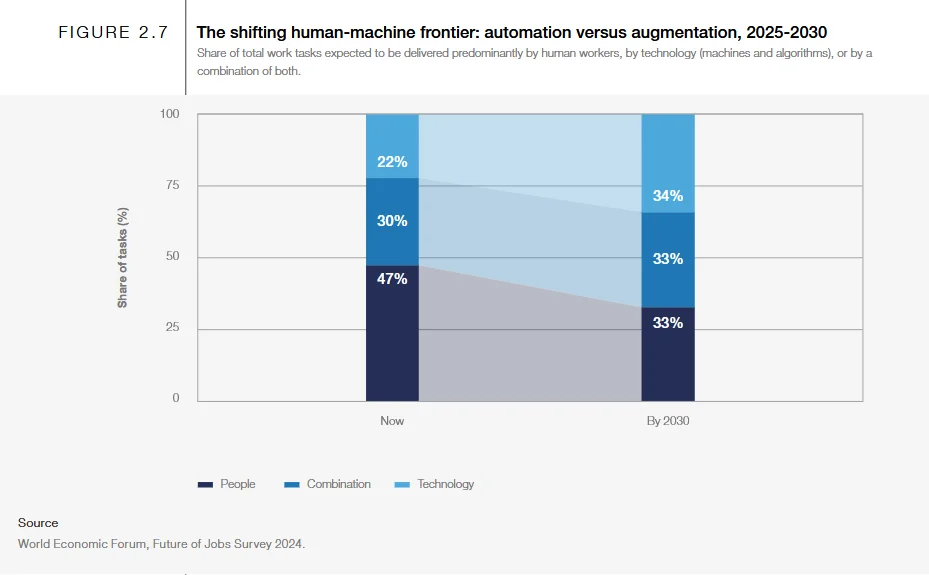
Image Source: digitalhrecosystem
The company’s core challenge was trying to build a stable house on shifting ground. They faced three immediate and significant hurdles:
- Uncharted Benchmarks: Compensation teams relied on established job families that didn’t map cleanly to the unique skill sets of new AI and automation roles.
- Rapidly Evolving Skills: The definition of an emerging role changed almost monthly. A skill that was rare six months ago could be mainstream by the next hiring cycle, making annual data obsolete before it was even published.
- Internal Equity Risk: Without standardized levels or defined pay ranges, significant pay gaps could form between new hires in emerging roles and tenured employees in overlapping functions, creating friction and dissatisfaction.
This struggle is not unique. Across technology, education, and consulting, leading organizations are grappling with the same issue: how to value work that has never been done before.
| Client Archetype | Business Focus | The Core “Emerging Roles” Challenge | The Strategic Consequence |
| Talent Intelligence Platform | AI-driven talent mapping | Needed trending data for new AI and tech roles. | Compromised accuracy of their analytics if they couldn’t track the newest jobs. |
| Global Education & EdTech | Curriculum and certifications | Required insights into new tech titles to keep content relevant. | Risk of curriculum becoming outdated, reducing the value of their certifications. |
| Enterprise HR Analytics | Market analytics for HR teams | Lacked benchmark data for new and niche job titles. | Inability to advise clients on how to structure compensation for the jobs of the future. |
Finance and HR at the software company agreed they could not afford to wait for the market to settle. They needed a dynamic system to define, price, and evolve emerging roles in real time.
The Approach
To tackle the problem head-on, the company created an internal task force named the Future Roles and Skills Architecture team, comprising leaders from HR, product, and data analytics. Their mission was to move from guesswork to a data-driven science. They developed a new methodology based on four guiding principles:
- Prioritize Skills Over Titles: Every new role was first defined by its core skill set, not its ambiguous job title. An “AI Prompt Engineer,” for example, was mapped by competencies in linguistics, machine learning, and natural language models.
- Use Market Signals, Not Tradition: The team replaced legacy salary surveys with live labor market data, analyzing salary ranges, demand growth, and geographic pay differentials for specific skill clusters.
- Build Flexible Leveling: Job levels were designed with broader pay bands that could accommodate a role’s natural evolution without requiring constant re-evaluation and regrading.
- Embrace Continuous Iteration: Each role’s definition, skill map, and compensation range was reviewed quarterly to ensure it remained aligned with the fast-moving market.
Implementation
The task force piloted its new approach with five critical emerging positions: Prompt Engineer, AI Model Trainer, Data Ethics Specialist, Automation Strategist, and MLOps Architect.
For each role, they executed a rigorous three-step process:
- Step One: Skill Mapping. They conducted interviews with internal technical experts and analyzed external job data to identify the essential skills required for success in each role.
- Step Two: Live Market Analysis. Using real-time data, they analyzed thousands of job postings that mentioned these key skills, capturing offered salary ranges, the industries hiring for them, and regional pay differences.
- Step Three: Role Prototyping. Armed with this data, the HR team drafted detailed role descriptions and preliminary pay bands. These prototypes were tied directly to the market value of the skills, not historical job titles.
This data-driven approach yielded surprising insights. The analysis revealed that while “Prompt Engineer” was a new title, the market was pricing the role closer to a senior product designer than a data scientist. The pay premium was driven by skills in creative problem-solving and user empathy, not just statistical expertise. This discovery alone prevented the company from making a costly miscalculation in its compensation strategy.
Lessons Learned
This initiative taught the company invaluable lessons about staying agile in a rapidly changing talent market.
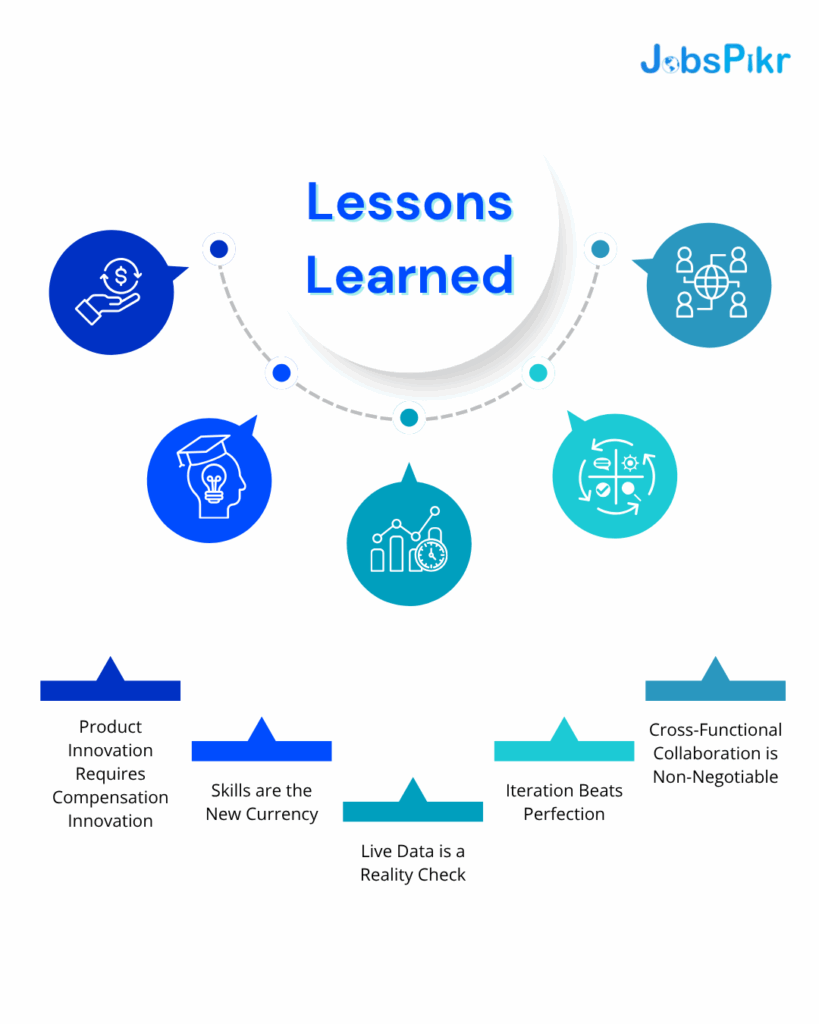
- Product Innovation Requires Compensation Innovation: A company cannot build the products of the future using the job descriptions of the past. The HR and compensation functions must be as innovative as the R&D department.
- Skills are the New Currency: In emerging fields, job titles are fleeting, but the underlying skills have measurable market value. Designing pay systems around skills, not titles, provides the flexibility to adapt as the landscape evolves.
- Live Data is a Reality Check: Real-time market data provides an unvarnished look at how new skills are being valued, long before formal reports are published. It replaces assumptions with evidence.
- Iteration Beats Perfection: Waiting for perfect information once a year is a losing strategy. The company learned that making smaller, data-informed adjustments every quarter was far more effective and sustainable.
- Cross-Functional Collaboration is Non-Negotiable: HR cannot define the future of work in a vacuum. True success requires a deep partnership with product and technical leaders who can help shape role design and validate skill valuation.
The Role of Data
Continuous labor market intelligence was the engine of this entire transformation. By monitoring job postings, advertised salary ranges, and the frequency of specific skills appearing in job descriptions, the company could spot patterns of emerging demand months ahead of the competition.
Predictive analytics helped the team forecast which roles were likely to mature into stable, long-term functions and which might remain niche or be absorbed into other roles. For instance, the data predicted that demand for “AI Model Trainers” would likely plateau as automation tools evolved, allowing the company to plan its long-term talent strategy accordingly. This real-time feedback loop turned compensation design from a static, annual event into a living, adaptive process.
Outcome
The “Future Roles” initiative fundamentally changed how the company approached talent strategy. The results were both immediate and transformative, creating a lasting competitive advantage.
Operationally, the impact was dramatic. The time required to define and approve compensation for brand-new roles plummeted from six weeks to less than two. This newfound agility allowed hiring managers to move decisively on top candidates. Financially, the data-driven approach was a clear success; the company avoided overpaying by more than 8% across its first twenty hires in these emerging fields, a significant saving that validated the new model.
Beyond the metrics, the process created a new level of confidence and clarity across the organization. Hiring managers felt empowered to pursue new talent pipelines, and pay equity reviews confirmed there was no significant variance between the new roles and established ones at similar job levels. The initiative was so successful it led to the creation of the “Emerging Roles Playbook,” a living library of job archetypes that is now updated quarterly and used across all divisions.
Conclusion
The company no longer waits for consultants to define the market; it now has the capability to define the market for itself. By treating compensation as an evolving, data-driven system, it built a structure capable of absorbing constant change. New roles no longer create confusion or risk internal pay disparities. Instead, they fit naturally into the company’s architecture with data-backed clarity. The organization now approaches each hiring cycle with confidence, knowing that whether the next critical role is in generative AI, quantum computing, or a field that doesn’t exist yet, it has a playbook to price it fairly, align it internally, and scale it globally.