

- Before You Scroll: Key Takeaways on Compensation Analytics and Pay Equity Benchmarking
- What Is Compensation Analytics?
- Benchmark Salaries with Real-Time Job Market Data
- Why Pay Equity Analysis Is Now a Strategic Priority
- Why Traditional Salary Benchmarking Keeps Breaking Down
- Turn Compensation Analytics into Action
- How Modern Compensation Analytics Solves These Challenges
- Where Real-Time Compensation Data Comes From
- Turn Compensation Analytics into Action
- Using Compensation Analytics for Strategic Workforce Planning
- How JobsPikr Powers Real-Time Compensation Analytics
- Turn Compensation Analytics into Action
- Why Enterprises Are Moving Toward Real-Time Compensation Benchmarking
- Building a Fair Pay Strategy with Compensation Analytics
- How Compensation Analytics Helps Organizations Pay Fairly
- Turn Compensation Analytics into Action
- Frequently Asked Questions About Compensation Analytics
Before You Scroll: Key Takeaways on Compensation Analytics and Pay Equity Benchmarking
Compensation decisions are rarely as simple as they look in spreadsheets. Most companies still benchmark salaries using compensation surveys released once a year. The problem is that the labor market does not move once a year. It moves constantly.
At the same time, pay transparency is becoming unavoidable. Employees compare salaries across companies and locations more openly, and regulators are asking organizations to explain how pay decisions are made. That pressure is why many HR and Total Rewards teams are shifting toward compensation analytics instead of relying only on traditional benchmarking reports.
Two things are happening at once. First, salary expectations are changing faster than historical datasets can track, especially in roles shaped by new skills and evolving job markets. Second, organizations are under growing pressure to prove that compensation structures are fair across teams, locations, and experience levels.
Key takeaways
- Compensation analytics helps organizations compare internal salaries with real job market signals instead of relying only on static compensation surveys.
- Salary benchmarking becomes more reliable when it uses current labor market data rather than historical compensation reports.
- Pay equity analysis allows HR teams to detect pay gaps across roles and locations before those gaps become structural problems.
- Real-time job market data provides a clearer view of workforce compensation trends than traditional compensation datasets.
What Is Compensation Analytics?
Setting salaries used to be predictable. HR teams ran a compensation survey, updated pay bands, and reviewed salaries once a year.
That model is starting to break.
The job market now moves faster than most benchmarking reports. New skills appear. Hiring demand shifts across regions. Pay expectations change quickly, especially in roles tied to emerging technologies.
This is where compensation analytics starts to matter.
Instead of relying only on internal payroll data or annual surveys, compensation analytics combines multiple signals. Internal pay structures. External job market salary data. Hiring demand trends. Together, these signals help organizations understand whether their compensation levels match the market.
The pressure to get this right is increasing. The World Economic Forum’s Future of Jobs Report 2025 lists AI and big data among the fastest-growing skill areas globally, which often leads to rapid shifts in salary expectations.
Pay equity concerns are also forcing companies to look more closely at compensation structures. Data from Pew Research Center shows that women in the United States earned about 82% of what men earned in 2022, highlighting the persistence of the gender pay gap.
Because of this, more organizations are using compensation analytics and salary benchmarking tools to compare internal pay with real labor market signals. It gives HR teams a clearer view of where salaries are competitive, where gaps may exist, and how compensation trends are evolving across the workforce.
Benchmark Salaries with Real-Time Job Market Data
Compare your internal pay bands with live labor market data to identify pay gaps and keep compensation aligned with the market.
Why Pay Equity Analysis Is Now a Strategic Priority
Pay equity used to sit quietly inside compensation reviews. Today, it is a boardroom topic.
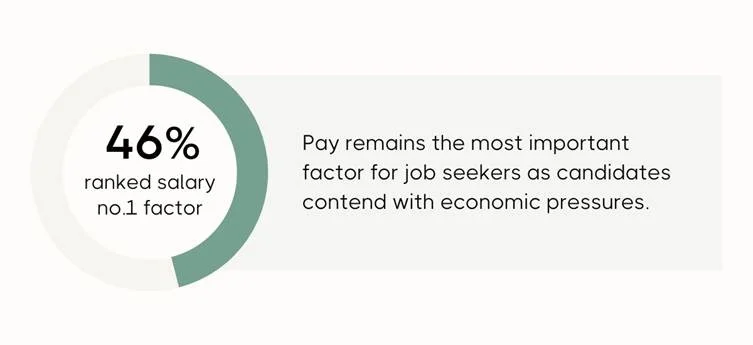
Image Source: https://www.3searchgroup.com/
Three forces pushed it there. Regulation, employee expectations, and the simple economics of talent retention.
Start with the economics. When compensation feels unfair, employees leave. And replacing them is expensive. Gallup estimates that replacing an employee can cost anywhere from half to twice that employee’s annual salary, once you factor in hiring, onboarding, and lost productivity.
That is not a small operational issue. It is a financial one.
The problem is that many organizations still do not have a structured way to monitor pay equity. According to beqom’s 2024 Pay Equity Report, which surveyed 875 compensation decision-makers across the US and UK, 34% of companies still have no pay equity strategy in place. Even more concerning, 54% are unsure whether they comply with global pay standards, and 45% say their current approach to pay equity is hurting their ability to attract talent.
In other words, pay equity is not just a compliance issue. It is becoming a hiring and retention issue.
Employees today have far more visibility into compensation than they did a decade ago. Salary sharing platforms, public job postings with pay ranges, and pay transparency laws in several regions mean compensation decisions are easier to compare and question.
This is where pay equity analysis becomes critical.
Instead of reviewing compensation only during annual audits, organizations can continuously analyze salary structures across roles, locations, and experience levels. When combined with compensation benchmarking data, this analysis helps HR teams answer a difficult but important question: are pay differences based on market reality, or are they structural gaps that need correction?
Companies that invest in structured compensation analytics and pay equity analysis software gain a clearer view of these patterns. They can detect gaps earlier, adjust pay structures with data-backed evidence, and build compensation strategies that remain competitive in the job market.
The alternative is reacting after the problem becomes visible. And by then, the cost is rarely limited to compensation adjustments. It often shows up in employee trust, hiring challenges, and retention.
Why Traditional Salary Benchmarking Keeps Breaking Down
Most compensation teams are not struggling because they lack data. They are struggling because the data they rely on moves too slowly.
The typical compensation cycle still looks familiar. HR teams purchase industry salary surveys, compare internal pay bands with those benchmarks, and adjust ranges during annual compensation reviews.
On paper, that process looks disciplined.
In practice, many Total Rewards teams run into the same frustrations year after year.
The market moves faster than benchmarking cycles
Salary surveys are usually published once or twice a year. That cadence made sense when job roles evolved slowly.
Today it creates lag.
New skills can change compensation expectations within months. Hiring demand for certain roles spikes quickly. By the time a benchmarking report reaches HR teams, the market conditions it reflects may already be outdated.
That is why compensation leaders often hear the same feedback from hiring managers: “The benchmark says this salary is competitive, but candidates are asking for much more.”
Pay transparency exposes inconsistencies quickly
Pay transparency laws and public salary disclosures are making compensation decisions easier to question.
Employees can now compare salary ranges across job postings, employers, and locations more easily than before. When internal pay structures do not align with market expectations, those differences become visible much faster.
This is one reason pay equity analysis is becoming a core part of compensation analytics.
Organizations need to understand whether pay differences are driven by legitimate market signals or by outdated benchmarks.
Skill premiums appear before surveys catch them
Another challenge comes from rapid skill shifts.
When new technologies or capabilities become important, companies often start paying premiums for those skills immediately. Job postings begin reflecting higher salary ranges, but traditional compensation datasets may take months to capture that change.
By the time surveys update, the market has already moved again.
For compensation teams, this creates a constant question: are our salaries aligned with what the market is paying right now?
Regional salary differences complicate benchmarking
Compensation expectations also vary widely across locations.
Two cities may have similar talent pools but very different hiring competition. Remote work and distributed hiring have made these differences even more pronounced. A company benchmarking salaries at a national level may miss what is happening inside specific hiring hubs.
Without more granular compensation benchmarking data, these regional shifts often appear only after hiring becomes difficult.
The result: compensation decisions become reactive
When benchmarks lag the market, compensation teams end up reacting instead of planning.
Salary adjustments happen after hiring slows down. Pay equity reviews happen after employees raise concerns. Compensation updates become corrective actions instead of strategic decisions.
This is the gap modern compensation analytics is trying to close. By combining internal pay structures with real-time labor market signals, organizations gain a clearer view of salary movements, skill premiums, and workforce compensation trends as they happen.
Turn Compensation Analytics into Action
See how real-time labor market data can power salary benchmarking, pay equity analysis, and fair compensation strategies across your workforce.
How Modern Compensation Analytics Solves These Challenges
Once compensation teams recognize the limitations of traditional benchmarking, the next question becomes obvious: what replaces it?
The answer is not abandoning benchmarks. It is expanding them.
Modern compensation analytics combines internal salary data with external labor market signals so organizations can understand how compensation is evolving in real time. Instead of relying on a single annual dataset, HR and Total Rewards teams analyze multiple sources of compensation information together.
This shift changes how salary benchmarking works.
Real-time salary benchmarking using job market data
Every day, companies publish job postings that include salary ranges, role descriptions, and skill requirements. Individually, those postings are just hiring announcements. But when analyzed at scale, they become a powerful signal of how compensation is moving in the labor market.
Modern compensation analytics platforms collect and normalize millions of these signals to build real-time compensation benchmarking datasets.
This allows HR teams to answer questions that traditional surveys struggle to address:
- Are salary ranges for a specific role rising faster in one region than another?
- Are companies offering premiums for certain skills within the same role category?
- Are hiring competitors adjusting compensation bands more aggressively?
Instead of waiting months for survey updates, organizations can observe these trends as they emerge.
Example: What Real Salary Benchmarking Data Shows
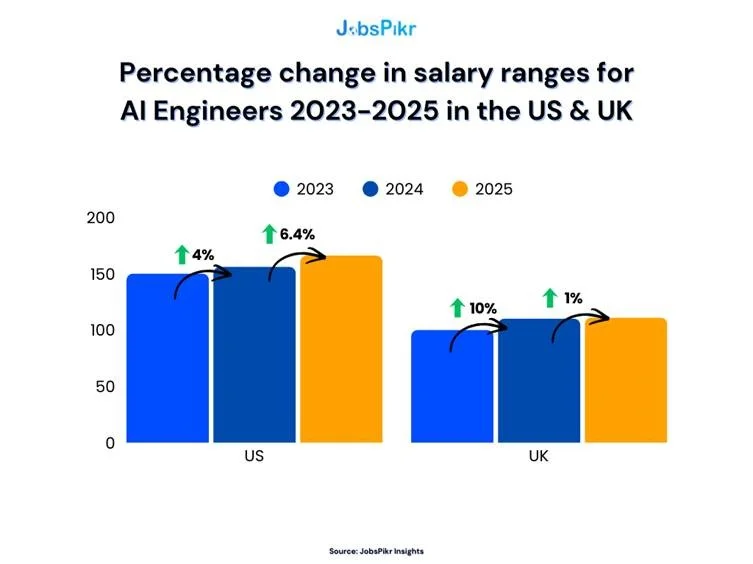
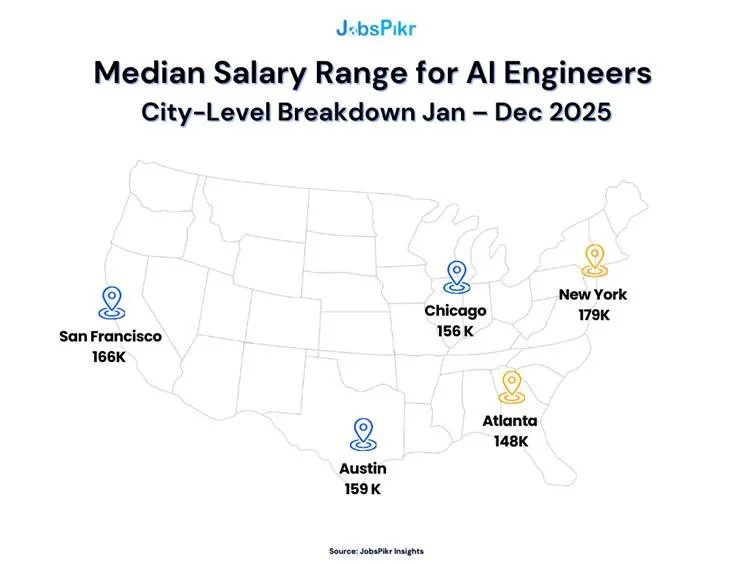
Data from the JobsPikr platform illustrates how quickly compensation signals move in the job market.
Median Salary Range for AI Engineers Across US, UK & India

Percentage change in salary ranges for AI Engineers between 2023–2025 in the US & UK
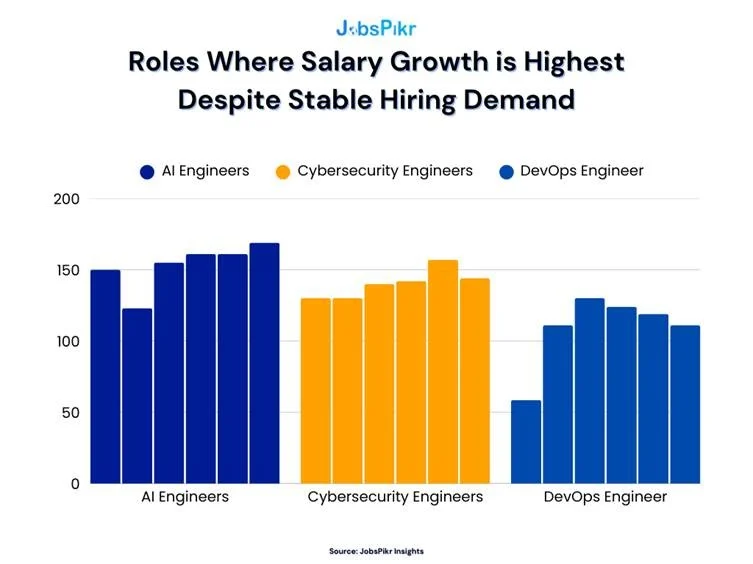
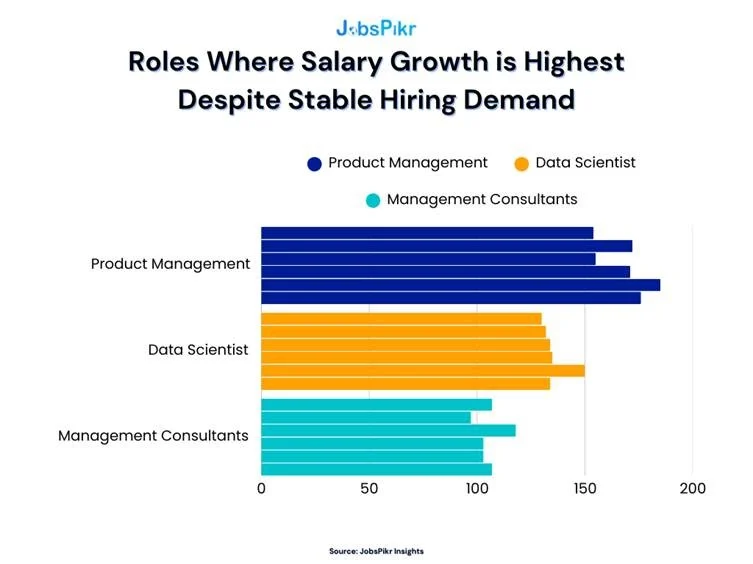
Roles where salary growth is highest despite stable hiring demand
Workforce compensation trends across industries
Another advantage of compensation analytics is the ability to track workforce compensation trends across industries and roles.
When job posting data is analyzed over time, patterns start to appear. Certain skills begin commanding higher salaries. Emerging job titles gain traction. Some industries start offering higher compensation to attract specialized talent.
These signals are difficult to capture through traditional benchmarking alone.
With compensation analytics, organizations can monitor how salary expectations evolve across different job markets and adjust their pay structures accordingly.
Continuous pay gap analysis
Compensation analytics also supports a more proactive approach to pay equity analysis.
Instead of running periodic audits, HR teams can continuously analyze salary distributions across roles, departments, and locations. When pay differences appear, they can investigate whether those differences reflect legitimate market conditions or structural pay gaps.
This visibility becomes increasingly important as pay transparency regulations expand and employees gain more access to salary information.
For many enterprises, the goal is no longer simply benchmarking salaries once a year. The goal is maintaining ongoing visibility into compensation structures so organizations can respond to changes in the job market before they affect hiring, retention, or employee trust.
Modern compensation analytics makes that possible by turning large volumes of labor market data into actionable insights for compensation planning.
Where Real-Time Compensation Data Comes From
If compensation analytics relies on real-time signals, the obvious question is where that data actually comes from.
Traditional compensation benchmarking pulls data from surveys. A group of companies submit salary information, the data is aggregated, and the results are published in a report. Those reports are useful, but they capture only a small slice of the job market and they update slowly.
Real-time compensation analytics works differently.
Instead of relying only on voluntary survey submissions, it analyzes labor market activity itself. Every time a company opens a role, publishes a job description, or updates a salary range in a job posting, it creates a new signal about compensation in that market.
Individually those signals are small. At scale, they become extremely valuable.
Job postings as compensation signals
Job postings contain more than just role descriptions. Many now include salary ranges, location information, skill requirements, and seniority levels. When millions of these postings are collected and structured, they reveal patterns about how companies are actually pricing talent.
For compensation teams, this data answers questions surveys often cannot.
- Which regions are seeing faster salary growth for a particular role?
- Which skills are starting to command pay premiums?
- Are competitors increasing salary ranges for similar positions?
Because job postings reflect live hiring activity, they provide a much more current view of compensation trends.
Normalizing salary data across roles and markets
Raw job posting data alone is not enough to support compensation benchmarking. The data needs to be standardized before it can be used effectively.
Job titles vary widely across companies. A “Data Analyst,” “Business Analyst,” and “Analytics Specialist” may refer to very similar roles. Salary ranges also appear in different formats depending on the company or region.
Modern talent intelligence platforms solve this by normalizing salary data. Roles are mapped to standardized job families, salary ranges are converted into comparable formats, and location data is aligned across markets. Once structured, the data becomes a reliable foundation for compensation benchmarking and pay equity analysis.
Tracking workforce compensation trends over time
The real value of this approach appears when the data is analyzed over time.
When organizations monitor millions of job postings continuously, they can see compensation trends forming months before they appear in traditional datasets. Salary ranges begin shifting in certain markets. Skill premiums emerge. Demand for specific roles intensifies.
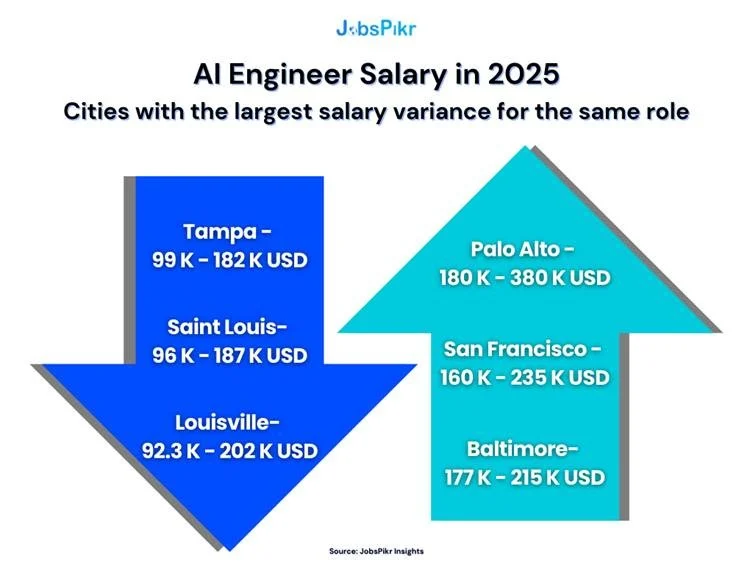
Example: Workforce Compensation Trends from JobsPikr Data
JobsPikr’s labor market dataset shows how compensation patterns evolve across regions and industries.
Roles with the fastest salary growth in the past two years
Cities with the largest salary variance for the same role
Industries showing highest compensation growth
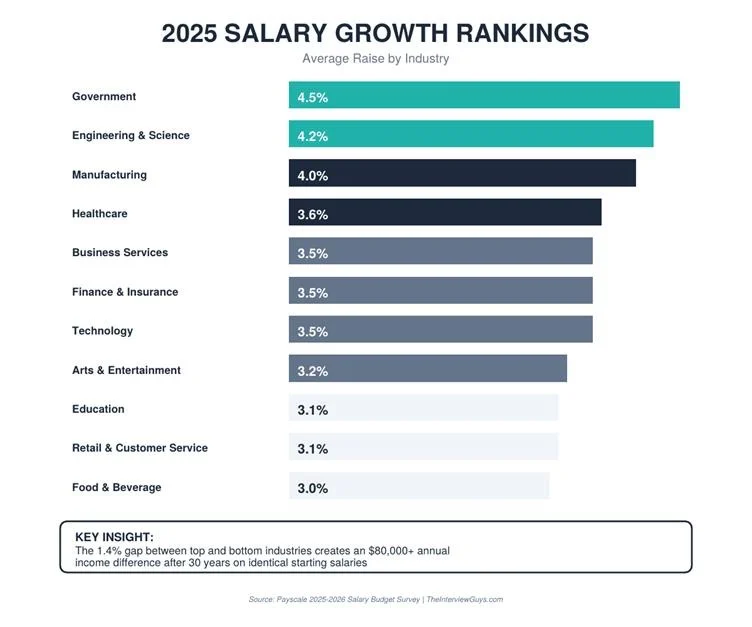
Image Source: theinterviewguys
Skills associated with salary premiums

Image Source: Robert Half
For HR and Total Rewards teams, these signals provide early visibility into how the labor market is evolving.
Instead of discovering compensation gaps after hiring slows down or employees start leaving, organizations can adjust their pay structures based on current labor market data.
This is the foundation of modern compensation analytics. It transforms raw job market activity into structured compensation insights that help organizations make more informed salary decisions.
Turn Compensation Analytics into Action
See how real-time labor market data can power salary benchmarking, pay equity analysis, and fair compensation strategies across your workforce.
Using Compensation Analytics for Strategic Workforce Planning
Compensation decisions rarely sit inside a single HR process. Salary structures influence hiring speed, retention, workforce planning, and even where organizations decide to expand teams.
That is why compensation analytics is increasingly becoming part of broader workforce strategy.
When organizations understand how their salaries compare with the job market, they gain clearer signals about where hiring plans may succeed and where friction might appear.
Budget planning for Total Rewards teams
One of the most immediate uses of compensation analytics is compensation budgeting.
Total Rewards leaders need to estimate how salary expectations may evolve over the next year. If the market price for certain roles is rising quickly, salary bands may need adjustment earlier than planned.
Without external compensation signals, these decisions often rely on internal assumptions. Compensation analytics introduces a clearer reference point by showing how salary ranges for similar roles are shifting across industries and locations.
This helps leadership teams plan compensation budgets with greater confidence.
Market-aligned salary benchmarking
Compensation analytics also improves salary benchmarking accuracy.
Traditional benchmarks usually provide a broad industry average. But real job markets are rarely that simple. Salary expectations vary by region, industry demand, and even specific skill combinations within the same role.
When HR teams analyze real-time labor market data, benchmarking becomes far more precise. Instead of comparing pay bands to static averages, organizations can evaluate compensation against actual hiring activity in the market.
Example: Salary Benchmarking Across Markets
Salary difference for the same role across top hiring hubs
Role categories where salary growth exceeds the industry average
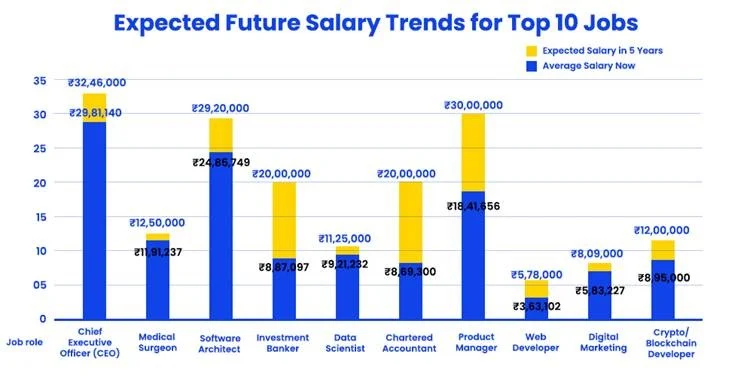
Image Source: https://collegevidya.com/
This reduces the risk of compensation structures drifting away from market reality.
Identifying pay compression before it becomes a problem
Pay compression is one of the most common compensation issues large organizations face.
It happens when newer hires start earning salaries close to, or even higher than, experienced employees in similar roles. This usually occurs when market salaries rise quickly while internal pay bands remain unchanged.
Compensation analytics helps detect these patterns early by comparing internal salary distributions with external compensation benchmarks. When compression appears, HR teams can investigate and correct the imbalance before it affects morale or retention.
Supporting location and hiring strategy
Compensation analytics also influences where organizations decide to hire.
Salary expectations vary widely across cities and regions. Some markets become saturated quickly, driving compensation levels upward as companies compete for the same talent pool.
By analyzing compensation trends across locations, workforce planners can identify regions where hiring demand is rising faster than supply. This insight helps organizations decide whether to adjust salary ranges, expand into different talent hubs, or diversify hiring locations.
Tracking skill premiums across emerging roles
Another challenge for compensation teams is tracking skill premiums.
When certain capabilities become valuable, for example, AI engineering, cloud infrastructure, or advanced analytics, employers often start offering higher salaries to attract those skills.
Traditional compensation surveys may take months to capture these changes. Compensation analytics detects them earlier by monitoring job market activity. When salary ranges for roles with specific skills start increasing across job postings, organizations gain early visibility into emerging compensation trends.
Supporting long-term workforce planning
Ultimately, compensation analytics becomes part of long-term workforce planning.
Compensation signals often reveal structural changes in the job market. If salaries for certain roles continue rising across multiple regions, it may indicate growing demand for those capabilities.
Organizations that monitor these signals early can adjust hiring strategies, training investments, and compensation structures accordingly.
In this way, compensation analytics moves beyond benchmarking. It becomes a strategic tool that helps HR and workforce leaders align pay structures with how the labor market is evolving.
How JobsPikr Powers Real-Time Compensation Analytics
Once organizations start relying on compensation analytics, the next challenge is data. Compensation insights are only as strong as the data behind them. Static surveys and limited datasets can show broad benchmarks, but they rarely capture how compensation is evolving across the live job market.
This is where talent intelligence platforms become important.
JobsPikr analyzes structured labor market data from 100 million-plus global job postings, turning raw job market activity into usable signals for HR and workforce teams. Instead of waiting for compensation surveys to update, organizations can observe how salary ranges, role demand, and skill premiums are changing across markets.
Salary benchmarking powered by job market data
Every job posting contains useful signals about compensation. Many include salary ranges, required skills, seniority levels, and location information. When analyzed at scale, these signals reveal how employers are pricing talent across industries and regions.
JobsPikr aggregates and structures this information to support salary benchmarking at a market scale. HR teams can compare internal pay bands with real job market salary ranges and see whether compensation structures align with current hiring conditions.
This approach helps organizations answer practical questions that traditional benchmarking often struggles with. Are competitors offering higher salaries for similar roles in a specific region? Are certain skills driving salary premiums in the market? Are compensation expectations changing faster than internal pay bands?
Pay equity analysis supported by external market signals
Internal payroll data is essential for understanding pay equity. However, internal data alone cannot show whether pay differences reflect legitimate market factors.
JobsPikr adds an external reference point.
By combining internal salary data with external labor market compensation signals, organizations can run more meaningful pay equity analysis. HR teams can evaluate whether compensation gaps reflect role complexity, regional market conditions, or structural pay disparities that require correction.
This makes pay equity analysis more defensible, especially as pay transparency regulations expand.
Tracking workforce compensation trends across industries
Another advantage of real-time labor market data is visibility into workforce compensation trends.
When millions of job postings are analyzed continuously, patterns start to appear. Certain skills begin commanding higher salaries. Demand for specific roles increases in certain regions. Emerging job categories develop their own compensation benchmarks.
JobsPikr captures these signals and converts them into structured insights that HR leaders can use for workforce planning, salary benchmarking, and compensation strategy.
See salary benchmarking in action
If you want to see how this works in practice, the short demo below shows how HR teams use JobsPikr’s salary benchmarking capabilities to explore compensation trends across roles and locations.
You can see how job market data is transformed into structured compensation insights that support salary benchmarking and pay equity analysis.
Demo: JobsPikr Salary Benchmarking Tool
Integrating compensation insights into HR systems
Compensation analytics becomes even more powerful when the data flows directly into HR platforms, analytics dashboards, or workforce planning tools.
JobsPikr provides structured labor market datasets through APIs and talent intelligence dashboards. This allows organizations to integrate external compensation signals directly into their HR analytics workflows.
Instead of running occasional compensation studies, HR teams can monitor salary benchmarks and workforce compensation trends continuously.
For organizations managing large global workforces, that visibility helps ensure compensation strategies remain competitive, equitable, and aligned with the realities of the job market.
Turn Compensation Analytics into Action
See how real-time labor market data can power salary benchmarking, pay equity analysis, and fair compensation strategies across your workforce.
Why Enterprises Are Moving Toward Real-Time Compensation Benchmarking
Compensation decisions used to follow a predictable rhythm. Companies gathered salary survey data, updated pay bands once or twice a year, and adjusted compensation during annual review cycles.
That model is starting to feel outdated.
The labor market now moves faster than traditional benchmarking cycles. Skills evolve quickly, hiring demand shifts across regions, and new job roles appear as industries adopt new technologies. When compensation data updates only once a year, it becomes difficult for organizations to keep their pay structures aligned with the market.
This is one reason enterprises are shifting toward real-time compensation benchmarking.
The market now influences salaries faster than surveys can track
The modern job market produces an enormous volume of signals every day. Companies publish new job postings, adjust salary ranges for open roles, and compete aggressively for specialized talent.
These signals reveal how compensation expectations are evolving in real time.
When organizations rely only on traditional salary surveys, they often see these changes months later. Real-time compensation benchmarking allows HR teams to observe salary movements as they happen, which makes it easier to adjust compensation strategies before hiring or retention problems emerge.
Pay transparency is increasing pressure on compensation decisions
Pay transparency laws are expanding in many regions, and companies are increasingly required to publish salary ranges in job postings.
Even in markets without formal regulations, employees are comparing salaries more openly through job boards, salary-sharing platforms, and professional networks.
This increased visibility means compensation decisions are more likely to be questioned. Organizations need reliable benchmarking data to explain why certain roles command higher salaries or why pay levels differ across locations.
Real-time compensation benchmarking provides that context.
Workforce competition is becoming more global
Another shift affecting compensation strategies is the globalization of talent.
Remote and distributed work models allow companies to hire talent from multiple regions. This expands the talent pool, but it also introduces new compensation challenges. Salary expectations may vary significantly between locations, even for the same role.
Real-time compensation benchmarking helps organizations track these differences and maintain compensation structures that remain competitive across multiple markets.
Compensation strategy is becoming a data problem
For many enterprises, compensation planning is no longer just an HR exercise. It has become a data challenge.
Organizations need to analyze multiple signals at once: internal salary distributions, external job market data, hiring demand trends, and workforce compensation patterns across industries.
Companies that invest in compensation analytics platforms gain the ability to combine these signals into a clearer picture of how compensation is evolving. This allows HR leaders to move from reactive adjustments to proactive compensation strategies that reflect current labor market conditions.
Building a Fair Pay Strategy with Compensation Analytics
For many organizations, fair pay is no longer just an HR principle. It is becoming a business requirement.
Employees expect transparency around compensation. Regulators are introducing reporting requirements around pay equity. And leadership teams want assurance that salary decisions are competitive, consistent, and defensible.
Meeting those expectations requires more than occasional compensation reviews. It requires a structured approach to compensation analytics.
Start with visibility into internal pay structures
The first step in building a fair pay strategy is understanding how compensation is distributed internally.
Many large organizations operate with hundreds of roles across multiple locations and departments. Over time, small differences in hiring decisions, promotions, or regional salary adjustments can create inconsistencies that are difficult to detect.
Compensation analytics helps HR teams analyze internal salary distributions across roles, experience levels, and locations. When this data is structured correctly, organizations can identify patterns such as pay compression, unexplained pay gaps, or inconsistent salary bands.
This internal visibility becomes the foundation for more reliable compensation decisions.
Compare internal pay with external labor market signals
Internal data alone does not show whether salaries are competitive.
To answer that question, organizations need to compare internal compensation structures with external labor market data. This is where salary benchmarking becomes essential.
By analyzing compensation ranges from the broader job market, HR teams can determine whether their salary bands align with what other employers are offering for similar roles.
This comparison helps organizations identify roles where compensation may be falling behind the market and adjust pay structures before hiring challenges appear.
Use pay equity analysis to detect structural gaps
Fair pay strategies also require consistent monitoring of pay equity.
Pay equity analysis examines whether employees performing similar work receive comparable compensation, once factors such as experience, role complexity, and location are taken into account.
When organizations combine internal salary data with external compensation benchmarking data, pay equity analysis becomes more reliable. HR teams can distinguish between legitimate market-driven pay differences and gaps that may require correction.
This approach strengthens both internal fairness and regulatory compliance.
Monitor compensation trends continuously
A fair pay strategy cannot rely on occasional reviews.
As the job market evolves, compensation expectations change. New skills begin commanding higher salaries, hiring demand shifts across regions, and emerging roles develop new pay benchmarks.
Compensation analytics allows organizations to monitor these changes continuously. Instead of adjusting salary structures only during annual reviews, HR teams can track workforce compensation trends and make smaller, data-informed adjustments over time.
Turning compensation data into strategic decisions
Ultimately, the goal of compensation analytics is not simply to produce reports.
It is to support better decisions.
When organizations have reliable visibility into internal pay structures and external labor market signals, they can build compensation strategies that remain competitive, transparent, and fair. This reduces hiring friction, strengthens employee trust, and helps leadership teams align compensation decisions with broader workforce strategy.
For enterprises managing large and distributed workforces, that clarity is increasingly becoming essential.
How Compensation Analytics Helps Organizations Pay Fairly
Compensation decisions are becoming harder to get right. The labor market changes quickly, new skills command different pay levels, and employees now have far more visibility into salary ranges than they did a decade ago. At the same time, organizations are under growing pressure to demonstrate that their compensation structures are both competitive and fair.
This is why compensation analytics is becoming an essential capability for HR and Total Rewards teams. Instead of relying only on periodic surveys or internal salary reviews, organizations can analyze real job market signals to understand how compensation is evolving across roles, locations, and industries. That visibility makes it easier to detect pay gaps early, adjust salary bands when the market shifts, and build compensation strategies that remain aligned with workforce expectations.
Salary benchmarking, pay equity analysis, and labor market intelligence all work together in this process. Internal payroll data shows how employees are currently paid. External job market data reveals how compensation expectations are changing. When those signals are analyzed together, organizations gain a clearer view of where their pay structures stand today and where adjustments may be needed.
For enterprises managing large and distributed workforces, this insight is becoming increasingly important. Compensation decisions influence hiring speed, employee retention, workforce planning, and overall organizational trust. When pay structures reflect real labor market conditions and are supported by consistent pay equity analysis, companies are better positioned to attract talent, retain employees, and build compensation strategies that stand up to both market pressure and transparency expectations.
In that sense, compensation analytics is not just a reporting exercise. It is becoming the foundation for how organizations design fair, competitive, and sustainable compensation strategies in a labor market that continues to evolve.
Turn Compensation Analytics into Action
See how real-time labor market data can power salary benchmarking, pay equity analysis, and fair compensation strategies across your workforce.
Frequently Asked Questions About Compensation Analytics
What is compensation analytics and why is it important?
Compensation analytics refers to the process of analyzing salary data, labor market signals, and workforce compensation trends to understand how pay structures compare with the broader job market. Instead of relying only on internal payroll records or periodic salary surveys, organizations combine multiple data sources to evaluate whether employees are being paid competitively and fairly.
This approach is becoming increasingly important as the labor market evolves faster than traditional compensation benchmarks can track. Compensation analytics helps HR and Total Rewards teams identify pay gaps, monitor salary trends, and adjust compensation strategies before hiring or retention challenges appear.
How does salary benchmarking help organizations make better pay decisions?
Salary benchmarking allows organizations to compare their internal pay structures with compensation levels offered across the job market. This comparison helps HR teams determine whether salary ranges for specific roles remain competitive in a particular industry or region.
When benchmarking data reflects real hiring activity in the market, organizations gain a clearer understanding of how compensation expectations are shifting. This helps leadership teams make more informed decisions about pay bands, compensation budgets, and hiring strategies.
What is pay equity analysis and how is it different from salary benchmarking?
Salary benchmarking focuses on comparing compensation with the external job market. Pay equity analysis focuses on fairness within the organization.
Pay equity analysis examines whether employees performing similar work receive comparable compensation after accounting for factors such as experience, location, and job responsibilities. By analyzing internal salary distributions alongside external market data, organizations can identify structural pay gaps and correct them before they become larger organizational issues.
What data sources are used for compensation benchmarking?
Compensation benchmarking can draw from several sources. Traditional benchmarking relies on industry salary surveys and internal HR datasets. Modern compensation analytics expands these sources to include labor market signals such as job postings, salary ranges published in job advertisements, hiring demand trends, and skill-based compensation patterns.
When these datasets are analyzed together, organizations gain a more complete view of how compensation expectations are evolving across the workforce.
How can labor market data improve pay transparency and pay equity analysis?
Labor market data provides an external reference point for compensation decisions. By analyzing salary ranges across job postings and hiring trends, organizations can see how compensation compares with the broader market.
This external perspective helps HR teams explain pay decisions more clearly and identify situations where compensation differences may not align with market conditions. As pay transparency regulations expand and employees gain more visibility into salary ranges, having access to reliable labor market data becomes increasingly important for maintaining fair and defensible compensation strategies.
What is the difference between pay equity and pay equality?
Talent analytics focuses on internal workforce data such as employee performance, retention, promotions, and compensation patterns within an organization. It helps HR teams understand what is happening inside their workforce.
Talent intelligence adds an external market perspective. It analyzes labor market signals such as job postings, salary benchmarks, hiring demand, and skill trends across industries and regions.
In simple terms, talent analytics explains internal workforce patterns, while talent intelligence shows how those patterns compare with the broader job market.