

- **TL;DR**
- Make Data-Driven Decision Making Your Everyday Advantage
- Why a Data-Driven Approach is Essential for Success?
- What is Data-Driven Decision Making?
- How Data-Driven Insights Strengthen Business Strategy?
- The Gap Between “Wanting” Data-Driven Decision Making vs. Actually Doing It
- Make Data-Driven Decision Making Your Everyday Advantage
- Steps to Establish a Strong Data-Driven Culture in Organizations
- Data-Driven Decision Making Meets Skills Intelligence
- Future Trends in Data-Driven Decision Making
- Data-Driven Decision Making Is Not the Goal, Better Choices Are
- Make Data-Driven Decision Making Your Everyday Advantage
- FAQs
**TL;DR**
Everyone keeps saying they want to “use data”, yet most HR teams still pull decisions from scattered reports or gut feel. What actually seems to work is far less glamorous: asking better questions, looking at where people leave, where hiring stalls, and what the numbers quietly reveal. The companies that improve are not chasing dashboards. They are learning to listen to patterns.
This article walks through how that looks inside people functions today. The useful bits are not theories but the everyday choices behind workforce planning, budgeting, or talent bets. We call out the stumbles too, because most organisations struggle before they get it right. JobsPikr comes in as a way for leaders to see labour market shifts without waiting for quarterly reviews, which makes decisions slightly less blind.
True data-driven decision making is not about having more dashboards or jargon. It is about reducing guesswork. When talent demand shifts, when attrition creeps up, when a new skill suddenly becomes critical, the organisations that respond fastest are those that treat data as a working tool rather than a compliance ritual. HR leaders who understand this are transforming the role of analytics from reporting to foresight.
Data has become central to efficient decision-making in any organization which has drastically improved the business’s success. Businesses utilize data to make data-driven decision making, work more efficiently, and gain an edge over their competitors. Whether it is HR, marketing, finance, or operations, a data-centered strategy offers an agile and proactive approach to business.
In this paper, we will focus on the significance of data-oriented decision making, its consequences within different business functions, and methods of integrating a data-centric culture to enhance organizational performance and effectiveness.
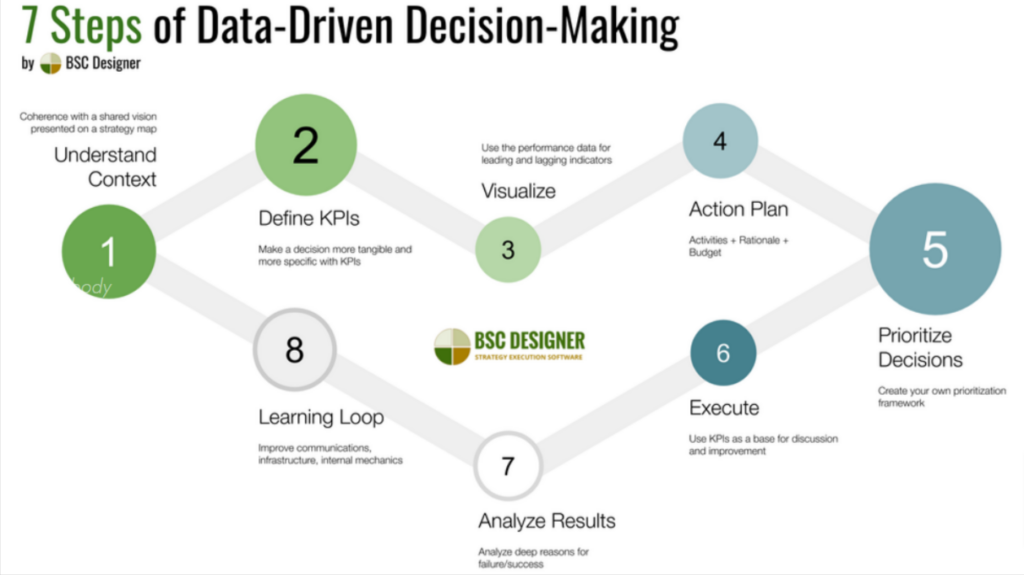
For data-driven insights, we need to collect qualitative and quantitative information and use it to guide business decisions instead of depending on one’s gut feelings or past experiences. A study conducted by PwC highlighted that data-driven organizations overwhelmingly reported improvements to their decision-making capabilities, pacing their intuition-reliant counterparts by over three times. A survey from Forrester Research also revealed that although 74% of the respondents claim that they want to be more data-driven, they fail to achieve effective analytics for tangible business results. Only 29% of those surveyed were successful in implementing the desired changes.
Having a data-driven approach to business decisions has proven to be more impactful than relying on data-driven decision making. A study of companies that utilized data for decision making revealed that they were 23 times more likely to acquire new customers, six times more likely retain them, and were nineteen times more profitable than companies that avoided data-driven decision making.
Make Data-Driven Decision Making Your Everyday Advantage
Clarity comes when you see talent shifts before they hit your organisation. explore how JobsPikr powers confident workforce decisions.
Why a Data-Driven Approach is Essential for Success?
For years, data promised smarter business decisions. It is only now that this promise is becoming visible. Markets are volatile. Skill gaps appear faster than hiring cycles. Workforce expectations shift without warning. Intuition alone cannot keep pace with these realities. Leaders need transparency, not just instincts.
In HR, this plays out in several ways:
- Increased Accuracy – Decisions carried out using data as a basis are more accurate and improve the outcomes of a target.
- Improved Operational Efficiency – Business process deficiencies are easily detectable and processes are streamlined.
- Better Risk Management – Utilizing predictive analytics, companies are able to foresee potential risks and work on averting them.
- Competitive Advantage – Companies can gain an upper hand over their competitors through the use of insights generated from available data.
Companies that do this well usually do not describe themselves as “data-driven”. They talk about clarity, timing, and confidence. Their advantage lies in noticing patterns before they become problems. That is the essence of data-driven insights.
What is Data-Driven Decision Making?
There is a misconception that data-driven decision making is a technology project. It is not. It is a behavioural shift.
Teams move away from:
• storytelling based on isolated experiences
• gut instincts masked as strategic judgement
• one-off reports produced for presentations
Instead, they build habits:
• questioning assumptions
• testing decisions against evidence
• adjusting plans when the data contradicts the narrative
This is particularly visible in HR. Consider hiring: a recruiter may feel confident in a role’s availability until market data shows that competition has doubled and talent supply is shrinking. The narrative changes instantly. That shift in thinking is the real marker of data maturity.
How Data-Driven Insights Strengthen Business Strategy?
As illustrated by the information provided in the study of MIT Sloan Management Review, companies that thoroughly utilize data analytics are 5% more productive and 6% more profitable than their closest competitors. The nature of data driven insights goes beyond simply delivering feedback as they do provide feedback in real time. This enables the organizations to pivot and strategize almost instantaneously based on the performance data and market requirements.
Organizations can implement data driven insights across various departments generating more effective decisions and streamlined processes. Let’s examine the influence data has on the business processes.
1. Data Driven Recruitment and HR Strategies based on Data Analytics
HR departments have started implementing data centric recruitment in order to get the most qualified personnel onboard. Heuristic AI-enabled applicant tracking systems evaluate candidate qualifications, align prospective employees with positions, and, based on previous recruitment results, project potential employee success.
- Workforce Planning: Calculate forthcoming hiring requirements according to the market.
- Employee Retention: Study attrition figures to enhance employee satisfaction.
- Performance Management: Assess efficiency and level of engagement with the use of real-time analytics.
As an example, a report from LinkedIn claims that 69% of HR respondents indicate that data driven decision making has improved talent acquisition and engagement metrics and that the time to hire was lowered by 50%. Firms that utilize AI in HR have higher employee retention rates of up to 20%.
2. Marketing Optimization Through Data Driven Insights
While designing marketing campaigns, marketing teams analyze data to improve customer engagement and maximize return on investment. Through the use of data, businesses are able to:
- Examine Consumer Behavior: Monitor web visits, purchases, and activity analytics.
- Optimize Marketing Campaigns: Apply a forward-looking approach to present relevant content.
- Evaluate Campaign Performance: Evaluate orders, consumer loyalty, and prospects generated.
According to McKinsey, companies exploiting data on customer behavior are able to do 23% better in acquiring new customers and increase their revenue by 28%. Moreover, brands who analyze customer behavior in real-time are able to achieve an 80% increase in the effectiveness of their campaigns.
3. Data Analytics in Financial Data Driven Decision Making
Financial departments utilize data driven approaches to make decisions for budget allocation, risk management, and revenue projections. Organizations can:
- Monitor Financial Health: Use real-time dashboards for expense tracking.
- Improve Investment Strategies: Analyze historical data for better financial planning.
- Reduce Fraud and Errors: AI-driven risk assessment tools help prevent fraud and inaccuracies.
As per Deloitte, 73% of CFOs agreed that cost effective decision making assisted in boosting business performance which helped reduce financial risks by 25%. By adopting real time analytics, businesses are able to identify fraud methods 30% faster than with older systems, safeguarding against financial misallocation.
4. Improving Customer Service Through Data
Customer service departments utilize client data and feedback to increase loyalty and satisfaction. Chatbots and AI sentiment tools, combined with custom support offer systems, makes it possible to:
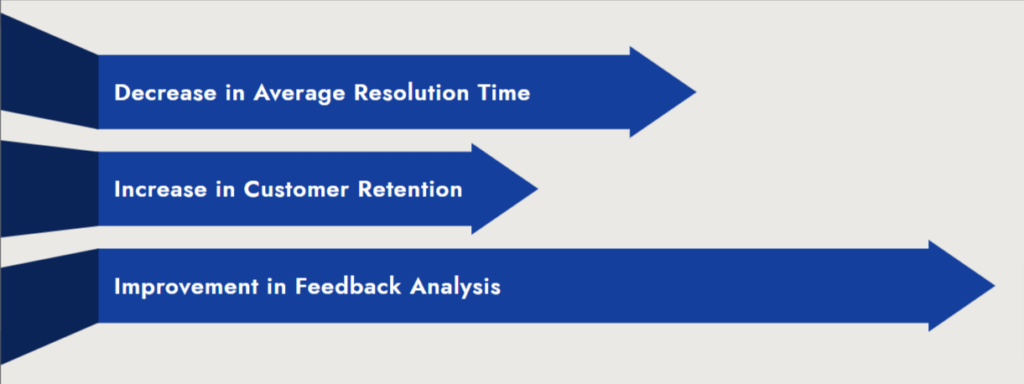
- Improve Response Times: With AI support, average resolution time is decreased by 40%.
- Enhance Customer Satisfaction: Over 35% of clients who receive data driven support do not switch over to other competitors.
- Optimize Feedback Analysis: Use AI tools to improve customer feedback trends.
The Gap Between “Wanting” Data-Driven Decision Making vs. Actually Doing It
Most leadership surveys paint a curious picture. Executives say they want data-driven decision making, but adoption tells another story. People analytics teams often describe it as an “expectation gap”. Leaders request insights yet default to instinct when those insights challenge their assumptions.
Why does this happen?
A few patterns show up repeatedly:
Teams lack confidence in interpreting data.
Analytics is often presented in rigid formats, full of metrics but light on meaning. When people cannot connect insights to context, they revert to experience.
Systems do not speak to each other.
Recruitment data may sit in one system, attrition patterns elsewhere, labour market signals in yet another platform. Without integration, insight loses its force.
There is fear of change.
Making a decision based on data means admitting previous assumptions may have been wrong. Not everyone enjoys that moment.
The companies that cross this gap usually do not start with dashboards. They start with questions:
What decision are we trying to improve?
Which data matters?
Who will use it and how?
That intentionality is what distinguishes mature data-driven decision making from reporting theatre.
Make Data-Driven Decision Making Your Everyday Advantage
Clarity comes when you see talent shifts before they hit your organisation. explore how JobsPikr powers confident workforce decisions.
Steps to Establish a Strong Data-Driven Culture in Organizations
Integrating effective data-driven decision making into organizational frameworks can be addressed with appropriate structures and resources. The following steps outline the most optimal practices for achieving seamless integration:
1. Develop an Appropriate Data Strategy
A data strategy lays the groundwork for proper business intel analytics and reporting. AI tools such as Power BI, Tableau, and Google Analytics allow businesses to gather and analyze data with greater effectiveness.
2. Foster Employee Confidence Towards Data
Harnessing Big Data: Best Practices and Business Applications from Harvard Business School suggested that 76% of employees reported lacking confidence in being able to effectively utilize data assets, whereas 92% of business executives considered data to be incredibly important. Training employees in data utilization tends to increase productivity by roughly 25-30%.
3. Increase Governance Around Compliance
The quality of the data held by a business is vital in making sound decisions. Businesses have to set out specific governance policies to ensure that data protection, accuracy, and compliance policies are adhered to, as this is vital in ascertaining sound business decisions.
4. Employ Continuous Improvement Strategies with Data
Promoting the collection of employee generated data is fundamental to effective and data-driven decision making, as employees are involved in all the appropriate stages of the process. This enables businesses to achieve a step change in performance compared to other businesses. Studies demonstrate that companies that integrate a data culture consistently outperform their peers in profitability by 5 to 10%.
Data-Driven Decision Making Meets Skills Intelligence
This trend deserves its own space. As roles evolve, skill demand shifts faster than job titles. Data-driven decision making grounded in skills insight is now one of HR’s strongest levers.
Practical applications include:
• spotting emerging skills and building internal capability
• identifying redundancy risk in roles
• refining workforce planning with skill clusters rather than job families
• developing reskilling paths based on market movement
Skills intelligence also changes retention. Some organisations do not lose people because they lack opportunities. They lose them because they cannot see them. Better visibility creates internal mobility, which in turn reduces hiring pressure.
Future Trends in Data-Driven Decision Making
As technology evolves, the future of data-driven decision making will be shaped by emerging trends such as:
- AI-Powered Predictive Analytics: Businesses will increasingly rely on AI to forecast trends, anticipate customer behavior, and automate decision-making.
- Real-Time Data Insights: Organizations will leverage real-time analytics for immediate decision-making, reducing response time to market changes.
- Data Driven Automation: More companies will integrate AI-driven automation into HR, finance, and operations for improved efficiency.
- Ethical Data Use and Compliance: As data privacy regulations become stricter, businesses must ensure ethical data collection and transparency in decision-making.
Data-Driven Decision Making Is Not the Goal, Better Choices Are
Based on the direct change, it is a must for any business to leverage data in its decision making processes. To seize competitive advantages, organizations need to utilize data-driven insights as it will enhance their Recruitment, Marketing, Finance, and Customer Service departments, thus leading to better and profitable business operations. Improve your decision making tactics with powerful workforce data. Sign up on JobsPikr today and start utilizing real-time analytics to boost your business strategies!
Make Data-Driven Decision Making Your Everyday Advantage
Clarity comes when you see talent shifts before they hit your organisation. explore how JobsPikr powers confident workforce decisions.
FAQs
What is data-driven decision making in HR?
It is the practice of using evidence to guide choices instead of assuming past experience is always right. In HR, this means hiring based on talent availability, addressing attrition causes before exit spikes, and using labour market signals to shape workforce planning. It is less about dashboards and more about clarity.
Why do organisations struggle with data-driven decision making?
Most companies have data, but not enough capability to interpret it. Systems are disconnected, teams lack confidence using analytics, and leaders sometimes prefer familiar instincts over inconvenient evidence. The gap is not a shortage of insight but a shortage of habit and accountability.
How can HR teams get started with data-driven decision making?
Begin with questions instead of technology. Identify 2–3 recurring decisions that always feel uncertain, gather the relevant signals, and shape small improvements. Over time, confidence grows and leaders start asking for insight before acting. This is how data-driven decision making becomes muscle memory.
What role does external labour market intelligence play?
Internal data only shows what happened inside your walls. External insight reveals what is shifting beyond them: which skills are emerging, how competition is hiring, where salary trends are moving, and when demand outpaces supply. Platforms like JobsPikr help HR leaders see these patterns early so decisions are grounded in context.
Does AI replace data-driven decision making?
Not really. AI can surface patterns and generate forecasts, but it cannot understand organisational nuance or make value judgments. Leaders still need to interpret, prioritise, and act. AI strengthens data-driven decision making, but it does not replace the thinking required to turn insight into outcomes.