

The human resources department has long been the operational backbone of organizations, traditionally focused on administrative tasks like payroll, compliance, and basic personnel management. However, in today’s hyper-competitive, knowledge-driven global economy, simply managing people is no longer sufficient. Organizations are relentlessly seeking ways not just to improve HR efficiency but to fundamentally unlock the latent potential within their workforce to drive innovation, agility, and sustainable competitive advantage. While adopting sophisticated software solutions offers significant operational gains, the true transformation lies in embracing a holistic philosophy: Enterprise Human Capital Management (HCM). HCM represents a paradigm shift, moving beyond administrative HR to strategically view employees as the most critical and appreciating assets – the core “human capital” – whose development and optimization directly correlate with amplified business value. This comprehensive exploration delves into the essence, components, critical importance, functional intricacies, and tangible benefits of Enterprise HCM, demonstrating why it is indispensable for thriving in the 21st-century marketplace.
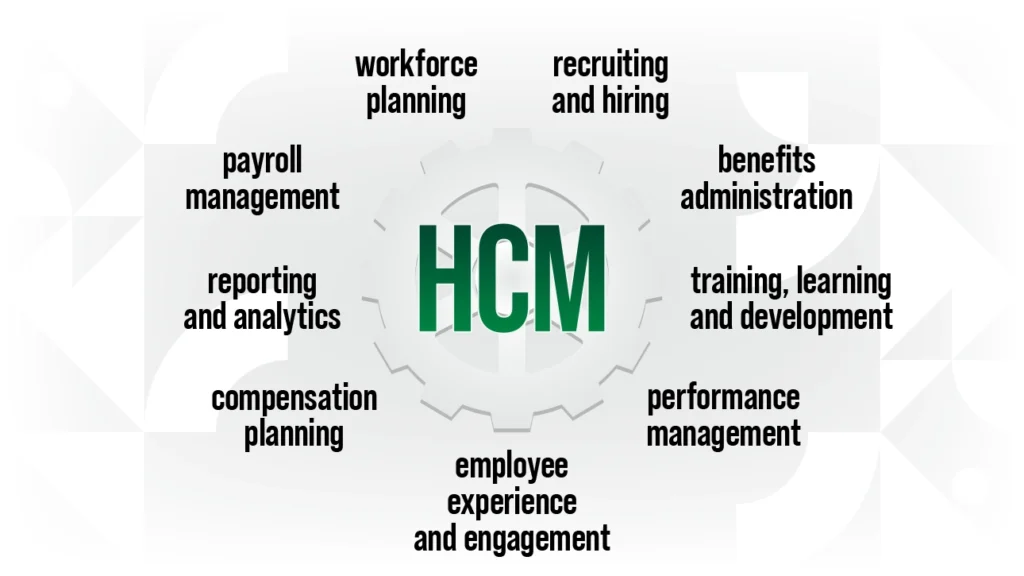
Image Source: Paycom
Deconstructing Enterprise Human Capital Management: Beyond Personnel to Strategic Asset
At its core, Enterprise Human Capital Management (HCM) is a strategic framework and integrated set of practices that position employees – the human capital – as the paramount source of organizational value creation. It transcends the reactive, transactional nature of traditional HR by adopting a proactive, investment-oriented perspective. HCM recognizes that people are not merely costs on a balance sheet but dynamic assets whose skills, knowledge, engagement, and potential for growth can be systematically cultivated to yield exceptional returns.
- From Function to Philosophy: While it incorporates the essential administrative functions of HR (recruitment, payroll, benefits administration, record-keeping), HCM fundamentally reorients these activities. It integrates them within a broader strategy focused on acquiring, developing, engaging, deploying, and retaining top talent aligned with the organization’s strategic objectives. HCM asks: How do these processes contribute to building the capabilities we need for future success?
- The Technology Enabler: Automation is a crucial enabler, but not the destination. HCM leverages integrated software suites (often cloud-based HCM platforms) to streamline processes, eliminate data silos, provide real-time insights, and free HR professionals from repetitive tasks. This allows them to focus on higher-value strategic initiatives like talent development, organizational design, and workforce planning. Automation ensures efficiency and accuracy in foundational tasks, creating the platform for strategic HCM.
- Holistic Lifecycle Focus: HCM adopts a cradle-to-grave view of the employee relationship, meticulously managing every stage of the employee lifecycle – from the initial attraction and recruitment phase, through onboarding, development, performance management, career progression, and ultimately, separation or retirement. Each stage is interconnected, and HCM strategies ensure a seamless, positive experience that fosters engagement and loyalty throughout the journey.
The Expansive Scope of Human Capital Management Practices: A Multi-Faceted Approach
Enterprise human capital management encompasses a wide spectrum of interconnected practices, forming a cohesive ecosystem for managing human capital:
- Strategic Workforce Planning: Moving beyond reactive hiring, this involves forecasting future talent needs based on business strategy, analyzing current workforce capabilities, identifying critical skill gaps, and developing proactive strategies (internal development, targeted recruitment, restructuring) to ensure the right people are in the right roles at the right time.
- Compensation Planning & Strategy: Designing competitive, equitable, and motivating compensation structures (salary, bonuses, incentives) aligned with market data, internal equity, business goals, and performance. Includes modeling different compensation scenarios and budgeting.
- Talent Acquisition (Recruiting & Hiring): Utilizing advanced sourcing strategies (social recruiting, AI-driven candidate matching, talent pools), employer branding, structured interviewing, and sophisticated assessment tools to attract and select high-potential candidates who fit both the role requirements and the organizational culture.
- Strategic Onboarding: Extending beyond paperwork, effective onboarding immerses new hires into the company culture, clarifies expectations, accelerates role proficiency, builds critical relationships, and fosters early engagement, significantly reducing early turnover.
- Learning & Development (L&D): Creating continuous learning pathways through targeted training programs (technical, soft skills, leadership), mentoring, coaching, access to online learning platforms, and opportunities for stretch assignments to build critical skills for current roles and future growth.
- Time & Attendance Management: Accurately tracking employee hours worked, leave, and absences for payroll, compliance, productivity analysis, and workforce optimization, often integrated with scheduling tools.
- Workflow & Process Management: Automating and optimizing HR and people-related workflows (approvals, requests, task assignments) to increase efficiency, reduce bottlenecks, and improve the employee and manager experience.
- Payroll Processing: Ensuring accurate, timely, and compliant calculation and disbursement of employee wages, salaries, bonuses, and deductions, including complex tax reporting.
- Performance Management: Evolving from annual reviews to continuous performance development. Setting clear goals aligned with company objectives, providing regular feedback and coaching, conducting meaningful evaluations, and linking performance to development and rewards.
- Benefits Administration: Designing, communicating, and managing competitive and flexible employee benefits packages (health insurance, retirement plans, wellness programs, voluntary benefits) that meet diverse employee needs and support wellbeing.
- Reporting & Analytics (People Analytics): Collecting, analyzing, and interpreting workforce data to generate actionable insights. Metrics might include turnover rates, time-to-hire, cost-per-hire, engagement scores, performance trends, skills gaps, diversity metrics, and predictive analytics for flight risk or high potential.
- Employee Self-Service & Manager Self-Service (ESS/MSS): Empowering employees and managers through intuitive portals to access and manage their own information (pay stubs, benefits enrollment, time-off requests, personal details) and perform people-management tasks (approvals, performance reviews, team data), reducing administrative burden on HR.
- Compliance & Risk Management: Proactively ensuring adherence to complex and ever-changing labor laws, regulations (FLSA, FMLA, ADA, EEO, GDPR, etc.), reporting requirements, and internal policies. Mitigating legal and financial risks associated with non-compliance.
- Retirement Services: Managing pension plans, 401(k) administration, and providing employees with tools and resources for retirement planning.
- Employee Engagement & Experience (EX): Proactively measuring and enhancing the emotional connection employees have with their work, colleagues, and the organization. Fostering a positive culture through recognition programs, communication channels, wellness initiatives, diversity & inclusion efforts, volunteering opportunities, and ensuring the physical and psychological work environment supports thriving.
The Indisputable Importance of Human Capital Management: Why It’s Non-Negotiable
The strategic significance of Enterprise human capital management has never been greater, driven by powerful macroeconomic, technological, and social forces:
- The Primacy of Human Capital: In the knowledge economy, competitive differentiation increasingly stems from innovation, customer experience, and agility – all intrinsically linked to the capabilities, creativity, and engagement of the workforce. Physical assets and proprietary technology can be replicated; a highly skilled, motivated, and uniquely aligned workforce is far harder to duplicate. HCM provides a systematic approach to cultivating this invaluable resource.
- Navigating the Evolving Workforce Landscape:
- Generational Shifts: The influx of Millennials and Gen Z, who prioritize purpose, development, flexibility, feedback, and work-life integration over traditional hierarchical structures and job security alone, demands new management approaches. HCM frameworks are designed to meet these evolving expectations.
- Rise of the Flexible Workforce: The growth of contingent labor (gig workers, freelancers, contractors) requires integrated talent management strategies that go beyond traditional full-time employees. HCM systems are adapting to manage this blended workforce effectively.
- Skills Revolution: The rapid pace of technological change (AI, automation, digitization) creates constant skills obsolescence and emergence. HCM, particularly through robust L&D and workforce planning, is essential for continuous reskilling and upskilling.
- Data-Driven Decision Making: Organizations generate vast amounts of workforce data. HCM, powered by integrated systems and People Analytics, transforms this raw data into strategic intelligence. Leaders can make evidence-based decisions about talent acquisition, retention strategies, performance interventions, compensation benchmarks, and predictive workforce modeling, moving HR from intuition to insight.
- Mitigating Compliance Complexity and Risk: The regulatory environment governing employment is increasingly complex and carries significant financial and reputational penalties for non-compliance. HCM systems provide automated tracking, reporting tools, and audit trails, ensuring adherence and reducing legal exposure. This is crucial for maintaining organizational reputation and avoiding costly litigation.
- Enhancing Employee Experience and Combating Attrition: The “Great Resignation” underscored the cost of disengagement and turnover. HCM focuses holistically on the employee journey, identifying pain points, fostering engagement, recognizing contributions, supporting wellbeing, and creating career pathways. A positive Employee Experience (EX) directly correlates with higher retention, productivity, and employer brand advocacy.
- Driving Operational Efficiency and Cost Optimization: By automating manual HR processes, streamlining workflows, reducing errors (especially in payroll), and enabling self-service, HCM significantly lowers administrative costs and frees HR resources for strategic work. Optimizing workforce deployment through better planning and scheduling also controls labor costs.
- Enabling Strategic Agility: Organizations need to pivot quickly in response to market shifts. A strategically managed workforce, with clear skills visibility and development pathways, is inherently more adaptable. HCM provides the framework to rapidly identify internal talent for new roles, redeploy resources, and close emerging skill gaps efficiently.
The Functional Pillars of Human Capital Management: A Deeper Dive
Enterprise human capital management functionality is typically organized into interconnected pillars, each addressing critical aspects of the talent lifecycle:
- Talent Management: Focuses on optimizing the entire talent journey.
- Talent Acquisition: Leverages advanced technologies (AI sourcing, predictive analytics for candidate fit, CRM for candidate relationship management) and strong employer branding to attract and hire high-quality talent efficiently and reduce time-to-fill critical roles.
- Performance Management: Shifts from infrequent, backward-looking appraisals to continuous, forward-looking development. Facilitates regular check-ins, goal setting (cascaded from organizational objectives), real-time feedback, competency assessments, and development planning. Focuses on growth and future potential.
- Career & Succession Planning: Identifies high-potential employees (HiPos), maps career paths, creates individualized development plans (IDPs), and proactively builds internal pipelines for critical roles and leadership positions to ensure organizational continuity and reduce reliance on external hiring for key positions.
- Learning Management (LMS Integration): Delivers personalized, accessible learning content (e-learning, microlearning, virtual instructor-led training, curated resources), tracks progress, measures impact, and supports just-in-time learning to address skill gaps and foster a culture of continuous development.
- Talent Analytics & Review: Uses data to identify talent trends, assess bench strength for critical roles, evaluate succession readiness, and understand factors influencing performance and retention, informing strategic talent decisions.
- Core Human Resources (HR): Manages the foundational employee record and administrative processes.
- HR Information System (HRIS): The central system of record for all employee data (personal, professional, job history, compensation, skills, performance). Ensures data accuracy, security, and accessibility.
- Employee Lifecycle Management: Automates workflows for hiring, onboarding, transfers, promotions, and separations/retirements, ensuring a consistent and compliant process.
- Strategic HR Data Management: Maintains organizational structures, job descriptions, compensation bands, and skills taxonomies. Provides the data foundation for workforce planning and analytics.
- HR Service Delivery: Offers efficient support through case management systems (HR helpdesk), knowledge bases, and robust ESS/MSS portals, improving resolution times and employee satisfaction.
- Employee Engagement Tools: Facilitates pulse surveys, recognition platforms (peer-to-peer and manager-led), feedback mechanisms, communication channels, and wellness program management to measure and enhance engagement.
- Compliance & Risk Management: Centralizes policy management, tracks mandatory training completion, manages leaves (FMLA, etc.), ensures I-9/E-Verify compliance, and provides tools for incident reporting and audit preparation.
- Workforce Management: Optimizes the deployment and productivity of the workforce.
- Time & Labor Tracking: Accurately captures hours worked, breaks, overtime, and absences via time clocks, mobile apps, or desktop systems. Often integrated with scheduling.
- Scheduling & Forecasting: Creates optimized schedules based on demand forecasts, employee availability, skills, and labor budget constraints, balancing operational needs with employee preferences.
- Labor Cost Optimization & Analytics: Tracks labor costs in real-time against budgets, analyzes productivity metrics, identifies areas for efficiency gains, and ensures optimal staffing levels.
- Absence Management: Tracks various leave types (vacation, sick, personal, FMLA, parental), manages accruals, and ensures policy compliance.
- Workforce Rewards: Attracts, retains, and motivates talent through competitive and fair compensation and benefits.
- Total Compensation Management:
- Compensation Planning & Administration: Manages salary structures, merit increases, bonus programs, equity grants, and incentive plans. Includes modeling, budgeting, and analysis tools.
- Pay-for-Performance: Integrates performance data (ratings, goal attainment) directly into compensation decisions, reinforcing the link between contribution and reward.
- Total Rewards Statements: Provides employees with personalized statements showcasing the full value of their compensation (salary, bonuses, benefits cost, retirement contributions), enhancing perceived value.
- Benefits Administration: Streamlines enrollment (often during life events), manages eligibility, handles carrier integrations, provides decision support tools for employees, and ensures compliance (ACA reporting, etc.). Supports flexible and voluntary benefits.
- Global Payroll: Ensures accurate, timely, and compliant payroll processing across multiple countries and jurisdictions, handling complex local tax regulations and reporting requirements. Often involves specialized integrations or partners.
- Total Compensation Management:
The Tangible and Transformative Benefits of Enterprise Human Capital Management
Implementing a strategic Enterprise human capital management approach yields substantial, measurable returns across the organization:
- Optimized Human Capital ROI: The fundamental benefit. Human capital management transforms HR from a cost center to a strategic investor, maximizing the return on investment in people by systematically enhancing their skills, engagement, and productivity, directly impacting the bottom line.
- Strategic Talent Acquisition & Retention: Attracts higher-quality candidates faster through advanced tools and strong employer branding. Significantly reduces costly turnover by fostering engagement, providing growth opportunities, and ensuring competitive rewards, preserving institutional knowledge, and reducing recruitment expenses.
- Enhanced Productivity & Performance: Continuous performance development, clear goal alignment, targeted learning, and effective manager coaching directly elevate individual and team performance. Streamlined processes and self-service tools also free up employee time for core responsibilities.
- Proactive Workforce Planning & Agility: Enables organizations to anticipate future skill needs, identify and close capability gaps proactively, and rapidly deploy talent to meet changing business demands, fostering organizational resilience.
- Data-Driven Strategic Decision Making: People Analytics provides actionable insights into workforce trends, performance drivers, engagement factors, and retention risks. This empowers leaders to make informed, evidence-based decisions about talent strategy, resource allocation, and organizational development.
- Significant Cost Reduction & Efficiency Gains: Automation of manual HR and payroll tasks, reduced errors, optimized labor scheduling, lower turnover costs, and streamlined processes lead to substantial operational savings. ESS/MSS drastically reduces HR administrative burden.
- Improved Compliance & Risk Mitigation: Automated tracking, centralized policy management, audit trails, and built-in regulatory updates minimize the risk of costly fines, lawsuits, and reputational damage associated with non-compliance.
- Elevated Employee Experience (EX) & Engagement: A focus on the entire employee journey – from seamless onboarding and continuous development to meaningful recognition, wellness support, and flexible work options – fosters higher engagement, satisfaction, and advocacy, creating a positive and productive work environment.
- Stronger Employer Brand: A reputation for valuing and developing employees, offering a positive work experience, and providing growth opportunities attracts top talent and enhances the organization’s standing in the marketplace.
- Support for Organizational Culture & Values: Human capital management practices (recruiting for cultural fit, recognition aligned with values, performance management emphasizing desired behaviors, communication tools) actively shape and reinforce the desired organizational culture.
Conclusion: Embracing HCM as a Strategic Imperative, Not an Option
Enterprise Human Capital Management is no longer a luxury reserved for large corporations; it is a fundamental strategic imperative for organizations of all sizes seeking sustainable success in a complex and dynamic world. The convergence of technological advancements (cloud computing, AI, analytics), shifting workforce demographics and expectations, and the undeniable link between human capital optimization and business performance has cemented HCM’s critical role.
Moving beyond fragmented HRIS solutions and transactional HR practices, Enterprise Human Capital Management offers a unified, strategic framework. It empowers organizations to view their workforce not as a cost to be controlled, but as the primary engine of value creation and innovation. By strategically investing in acquiring, developing, engaging, and retaining top talent, organizations unlock unprecedented levels of productivity, agility, and competitive differentiation.