


- **TL;DR**
- What is Agility in the Workplace?
- The Role of Agility Skills in the Workplace
- How Agility Skills Drive Business Success
- How to Implement Agility Skills in the Workplace?
- Agility and Workforce Intelligence in 2026
- Building Agility Through Skills-Based Workforce Planning
- Building a Workforce That Adapts, Innovates, and Leads
- FAQs
**TL;DR**
Business conditions in 2026 are defined by volatility, rapid technological change, and shifting talent markets. Organizations that consistently outperform their competitors have one trait in common: strong agility skills in the workplace. These skills enable faster decisions, smarter workforce planning, stronger innovation pipelines, and more resilient teams. In this refreshed guide, we break down what agility skills in the workplace truly mean, why they matter more than ever, and how workforce intelligence platforms like JobsPikr help organizations build measurable agility at scale.
The ability to adapt quickly in today’s business has never been more crucial. Businesses are no longer operating within the confines of slow-moving processes or predictable market trends. Instead, they face constant changes in technology, consumer behavior, and economic conditions. As a result, the importance of agility in the workplace has become a critical factor in driving business success. In this article, we will explore how agility skills in the workplace empower organizations to stay ahead of the curve, foster innovation, and maintain competitiveness, while also delving into why agility is important in business.
What is Agility in the Workplace?
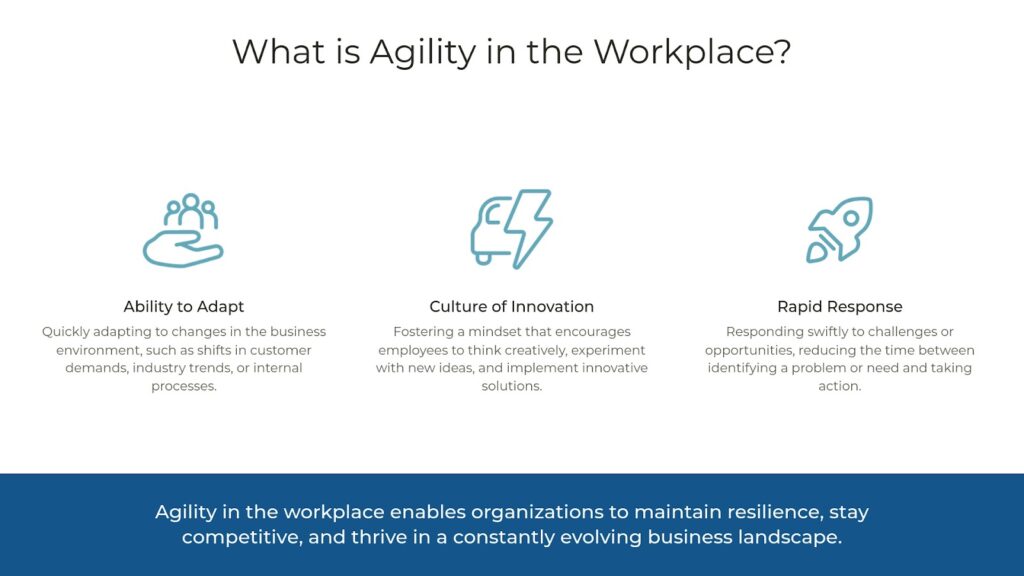
Agility in the workplace refers to an organization’s ability to quickly adapt, innovate, and respond to changes in the business environment. It involves more than just the willingness to embrace change; it is about having the skills, processes, and mindset that enable teams to pivot rapidly while maintaining efficiency and productivity. Whether it’s responding to a shift in consumer demand, adapting to new regulations, or implementing cutting-edge technologies, workplace agility ensures that businesses can effectively navigate challenges and seize new opportunities.
Why is Agility Important in Business?
The core reason why agility is important in business is that it allows organizations to maintain resilience in the face of uncertainty. In a highly competitive market, the most agile companies are often the ones that thrive. Here’s why:
- Faster Decision-Making: Agile businesses can make informed decisions quickly, reducing the time between identifying a problem or opportunity and taking action.
- Improved Adaptability: The ability to adapt swiftly to changes in customer needs, industry trends, or internal processes is key to sustaining growth.
- Greater Innovation: Workplace agility fosters a culture of continuous improvement, where employees are encouraged to think creatively and innovate.
- Enhanced Customer Satisfaction: Organizations that are agile can rapidly respond to customer feedback and changing preferences, leading to higher satisfaction rates.
- Better Employee Engagement: Agility skills in the workplace often result in higher employee engagement, as staff feel more empowered to contribute ideas and drive change.
The Role of Agility Skills in the Workplace
Agility skills in the workplace go beyond having flexible strategies; they encompass a range of competencies that individuals and teams possess to respond efficiently to changes. These skills can be grouped into three key areas:
1. Cognitive Agility: Thinking Fast and Flexibly
Cognitive agility involves the mental capacity to think quickly, switch between tasks efficiently, and manage multiple responsibilities. Employees with strong cognitive agility are skilled in problem-solving, decision-making, and critical thinking, which are essential for adapting to new challenges.
- Problem-Solving Skills: Teams that can identify challenges and develop quick solutions help businesses respond effectively to unforeseen circumstances.
- Decision-Making Skills: Fast and informed decision-making is crucial in ensuring that companies can pivot quickly, keeping projects and processes aligned with new objectives.
- Strategic Thinking: Agility in the workplace is fueled by strategic thinking, which allows employees to anticipate changes and plan accordingly.
2. Emotional Agility: Adaptability and Resilience
Emotional agility refers to the ability to manage emotions, handle stress, and maintain focus during periods of change. In a fast-paced work environment, emotional agility ensures that employees can remain calm under pressure and adapt to shifting circumstances without losing productivity.
- Adaptability: An adaptable workforce is prepared for unexpected changes, whether it’s a shift in project scope or a major organizational overhaul.
- Resilience: Agility skills in the workplace also foster resilience, enabling employees to bounce back from setbacks and remain motivated in the face of adversity.
- Collaboration and Communication: Agile teams often excel at collaboration, as clear and effective communication is crucial for driving alignment during change initiatives.
3. Technical Agility: Embracing New Tools and Technologies
Technical agility is about how well employees can adapt to new tools, software, and processes. In today’s digital age, technical agility is a must-have skill in the workplace, as technology plays a central role in driving innovation and operational efficiency.
- Learning Agility: The ability to quickly learn and apply new skills is vital for keeping up with technological advancements.
- Process Agility: Employees who can swiftly adapt to new workflows, software updates, or automation tools contribute to seamless transitions in operations.
- Innovation: Technical agility supports innovation by encouraging employees to explore and implement new technologies that enhance productivity and create value.
How Agility Skills Drive Business Success
Agility skills in the workplace are more than just buzzwords; they are fundamental components of a thriving business. Let’s examine how these skills contribute to business success:
1. Driving Innovation and Competitive Advantage
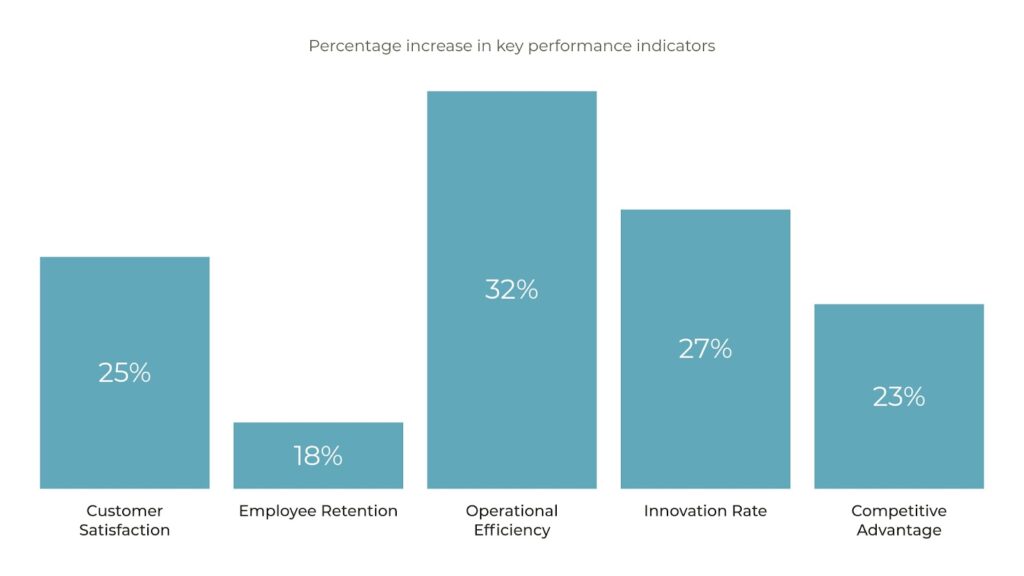
Innovation is at the heart of workplace agility. Agile organizations encourage employees to think creatively, experiment with new ideas, and quickly implement solutions. This fosters a culture of innovation, where teams are not afraid to try new approaches, fail fast, and learn from mistakes. This culture of continuous improvement can give businesses a significant competitive advantage, as they are always one step ahead of slower-moving competitors.
2. Fostering Adaptability and Rapid Response to Change
Agility skills in the workplace enable businesses to respond rapidly to changes in market conditions, regulatory requirements, or customer preferences. This adaptability reduces downtime, minimizes disruptions, and ensures that the organization remains aligned with its goals. For recruitment agencies, which often face sudden changes in hiring trends or client demands, being able to pivot quickly is essential to maintain client satisfaction and success.
3. Enhancing Employee Engagement and Retention
Workplace agility isn’t just beneficial for business outcomes—it also positively impacts employee engagement and retention. When employees feel empowered to contribute ideas, adapt quickly to changes, and take ownership of their work, they are more likely to be satisfied with their roles. This engagement leads to lower turnover rates, as employees feel valued and invested in the company’s success.
4. Improving Customer Satisfaction and Loyalty
Agile businesses are customer-centric. They can quickly adapt their products, services, or approaches based on real-time feedback from customers. This customer-centric approach drives satisfaction, as clients feel heard and valued. In the context of recruitment agencies, agility skills in the workplace can enhance client relationships by delivering customized solutions faster and more efficiently.
5. Reducing Operational Costs and Increasing Efficiency
One of the practical benefits of agility in the workplace is cost reduction. Agile businesses can quickly identify inefficiencies, eliminate waste, and optimize processes. This streamlined approach not only cuts costs but also increases overall efficiency. By maintaining lean operations, companies can reallocate resources toward growth initiatives, research and development, or employee training.
How to Implement Agility Skills in the Workplace?

To harness the benefits of agility in the workplace, businesses need to actively cultivate these skills across their teams. Here’s how organizations can develop agility skills in the workplace:
- Promote a Culture of Learning
Encouraging a culture of continuous learning is a foundational step in building workplace agility. Providing access to training programs, workshops, and skill-building sessions enables employees to keep up with the latest industry trends, technologies, and practices.
- Encourage Open Communication and Collaboration
Fostering open lines of communication is crucial for agility. Employees need to feel comfortable sharing ideas, providing feedback, and collaborating with colleagues across departments. Creating cross-functional teams and encouraging transparent communication channels can boost agility.
- Invest in Technology and Tools
Equipping teams with the right tools and technology is essential for driving workplace agility. Investing in collaboration software, project management tools, and data analytics platforms can enhance employees’ ability to work efficiently and adapt to new demands.
- Empower Decision-Making at All Levels
Agile organizations delegate decision-making authority to lower levels, allowing employees to make faster and more informed decisions. This empowerment not only improves agility but also increases accountability and job satisfaction.
- Lead by Example
Leadership plays a pivotal role in promoting workplace agility. Leaders who demonstrate agile behaviors, such as quick decision-making, adaptability, and a willingness to embrace change, set the tone for the entire organization.
Agility and Workforce Intelligence in 2026
One of the biggest shifts shaping 2026 is that agility is no longer driven by instinct alone — it is powered by intelligence.
In the past, agility skills in the workplace often depended on leadership intuition or reactive adjustments. A hiring slowdown would trigger cost cuts. A sudden skill shortage would spark urgent recruitment drives. While those actions were technically agile, they were still reactive.
Today, workforce intelligence changes the equation.
Modern organizations combine internal performance metrics with external labor market data to create a live view of talent supply, skill demand, compensation trends, and geographic hiring shifts. This real-time visibility allows companies to anticipate disruption rather than simply respond to it.
For example:
- If demand for AI governance skills begins rising across multiple industries, agile organizations can launch targeted upskilling programs before the talent shortage peaks.
- If remote hiring accelerates in specific regions, workforce planning teams can diversify sourcing strategies early.
- If compensation benchmarks start climbing for niche technical roles, organizations can proactively adjust budgets and avoid offer rejections.
This is where agility skills in the workplace become measurable. Instead of relying on quarterly reviews or annual workforce plans, leaders use live market signals to recalibrate strategy continuously.
Workforce intelligence platforms like JobsPikr enable this shift by providing structured, real-time labor market analytics. These insights help organizations:
- Detect emerging skill clusters
- Identify hiring saturation risks
- Monitor competitor hiring intensity
- Forecast supply-demand mismatches
In 2026, agility is deeply connected to data literacy. Teams that understand how to interpret labor market trends can move faster with confidence. Those without visibility risk making delayed or misaligned decisions.
Ultimately, workforce intelligence transforms agility from a soft capability into a strategic operating model. It ensures that agility skills in the workplace are supported by evidence, not guesswork — and that adaptability becomes a predictable strength rather than a last-minute reaction.
Building Agility Through Skills-Based Workforce Planning
One of the most important structural shifts in 2026 is the move from role-based planning to skills-based workforce planning. This evolution has a direct impact on how organizations strengthen agility skills in the workplace.
Traditionally, workforce plans were built around fixed job titles. A department needed five data analysts, three recruiters, or ten engineers. But roles change faster than ever. AI automates certain tasks. New technologies create entirely new responsibilities. Hybrid teams blend functions. When planning revolves strictly around titles, agility suffers.
Skills-based planning changes that.
Instead of asking, “How many roles do we need?”, agile organizations ask, “What capabilities do we need now — and what will we need next?”
This shift enables far more flexibility.
For example:
- If automation reduces manual reporting tasks, employees with adjacent analytical skills can transition into higher-value roles.
- If a new regulatory requirement emerges, teams can quickly identify internal employees with relevant compliance expertise instead of hiring externally.
- If a growth initiative requires rapid scaling in a niche skill area, workforce intelligence data can highlight where talent supply is strongest geographically.
By focusing on capabilities rather than rigid structures, organizations make their agility skills in the workplace more sustainable.
Skills-based planning also supports internal mobility. When leaders map skill inventories across the organization, they can redeploy talent more efficiently. Employees are not boxed into static job descriptions. They become dynamic contributors who evolve with business needs.
Technology plays a crucial role here. AI-powered talent analytics platforms help identify skill adjacencies, forecast future demand, and detect gaps before they impact productivity. This foresight strengthens agility by reducing last-minute hiring scrambles and reactive training programs.
In 2026, the most resilient organizations treat their workforce as a portfolio of evolving capabilities. That mindset reinforces agility skills in the workplace by ensuring the organization can pivot without disruption — because the talent foundation is already adaptable.
Skills-based workforce planning does not just support agility. It operationalizes it.
Building a Workforce That Adapts, Innovates, and Leads
Agility in the workplace is not just a nice-to-have; it is a critical driver of business success. The ability to adapt quickly, innovate continuously, and respond to changes effectively is what sets successful businesses apart from their competitors. Agility skills in the workplace help organizations foster innovation, improve customer satisfaction, enhance employee engagement, and increase operational efficiency. For recruitment agencies, in particular, agility ensures that they can meet the changing needs of clients and candidates in a highly dynamic industry.
Investing in agility skills is about thriving in a complex, fast-moving business world. To ensure your organization stays ahead, Sign up on JobsPikr for real-time labor market insights, helping you build an agile, data-driven approach to workforce planning and recruitment.
FAQs
What are agility skills in the workplace?
Agility skills in the workplace refer to the cognitive, emotional, and technical capabilities that allow employees and organizations to adapt quickly to change while maintaining performance and strategic alignment.
Why are agility skills in the workplace important in 2026?
Rapid technological advancements, labor market volatility, and hybrid work structures make agility essential. Organizations with strong agility skills in the workplace respond faster to change and maintain competitive advantage.
How can workforce intelligence improve agility?
Workforce intelligence platforms provide real-time insights into labor demand, skill trends, and compensation benchmarks. This data enables proactive planning and strengthens agility skills in the workplace.
What is the difference between agility and flexibility?
Flexibility refers to the ability to adjust. Agility goes further—it combines speed, strategy, and execution. Agility skills in the workplace ensure that adaptation happens efficiently and purposefully.
How do you measure agility in the workplace?
Metrics may include decision cycle time, internal mobility rates, learning completion velocity, hiring response speed, and adaptation time to market changes. These indicators reflect the strength of agility skills in the workplace.