
- **TL;DR**
- What Is AI-Driven Analytics in Workforce Optimization?
- Move From Workforce Guesswork to Workforce Intelligence
- How AI-Driven Analytics Revolutionizes Workforce Optimization?
- Core Workforce Challenges Solved by AI-Driven Analytics
- How AI-Driven Analytics Drives Workforce Optimization?
- Top Benefits of AI-Driven Recruitment and Workforce Analytics
- Move From Workforce Guesswork to Workforce Intelligence
- How AI-Driven Analytics Leverages Cutting-Edge Technology?
- Step-by-Step Guide to AI-Driven Workforce Optimization Strategies
- Real-Time Workforce Intelligence: From Static Planning to Continuous Decision-Making
- Move From Workforce Guesswork to Workforce Intelligence
- Future of AI-Driven Analytics in Workforce Optimization: Trends & Predictions
- How Leaders Can Act on AI-Driven Workforce Insights
- Move From Workforce Guesswork to Workforce Intelligence
- FAQs
**TL;DR**
AI-driven analytics is reshaping how organizations plan, hire, deploy, and retain talent. By combining large-scale workforce data with machine learning, predictive models, and real-time insights, businesses can move from reactive HR decisions to proactive workforce optimization. This article explores how ai-driven analytics powers smarter workforce planning, recruitment intelligence, performance management, and trend forecasting, while also addressing ethics, data readiness, and what forward-looking workforce leaders need to do next.
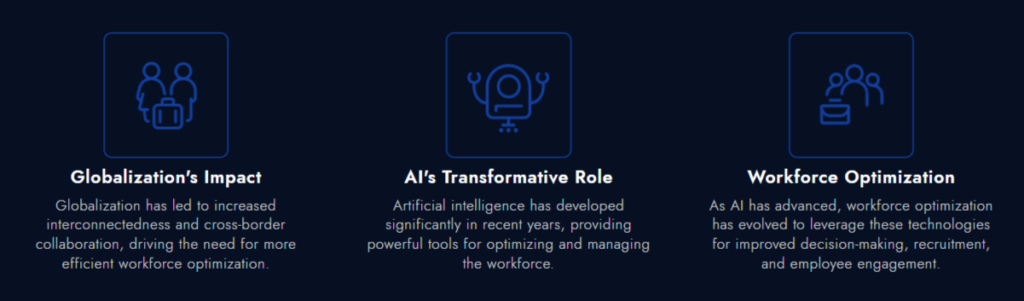
As a consequence of globalisation, artificial intelligence (AI) has developed significantly in recent years, and workforce optimization has followed suit. There is a lot of buzz about the use of AI, and for good reason. AI-driven analytics has appeared with increased predictions as advance in AI technology, making more accurate forecasting possible. Through AI-driven recruitment intelligence and analytics, companies today can attract and keep the best people while using resources effectively.
This article sheds light onto the world of AI-driven analytics in reference to workforce planning and presents potent and implementable steps for decision makers and business analysts on how to work with this novel technology.
What Is AI-Driven Analytics in Workforce Optimization?
At its core, ai-driven analytics refers to the use of artificial intelligence techniques such as machine learning, natural language processing, and predictive modeling to analyze workforce-related data and generate actionable insights.
Unlike traditional analytics, which often focuses on historical reporting, AI-driven analytics goes a step further. It identifies trends, learns from patterns, and continuously improves its predictions as new data becomes available. In the context of workforce optimization, this means organizations can move beyond descriptive metrics and start making informed, forward-looking decisions.
Workforce data can include job postings, hiring timelines, compensation benchmarks, skills demand, employee performance metrics, engagement surveys, attrition data, and external labor market signals. AI brings these fragmented data sources together, making sense of them at scale and translating them into insights leaders can actually use.
The result is a more connected, intelligent approach to workforce management, where decisions are based on evidence rather than assumptions.
Move From Workforce Guesswork to Workforce Intelligence
Use AI-driven analytics to anticipate talent needs, track skills demand, and plan with confidence.
How AI-Driven Analytics Revolutionizes Workforce Optimization?
Because of robust AI-powered tools, organizations are getting the ability to see their operations in ways they could not before. This modern development known as AI analytics makes use of large data sets to identify valuable business patterns and refine actionable business strategies. With AI-powered business intelligence, organizations can predict workforce requirements, develop recruitment strategies, and streamline the rest of the business operations. For instance, an AI analytical solution can determine how many hires must be made in the future by examining previous hiring data thus preventing companies from being understaffed or overstaffed. Additionally, these tools enable organizations to achieve their specific business objectives because they provide recommendations based on the objectives set by the business. As a result, these intelligent systems create strategies that support the overarching organizational goals. In this area of workforce optimization, it assists companies to manage issues like:
- Predicting Workforce Demand: AI-driven analytics tools can analyze previous data, seasonal patterns, and even pricing changes to guess the amount of workforce needed.
- Enhancing Recruitment Strategies: AI enabled recruitment tools process candidate data and determine the candidates who match with set requirements.
- Improving Decision-Making: AI tools make suggestions based on set data for workforce planning and deployment.
- Identifying Workforce Trends: AI-driven recruitment analytics helps organizations stay ahead of industry trends and adapt to changing demands.
With the ability to analyze data and offer strategic suggestions, AI augmented analytics enables firms to take advanced measures that improve workforce productivity.
Core Workforce Challenges Solved by AI-Driven Analytics
Predicting Workforce Demand
Accurately predicting workforce demand has always been a challenge, especially in industries affected by seasonality, economic shifts, or rapid innovation. AI-driven analytics analyzes historical workforce data, business performance indicators, and external market signals to forecast future staffing needs.
This enables organizations to plan hiring well in advance, optimize workforce allocation, and maintain service levels without unnecessary cost pressure.
Enhancing Recruitment Strategies
Recruitment generates vast amounts of data, from resumes and job descriptions to interview feedback and hiring outcomes. AI-driven recruitment intelligence processes this data at scale, identifying which candidate profiles perform best in specific roles and which sourcing channels deliver the highest quality hires.
Over time, AI-driven analytics helps organizations refine job descriptions, improve candidate matching, and reduce time-to-hire, while maintaining consistency and fairness.
Improving Decision-Making
Human decision-making is often influenced by bias, incomplete information, or time constraints. AI-driven analytics provides objective, data-backed recommendations that support better workforce decisions. Leaders can test different scenarios, compare outcomes, and understand the trade-offs before taking action.
Identifying Workforce Trends
By continuously monitoring labor market data, employee behavior, and industry signals, AI-driven analytics helps organizations stay ahead of emerging workforce trends. This includes shifts in skill demand, changes in employee expectations, and evolving hiring practices.
How AI-Driven Analytics Drives Workforce Optimization?
While almost any company could benefit from AI-driven analytics, it’s most valuable in highly competitive markets. The most relevant are the following:
1. Workforce Planning
AI powered tools utilize past datasets, market data and needs of the organization to provide accurate predictions around workforce requirements. This insight allows businesses to manage resources using data to avoid both over and underemployment. For instance, a retail company may use AI analytics to forecast staffing requirements during the busiest shopping seasons in order to ensure service levels do not drop.
2. AI-Driven Recruitment
Relying heavily on human resources, recruitment processes can benefit tremendously from AI-driven recruitment intelligence that handles mundane work such as screening CVs. AI models not only surface potential candidates at a record pace, but also scan past hiring data to improve job texts and recruitment approaches. For example, AI tools can analyze past employees performance data and suggest candidate profiles with objectives that will most likely be achieved.
3. Forecasting Trends
Through the analysis of various sources of information, be it industry publications, employee satisfaction surveys, or economic performance indicators, AI analytics equips organizations with hindsight to workforce trends. Such functionality makes it possible for companies to alter strategies in anticipation of newly needed skills or changing preferences within the workforce.
4. Performance Management
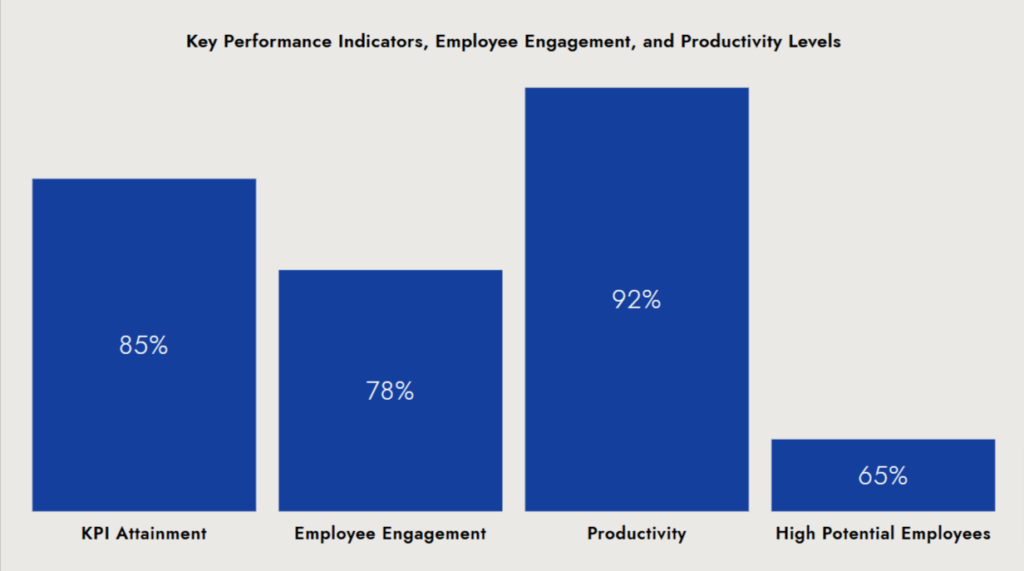
The performance of employees can be tracked effortlessly using AI powered solutions which constantly update with KPI reporting, employee engagement, and productivity levels. Such data can assist managers in identifying organizational superstars and taking responsive action to mitigate underperformance and construct development plans specialized to each employee’s career aspirations and the expectations of their organization.
Top Benefits of AI-Driven Recruitment and Workforce Analytics
The adoption of AI-driven analytics provides organizations with several strategic advantages, ensuring they remain agile and competitive in the modern business landscape:
1. Increased Efficiency
Automation powered by AI reduces the time spent on manual processes, such as candidate sourcing and workforce scheduling, allowing HR teams to focus on strategic priorities. A global survey revealed that organizations using AI in recruitment saw a 30% reduction in time-to-hire.
2. Enhanced Accuracy
AI eliminates human biases and errors, delivering objective, data-backed decisions. This ensures that recruitment and workforce strategies are built on accurate and actionable insights.
3. Improved Employee Retention
By analyzing engagement metrics and employee feedback, AI-driven tools identify factors contributing to employee turnover. These insights enable companies to implement retention strategies such as enhanced benefits, career development opportunities, and improved workplace environments.
4. Cost Savings
Accurate demand forecasting and resource optimization minimize waste, leading to significant cost savings. For example, AI-powered workforce planning tools can help reduce overtime costs by efficiently managing staffing levels.
5. Competitive Advantage
Organizations leveraging AI driven analytics stay ahead by identifying trends faster and adapting more effectively to changing market dynamics, ensuring sustained growth and resilience.
Move From Workforce Guesswork to Workforce Intelligence
Use AI-driven analytics to anticipate talent needs, track skills demand, and plan with confidence.
How AI-Driven Analytics Leverages Cutting-Edge Technology?
Here are some technologies that power AI-driven analytics and its use in workforce optimization:
- Machine Learning (ML): ML algorithms work on historical data to find trends and make predictions, which helps organizations forecast workforce needs and prove trends.
- Natural Language Processing (NLP): NLP converts unstructured data such as resumes, job descriptions, and employee comments into structured data that enables decision making with marketplace insights.
- Predictive Analytics: This technology uses statistical models and ai algorithms with the goal of solving challenges that organizations have tried to prepare for but did not work out.
- Data Visualization Tools: AI-powered dashboards describe very complex information in a simple format for easier comprehension by stakeholders, which facilitates faster decision-making.
Step-by-Step Guide to AI-Driven Workforce Optimization Strategies
For workforce optimization, AI powered analytics enable a new dimension in the productivity of an organization. To ensure that the impact gained with AI tools is maximized, a structured approach has to be taken. Here are key strategies to achieve successful implementation:
1. Define Clear Objectives
Start by identifying the specific problems AI will solve, such as improving recruitment efficiency, enhancing workforce planning, or reducing turnover. Clear goals provide a roadmap for leveraging AI effectively.
2. Invest in Advanced Tools
Select AI-driven platforms that offer robust analytics capabilities, scalability, and user-friendly interfaces. Tools like Eightfold AI and Tableau provide advanced insights into workforce trends, recruitment efficiency, and employee engagement.
3. Foster Data Integration
Ensure seamless integration of data from HR systems, recruitment platforms, and market research tools. Unified data allows for comprehensive analysis and reduces the risk of silos hampering decision-making.
4. Provide Training
Equip HR teams and decision-makers with the knowledge and skills to interpret AI-driven insights. Conduct training sessions and workshops to ensure employees are comfortable using new tools and technology.
5. Monitor, Evaluate, and Optimize
Establish KPIs to measure the success of AI-driven analytics initiatives. Regularly review performance metrics to refine strategies and ensure alignment with business objectives.
Real-Time Workforce Intelligence: From Static Planning to Continuous Decision-Making
Traditional workforce planning has largely been built on snapshots in time. Monthly reports, quarterly hiring reviews, and annual workforce plans have historically guided talent decisions. While this approach worked in slower, more predictable markets, it struggles to keep pace with today’s rapidly shifting labor dynamics.
Real-time workforce intelligence changes this model entirely.
Powered by ai-driven analytics, real-time workforce intelligence continuously ingests and analyzes fresh data from multiple sources such as job postings, hiring pipelines, labor market signals, skills demand, and internal workforce metrics. Instead of waiting weeks or months to understand what changed, organizations gain near-instant visibility into workforce movements as they happen.
This shift from periodic analysis to continuous intelligence allows leaders to respond faster, plan more accurately, and reduce the risk of reactive decision-making.
Why Real-Time Workforce Intelligence Matters
Labor markets today are fluid. Skills become obsolete faster, hiring competition intensifies overnight, and economic or regulatory changes can impact workforce availability with little warning. In this environment, delayed insights often lead to missed opportunities or costly missteps.
Real-time workforce intelligence helps organizations:
- Detect hiring slowdowns or spikes as they occur rather than after the fact
- Identify emerging skill shortages before they impact delivery or growth
- Adjust workforce plans dynamically based on market and business signals
- Reduce dependency on lagging indicators such as historical attrition reports
By continuously monitoring workforce and labor market data, ai-driven analytics enables organizations to stay aligned with current reality rather than outdated assumptions.
How Real-Time Workforce Intelligence Works
At a practical level, real-time workforce intelligence is built on three core layers.
The first layer is continuous data ingestion. AI-driven systems pull data from internal HR platforms, applicant tracking systems, job boards, and external labor market sources. This ensures that workforce intelligence reflects both internal talent dynamics and external market conditions.
The second layer is pattern recognition and anomaly detection. Machine learning models analyze incoming data to identify deviations from normal trends. For example, a sudden increase in time-to-fill for a critical role or a sharp rise in demand for a specific skill can trigger early alerts.
The third layer is actionable insight delivery. Instead of overwhelming decision-makers with raw data, AI-driven analytics translates findings into clear signals and recommendations. These insights are surfaced through dashboards, alerts, or reports that support immediate decision-making.
Together, these layers transform workforce data into intelligence that is always current and decision-ready.
Real-Time Workforce Intelligence in Action
In recruitment, real-time intelligence allows teams to track talent supply and demand shifts as they happen. If competition for a role intensifies in a particular region, recruiters can adjust sourcing strategies or compensation benchmarks immediately rather than discovering the issue after repeated hiring delays.
In workforce planning, real-time insights help organizations rebalance teams based on changing workloads or business priorities. Leaders can see where capacity constraints are emerging and reallocate resources before productivity or employee experience is affected.
For skills planning, real-time workforce intelligence highlights which skills are gaining traction across industries. This enables organizations to proactively reskill employees or update hiring priorities instead of reacting once skill gaps become critical.
Strategic Impact on Workforce Optimization
The real value of real-time workforce intelligence lies in its ability to support continuous workforce optimization. Instead of treating workforce planning as a one-time exercise, organizations can treat it as an ongoing process that evolves with the business and the labor market.
When combined with ai-driven analytics, real-time intelligence empowers organizations to make faster, more confident decisions while reducing uncertainty. It also creates alignment between HR, business leaders, and strategy teams by grounding conversations in shared, up-to-date insights.
Over time, this approach leads to more resilient workforce strategies, better talent outcomes, and a stronger ability to adapt to change without disruption.
Move From Workforce Guesswork to Workforce Intelligence
Use AI-driven analytics to anticipate talent needs, track skills demand, and plan with confidence.
Future of AI-Driven Analytics in Workforce Optimization: Trends & Predictions
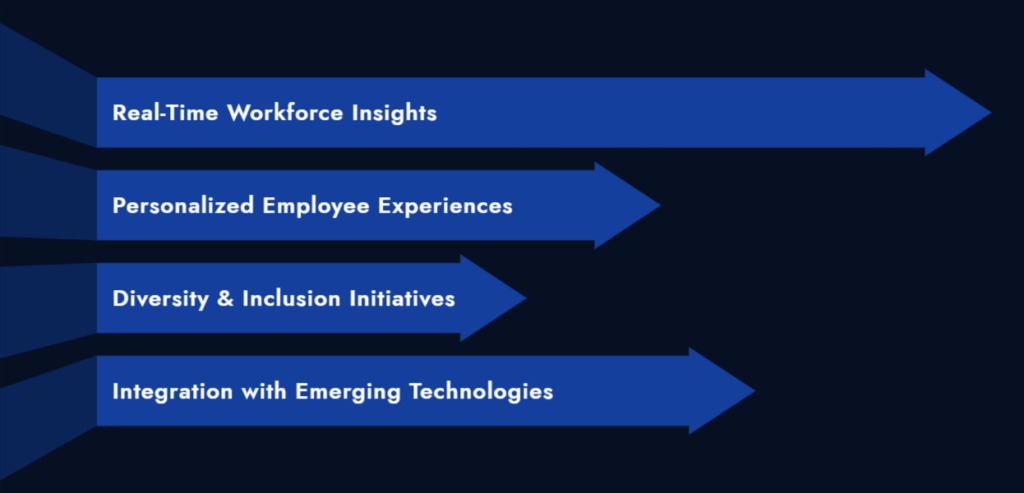
The advancement of AI-driven analytics will propel human resource optimization. Novel technologies and trends will push the boundaries of how these tools perform, and refine the impact they achieve. Some emerging key trends include:
- Real-Time Insights: AI tools will increasingly offer real-time data analysis, enabling businesses to respond to workforce challenges and opportunities as they arise. This agility will be critical in fast-paced industries such as tech and retail.
- Enhanced Personalization: AI driven analytics will enable hyper-personalized employee experiences, from onboarding to career development. For instance, tailored learning paths will ensure that employees acquire skills relevant to their individual roles and aspirations.
- Diversity and Inclusion Initiatives: AI-powered platforms will play a pivotal role in promoting workplace diversity by identifying and eliminating biases in hiring and performance evaluations. Organizations will be better equipped to create inclusive environments that foster innovation and collaboration.
- Integration with Emerging Technologies: The convergence of AI with blockchain, IoT, and augmented reality will unlock new possibilities for workforce management. For example, IoT devices can provide real-time productivity metrics, which AI tools can analyze to suggest workflow improvements.
- Ethical AI Practices: As AI adoption grows, organizations will focus on ethical practices, such as ensuring transparency in decision-making and safeguarding employee data. These practices will build trust and promote sustainable use of AI-driven analytics.
How Leaders Can Act on AI-Driven Workforce Insights
AI-driven analytics is revolutionizing workforce optimization, offering organizations the tools to make data-driven decisions, improve efficiency, and stay competitive in a dynamic job market. By embracing AI-driven recruitment intelligence and analytics, businesses can attract top talent, enhance employee satisfaction, and achieve long-term success.Take the first step toward transforming your workforce strategy with AI-driven analytics. Sign up on JobsPikr today and unlock powerful solutions for workforce planning, recruitment, and optimization.
Move From Workforce Guesswork to Workforce Intelligence
Use AI-driven analytics to anticipate talent needs, track skills demand, and plan with confidence.
FAQs
What is AI-driven analytics in workforce management?
AI-driven analytics uses artificial intelligence to analyze workforce data, identify patterns, and generate predictive insights that support workforce planning, recruitment, and performance management.
How does AI-driven analytics improve recruitment outcomes?
AI-driven analytics helps identify high-quality candidates faster, improves job matching, reduces bias, and continuously learns from past hiring outcomes to refine recruitment strategies.
Is AI-driven analytics suitable for all organizations?
Yes. While large enterprises may adopt it at scale, small and mid-sized organizations can also benefit by using AI-driven analytics to gain visibility into hiring trends and workforce needs.
How does AI-driven analytics support workforce planning?
It forecasts workforce demand, identifies skill gaps, models different business scenarios, and helps organizations plan hiring and reskilling initiatives proactively.
How can organizations get started with AI-driven analytics?
Start by defining clear workforce goals, ensuring data readiness, selecting the right analytics platform, and training teams to interpret and apply insights effectively.