
**TL;DR**
Most hiring problems in 2025 come from the same place. Teams are making decisions without really knowing what the market looks like right now.
AI tools help with speed and scale, but they do not fix bad assumptions. If your systems are learning from old job data, they are optimizing for a version of the market that no longer exists. Skills that mattered last year may already be cooling off. Roles competitors are hiring for today may not even be on your radar yet.
Good talent acquisition now comes down to awareness. Knowing which skills are getting harder to find. Knowing where talent supply is drying up or opening up. Knowing when a role should be hired immediately and when it makes more sense to wait or rethink it.
Teams that stay close to live job market signals spend less time firefighting. They ask fewer “why is this role so hard to close” questions because they already know the answer before they start hiring.
The future of talent acquisition is being shaped less by new tools and more by how well hiring teams understand the market they are hiring into.
Hiring used to be predictable. Teams opened roles, sourced candidates, and filled positions based on what worked last year. That approach breaks down quickly when skills shift, competitors hire aggressively, and candidates disappear faster than expected.
Most teams are not short on tools. They already use an ATS, sourcing platforms, and automation. What they are short on is context. They open roles without knowing how crowded the market is, how long hiring is likely to drag on, or whether they are chasing a skill set that everyone else is chasing too.
That is where talent acquisition has changed. The work is less about running a process cleanly and more about making the right calls upfront. When to push. When to pause. When a role needs to be reshaped before it ever goes live.
The goal of this piece is simple. To break down what talent acquisition actually looks like in 2025, where recruitment models fall apart, and how teams are adjusting before hiring turns into damage control.
What is Talent Acquisition?
Before diving into the future of talent acquisition, it is critical to define what talent acquisition entails. Talent acquisition is a strategic approach to identifying, attracting, and onboarding top talent to meet an organization’s needs.
Unlike traditional recruitment, which focuses on filling specific positions, talent acquisition emphasizes long-term human resource planning and finding appropriate candidates for positions that are crucial for growth and development.
This involves a continuous cycle of workforce planning, employer branding, candidate management, and analytics. The ultimate goal is to build a sustainable pipeline of high-quality candidates to drive future business success.
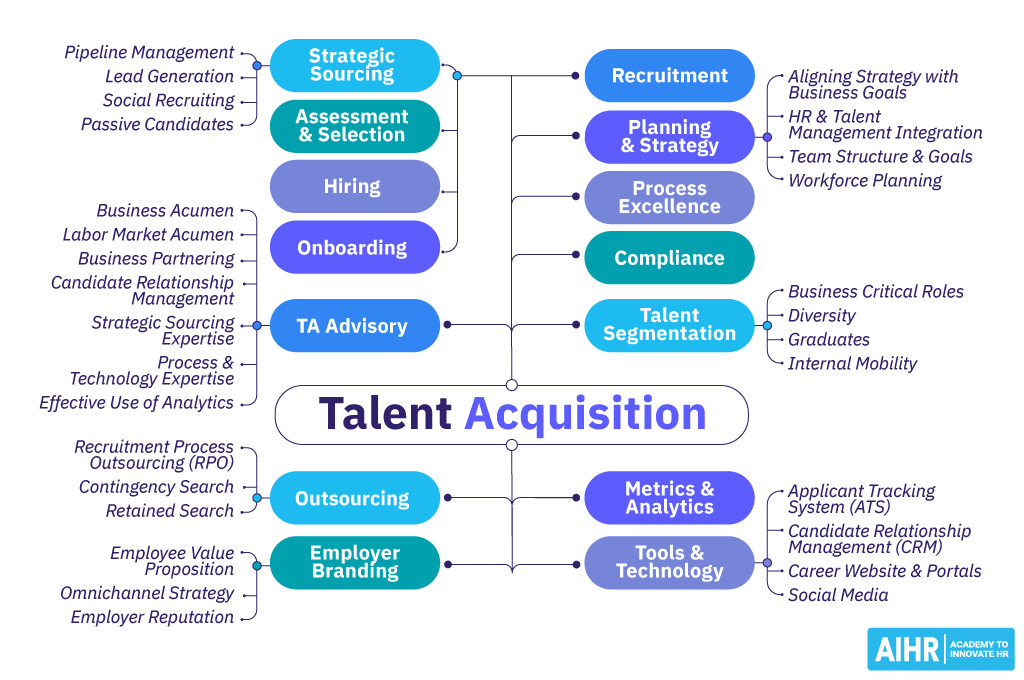
Image Source: AIHR
See the Job Market Before You Start Hiring
Stop guessing how competitive a role is. Use real-time job data to understand skills demand, hiring activity, and market pressure before roles go live.
Talent Acquisition vs Recruitment
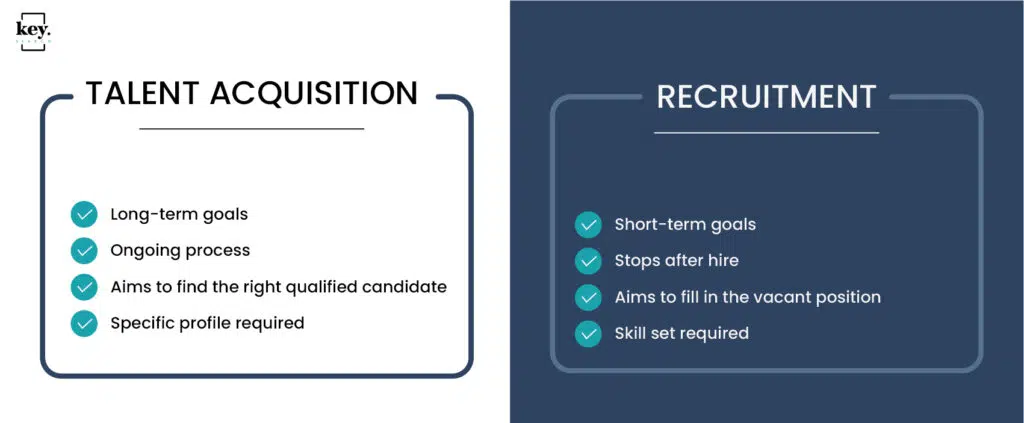
Image Source: Medium
People mix up recruitment and talent acquisition because they happen in the same teams and use the same tools. The difference only becomes obvious when hiring gets difficult. That is when a purely recruitment-led approach starts to crack, and a talent acquisition mindset starts to matter.
Recruitment is triggered by an open role
Recruitment begins once headcount is approved. A vacancy exists, so the goal is to fill it. The focus stays on sourcing, screening, and moving candidates through the process quickly.
This works well for roles that are familiar and easy to hire for. It struggles the moment the market becomes competitive or the role itself is poorly defined.
Talent acquisition starts before hiring begins
Talent acquisition kicks in earlier. Teams look at the role before it goes live and push on the assumptions behind it. Is this actually the right role? Are the expectations realistic for the market? Are we asking for skills that rarely show up together?
Catching these issues early prevents wasted effort later.
Recruitment treats each hire in isolation
In a recruitment model, each open role is its own task. Once it is filled, the team moves on.
Talent acquisition works across hires. It looks for repeat friction. Roles that take longer every quarter. Skills that consistently draw weak pipelines. Gaps between expectations and reality that never seem to close.
Talent acquisition focuses on avoiding surprises
The biggest difference shows up in outcomes. Recruitment success is closing roles. Talent acquisition success is fewer unexpected problems.
Fewer roles dragging on longer than planned. Fewer last-minute approvals to increase compensation. Fewer situations where the market turns out to be far tougher than anyone expected.
Why the distinction matters in 2025
Hiring conditions change too quickly now for a purely reactive approach. Candidate behavior shifts fast, and competitors move even faster.
Recruitment fills seats. Talent acquisition helps teams avoid repeating the same hiring mistakes under new market pressure.
What is The Future of Talent Acquisition?
The future of talent acquisition lies in the integration of advanced technologies and innovative strategies to attract top talent. Artificial intelligence (AI) and machine learning will transform recruitment processes through predictive analytics and personalized candidate experiences.
Digital platforms will enable global talent sourcing, expanding the talent pool beyond traditional geographical boundaries. Companies will increasingly focus on employer branding, using social media and virtual reality (VR) to create immersive job previews. Additionally, diversity, equity, and inclusion (DEI) initiatives will be paramount, ensuring equitable opportunities for underrepresented groups and fostering a more inclusive workplace environment overall.
Artificial Intelligence and Machine Learning in Hiring
Artificial Intelligence (AI) and Machine Learning (ML) are transforming the hiring landscape by enhancing efficiency and decision-making. AI-driven tools analyze vast amounts of data to identify patterns and predict candidate success, leading to more informed hiring decisions.
ML algorithms can automate repetitive tasks, such as resume screening and interview scheduling, saving recruiters significant time. Additionally, AI can help mitigate unconscious bias by focusing on data-driven qualifications over any subjective criteria.
Organizations leveraging these technologies benefit from a streamlined hiring process and improved talent acquisition strategies that align closely with actual performance metrics.
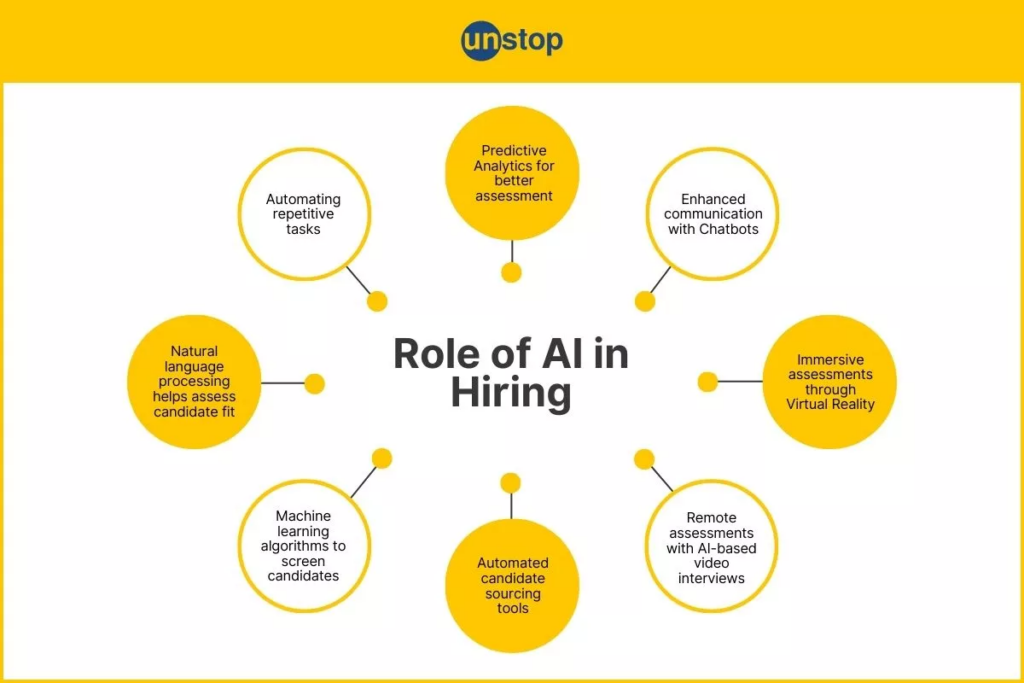
Image Source: Unstop
The Role of Automation in Streamlining Processes
Automation significantly enhances efficiency in talent acquisition by reducing repetitive tasks and minimizing human error. Talent acquisition platforms can handle the bulk of resume screening, scheduling interviews, and managing candidate communication. This allows human recruiters to focus on strategic aspects like engaging with candidates and building relationships. Key benefits include:
- Reduced Time-to-Hire: Faster processing of applications.
- Improved Candidate Experience: Prompt communication.
- Enhanced Decision-Making: Data-driven insights and analytics.
By integrating automation, organizations can scale their hiring operations efficiently, ensuring they remain competitive in the fast-paced job market.

Image Source: SHRM
Impact of Remote Work on Talent Acquisition
Remote work has significantly altered talent acquisition strategies, enabling companies to access a broader talent pool unrestricted by geographic limitations. This shift encourages diversity and inclusion, as organizations can hire individuals from various cultural, ethnic, and socio-economic backgrounds. Moreover, companies are no longer confined to local talent shortages, which can mitigate skill gaps and enhance overall workforce expertise.
However, recruiters must adapt to new challenges, such as assessing candidates’ ability to work independently and maintain productivity remotely. Embracing digital tools for virtual interviews, assessments, and onboarding is crucial for successfully navigating this paradigm shift.

Image Source: DistantJob
Using Social Media & Digital Platforms for Recruitment
Harnessing the power of social media and digital platforms has emerged as an indispensable strategy in modern talent acquisition. Recruiters leverage platforms like LinkedIn, Twitter, and Glassdoor to identify and engage potential candidates. Utilizing targeted ads, they can reach a diverse and global talent pool.
Tools such as AI-driven chatbots on career sites streamline the application process and improve candidate experience. By integrating analytics, recruiters can track engagement metrics and refine their strategies. Platforms with professional networks also provide deeper insights into candidate profiles, enhancing the recruitment process significantly.
The Rise of Gig Economy and Freelance Talent
The gig economy has seen exponential growth, transforming traditional workplaces and reshaping talent acquisition strategies. Companies are increasingly leveraging freelance professionals to meet dynamic business needs, driven by the demand for specialized skills and cost-efficiency. Platforms like Upwork, Fiverr, and Toptal facilitate this trend, offering businesses access to a global pool of versatile talents. Benefits include:
- Flexibility: Adapt workforce size based on project demands.
- Expertise: Access niche skills not available in-house.
- Cost-Efficiency: Reduce long-term employment expenses.
This shift calls for innovative recruitment tactics and robust freelance management tools to ensure seamless collaboration and quality outcomes.
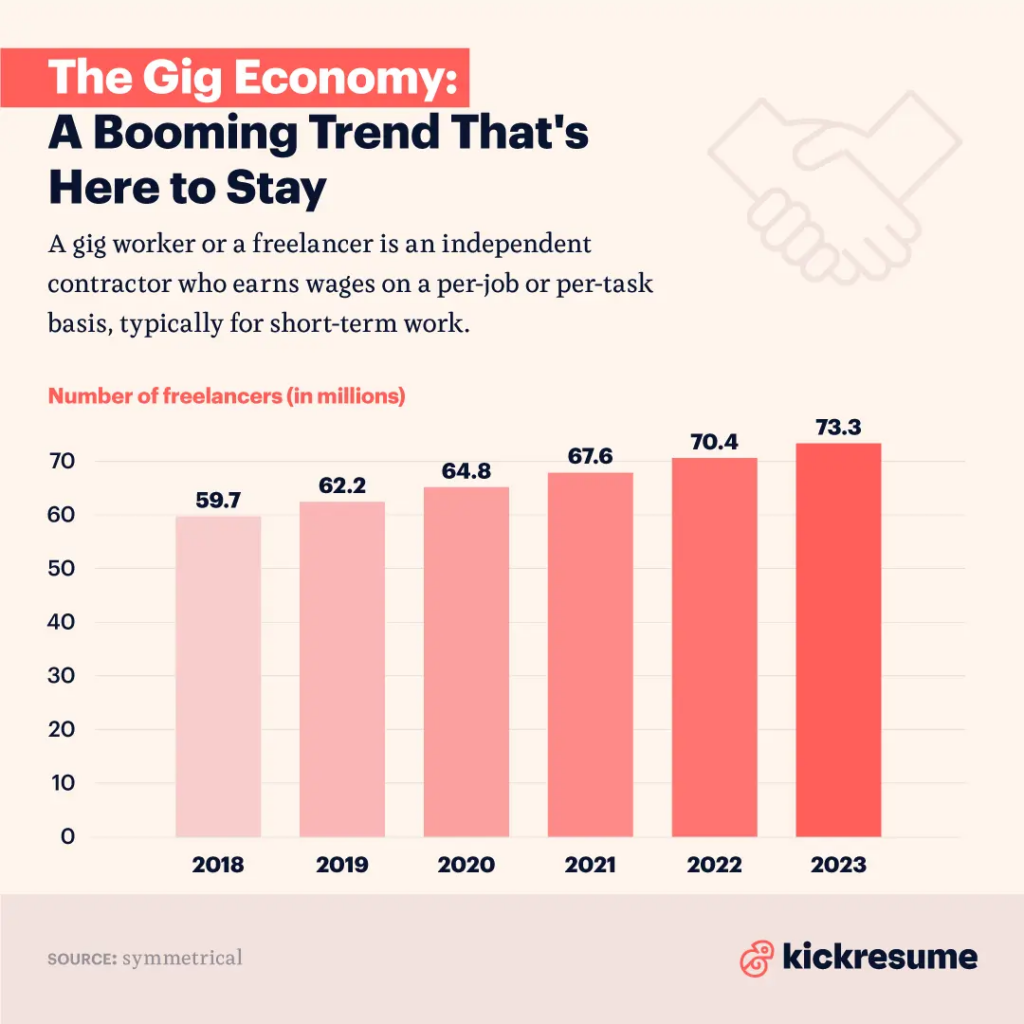
Image Source: KickResume
Diversity and Inclusion as Core Hiring Strategies
In today’s dynamic workforce, diversity and inclusion are increasingly becoming central to talent acquisition strategies. Companies are leveraging advanced tools and practices to build teams that reflect a wide range of experiences, perspectives, and backgrounds.
These strategies involve:
- Implementing unbiased recruitment technologies.
- Conducting inclusive hiring training for recruiters.
- Adopting diverse interview panels.
- Creating supportive workplace cultures for all employees.
Building such diverse teams is not merely a moral imperative but also a business one, as it fosters innovation and drives better decision-making. Inclusive hiring processes ensure a wider talent pool and enhance the company’s adaptability in a global market.
Future Skills and Competencies in Demand
The evolving job market places high demand on a range of future skills and competencies pivotal for success. Key areas include digital literacy, data analytics, and artificial intelligence, as automation and advanced technologies become more integrated. Critical soft skills such as emotional intelligence, adaptability, and creative problem-solving are equally essential.
Businesses seek professionals proficient in cross-functional collaboration and strategic thinking. Proficiency in emerging technologies like blockchain and cybersecurity is increasingly important. Continuous learning and adaptability will remain crucial as these trends accelerate, influencing the competencies required for tomorrow’s workforce.

Image Source: World Economic Forum
Sustainable and Ethical Recruitment Practices
Implementing sustainable and ethical recruitment practices has become crucial for organizations aiming to attract top talent while maintaining corporate responsibility. Companies are increasingly focusing on diversity and inclusion, ensuring fair hiring processes that avoid biases. There’s a growing trend towards employing AI tools to anonymize resumes, preventing discrimination based on gender, race, or age.
Additionally, businesses are adopting green hiring practices that involve virtual interviews to minimize carbon footprints. Internally, fostering environments where employees see growth ensures retention. External certification, such as B Corp, may validate these efforts, reinforcing the commitment to ethically responsible recruitment methodologies.
Where the Future of Talent Acquisition Is Heading
Most hiring teams are not trying to do anything wrong. They are responding to pressure. Tight timelines. Changing requirements. Hard-to-find skills. The problem is that many hiring decisions are still made with incomplete context.
That is the bigger shift behind the future of talent acquisition in 2025.
Hiring is no longer just an execution problem. It is a decision-making problem. Teams are expected to know how competitive a role will be before it goes live. They are expected to anticipate skill shortages instead of discovering them halfway through a stalled search. They are expected to advise the business, not just react to it.
Recruitment alone cannot carry that load. Filling roles efficiently still matters, but speed falls apart when assumptions are wrong. Talent acquisition has stepped in to close that gap. It focuses on understanding the market first, shaping roles realistically, and reducing avoidable friction before it shows up in the funnel.
Technology helps, but it does not solve this on its own. AI can screen faster. Automation can move candidates along. None of that fixes a role that is mis-scoped or aimed at a shrinking talent pool. What actually changes outcomes is awareness. Knowing what skills are heating up. Knowing where competition is intensifying. Knowing when a hiring plan needs to be adjusted instead of pushed harder.
This is why access to reliable job market data has quietly become one of the most valuable inputs in talent acquisition. It gives teams a way to check assumptions against reality. It replaces guesswork with signals. It helps prevent the same hiring problems from repeating quarter after quarter.
JobsPikr supports this shift by providing structured, real-time job data across roles, skills, companies, and locations. That data helps talent teams see how the market is moving, not after the fact, but while decisions are still being made.
The teams that adapt best in 2025 are not necessarily hiring more. They are hiring with fewer surprises. They set expectations early. They make tradeoffs consciously. They treat talent acquisition as an ongoing process of reading the market and responding to it.
Hiring will not get simpler. But it can get calmer, more predictable, and more aligned with reality. That is what the future of talent acquisition looks like when it is done well.
See the Job Market Before You Start Hiring
Stop guessing how competitive a role is. Use real-time job data to understand skills demand, hiring activity, and market pressure before roles go live.
FAQs
What is the future of talent acquisition?
The future of talent acquisition looks less like running hiring processes and more like making judgment calls early. Teams are being pulled into decisions about role scope, timing, and feasibility before anything is posted. A lot of the work happens before sourcing even begins, because getting those early calls wrong is what causes roles to drag on for months.
What is the 2025 talent trend?
In 2025, the biggest talent trend is that companies are finally paying attention to skills instead of relying on job titles and old hiring templates. Hiring teams are also watching the market more closely. They want to know where demand is building, which skills are getting harder to find, and how competitors are changing their roles instead of guessing based on last year’s experience.
What career will be in demand in 2025?
Careers tied to data, AI, software, security, and cloud systems continue to draw heavy demand, but not all roles within those fields are equal. Companies are struggling most with roles that sit between functions, like people who can work with data and still understand business needs, or engineers who can operate in changing environments rather than fixed job scopes.
Why is talent acquisition harder now than before?
Hiring feels harder because the market is less forgiving. Candidates move quickly, roles change mid-search, and competition often shows up without warning. Many problems start when teams assume a role will be “business as usual,” only to realize too late that the talent pool is thinner or more expensive than expected.
How can companies prepare for the future of talent acquisition?
The companies that handle this best spend more time upfront. They check how competitive a role really is, stay flexible on requirements, and adjust plans when the market shifts instead of pushing harder on broken searches. It does not remove all friction, but it prevents the same problems from repeating over and over again.