


- **TL;DR**
- Why GDPR Compliance Matters for Job Data and Labor Market Intelligence
- Looking for GDPR-Compliant Job Data You Can Rely On
- What GDPR Compliance Means for Job Data Providers Today
- How CCPA Shapes Job Data Collection for US-Based Companies
- The Global Compliance Landscape Beyond GDPR and CCPA
- Looking for GDPR-Compliant Job Data You Can Rely On
- How JobsPikr Ensures End-to-End Data Compliance Across All Regions
- Why Compliance Builds Trust for HR, Talent Intelligence, and Product Teams
- JobsPikr’s Compliance Playbook: What Customers Can Expect
- Looking for GDPR-Compliant Job Data You Can Rely On
- Real Examples of Ethical Compliance in the Job Data Ecosystem
- Compliance Isn’t a Checkbox, It’s the Foundation of Trust
- Looking for GDPR-Compliant Job Data You Can Rely On
- FAQs
**TL;DR**
GDPR compliance is no longer just a legal checkbox for job data. It is the foundation of trust for any company using labor market data to make hiring, workforce planning, or product decisions. As regulations like GDPR and CCPA tighten globally, how job data is collected, processed, and stored matters as much as the insights it delivers.
Job data sits in a unique space. It is public, but not unregulated. Poor compliance data collection practices can expose companies to legal risk, reputational damage, and unreliable analysis. This is especially true when labor data feeds analytics platforms, AI models, or long-term workforce strategies.
In this article, we break down what GDPR compliance means in the context of job data, how CCPA applies to labor market data in the US, and why global data compliance standards are converging. We also explain how JobsPikr approaches compliant data collection by design, focusing on transparency, security, and ethical use of job data.
If you are a product leader, HR stakeholder, or data team relying on labor market data, this guide will help you understand what “compliant” really looks like and why it is essential for building intelligence you can trust.
Why GDPR Compliance Matters for Job Data and Labor Market Intelligence
If you work with job data long enough, you start hearing the same assumption again and again.
“It’s public data, so compliance doesn’t really apply.”
That assumption is where most problems begin.
GDPR compliance is not only about secret, private, personal information. It’s about whether your data collection and use is responsible, limited, and transparent. And when you’re working with job data at scale, “responsible” stops being a nice-to-have and becomes the whole point.
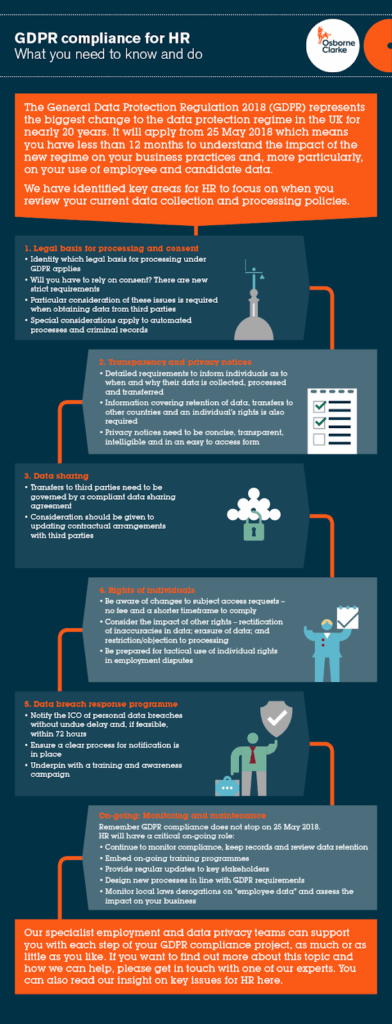
Image Source: osborneclarke
The rise of regulated data collection worldwide
Ten years ago, most companies could get away with saying, “We only collect what’s publicly available.” Today, that line doesn’t impress anyone. Not legal teams, not security teams, not procurement, not buyers.
Data compliance expectations have tightened across regions. GDPR in the EU set a high bar, CCPA pushed similar expectations in the US, and other countries have followed with their own versions of “tell me what you collect, why you collect it, and how you protect it.”
And here’s the practical impact: even if your use case is totally normal, like analyzing labor market data to see hiring trends, you still need compliance data collection practices that hold up under review. If they don’t, a simple “market intelligence” project can turn into a long security questionnaire, a blocked vendor approval, or a fire drill with legal.
Why job data sits in a sensitive grey zone
Job postings look clean. A role title. A location. A description. A date. Sometimes skills. Sometimes a category.
But job data is messy in real life.
Some postings include recruiter emails. Some include phone numbers. Some include hiring manager names. Some include very specific location details that make it easier than you’d expect to identify individuals tied to the hiring process.
Even if your goal is to work with job data, you can accidentally collect personal data. And once personal data enters the pipeline, GDPR compliance becomes much more serious. It changes how you store, retain, share, and govern the dataset.
This is why “public” is not the same as “free to collect anything.” Public is a visibility state. Compliance is a responsibility.
If you want labor data you can use confidently, the safest approach is simple: focus on market signals, not people. That means collecting what helps you understand demand, skills, roles, locations, and trends, while filtering out anything that looks like personal contact information.
What HR and data teams often get wrong about compliance risks
The first mistake is thinking compliance is the provider’s problem only.
In real life, if you use labor market data inside your dashboards, reports, or models, you are part of the chain. Your company’s name is attached to the decision-making that data supports. So if someone asks “where did this come from” and the answer is shaky, it becomes your risk too.
The second mistake is assuming compliance slows everything down.
It can, if it’s bolted on at the end. But when GDPR compliance is built into how job data is collected and processed, it actually makes life easier. Cleaner inputs. Fewer weird fields. Better governance. Less internal debate about whether the dataset is safe to use for analytics, AI, or sharing across teams.
The third mistake is thinking compliance is only about avoiding penalties.
That’s the wrong motivation. The real win is trust. When your data compliance is solid, stakeholders stop second-guessing the dataset and start using it. That’s when labor data becomes useful across HR, product, and strategy.
Looking for GDPR-Compliant Job Data You Can Rely On
Learn how JobsPikr’s compliance-first data collection supports secure, ethical labor market intelligence at scale.
What GDPR Compliance Means for Job Data Providers Today
When people say “gdpr compliance” in the job data world, they often mean “we’re not doing anything shady.” That’s a start, but it’s not a standard. GDPR compliance is much more specific than that.
At a practical level, GDPR compliance is about building a labor data pipeline that has clear boundaries. It collects what’s needed for labor market data insights, filters what shouldn’t be collected, keeps the data secure, and makes it easy to explain what you do if a customer, auditor, or regulator asks.
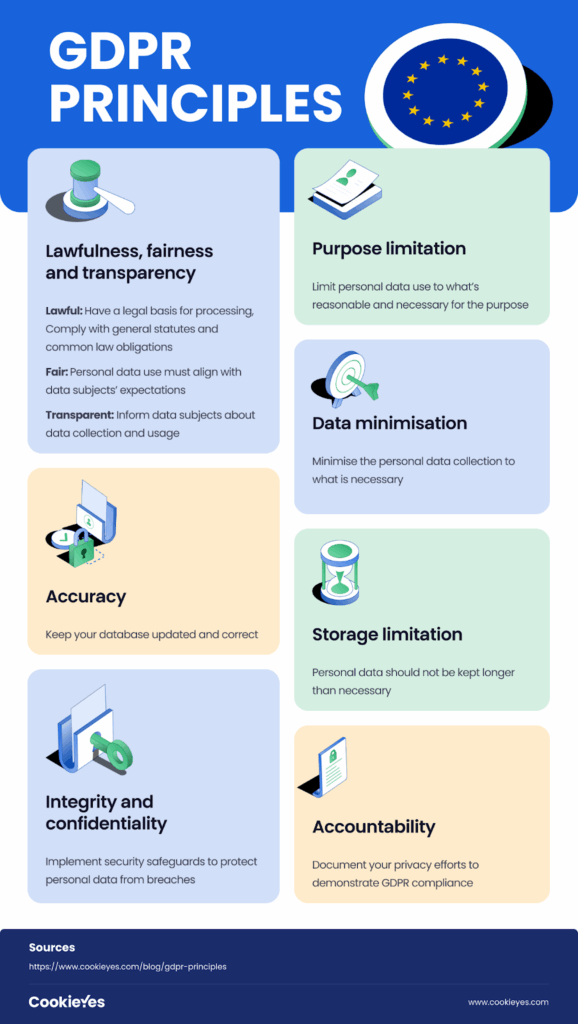
Image Source: cookieyes
Personal data risk in job postings
Job postings are not supposed to be personal-data heavy, but in the real world they often are.
Some postings include recruiter names and direct emails. Some include phone numbers. Some embed tracking parameters that link back to individuals in internal systems. Some include office addresses so precise that they narrow down teams, departments, or even specific hiring contacts.
That matters because GDPR’s definition of personal data is broad. It is not limited to “private” information. If a piece of data can identify a person directly or indirectly, it can fall under GDPR. In a job data context, that means the risk is less about the job title itself and more about the “extra stuff” that can hitch a ride inside the posting.
A compliant approach is not to pretend this never happens. It is to design your compliance data collection process to catch and remove it before it becomes part of your deliverable dataset.
Data minimization by design
Here’s a simple way to think about it.
If a field does not improve labor market analysis, it should not be in the pipeline.
Most teams using job data want market signals like demand by role, skills trends, hiring velocity, location heatmaps, seniority mix, and employer activity. None of that requires personal contact details.
So gdpr compliance in job data usually looks like a deliberate “minimum viable dataset” approach. You keep the structured fields that drive analysis, and you block or remove fields that create privacy and security risk.
That is not only safer. It also makes the data cleaner. When you cut out messy personal fields, the dataset becomes easier to standardize, easier to compare across sources, and easier to share internally without panic.
Purpose limitation
Purpose limitation sounds like legal language, but it’s basically common sense: you collect job data for labor market intelligence, not to build a database of people.
That distinction matters because it shapes every downstream decision. What you store. What you expose via API. How long you retain it. Whether you allow redisplay or republishing. Whether you let customers search by personal identifiers.
A compliant provider draws that line early and keeps it consistent.
Retention discipline
Retention is one of the most ignored parts of data compliance until someone asks a painful question: “Why do we still have this from three years ago?”
Job postings change fast. They get updated, removed, reposted, duplicated. For labor market data, you often need history, because trends matter. But gdpr compliance still expects a retention logic that is defensible.
So the goal is not “keep everything forever.” The goal is “keep what’s needed for analysis, versioning, and auditability, and avoid keeping unnecessary personal fragments.”
Controlled access
Even compliant data collection can become non-compliant use if access is sloppy.
In practice, job data providers earn trust by enforcing controls around who can access datasets, how those datasets are delivered, and how usage is monitored. This becomes even more important when labor data is fed into multiple internal teams and tools across a customer’s organization.
This is also where security and compliance stop being separate conversations. For buyers, they blend together.
Transparency and documentation that holds up in procurement
Let’s be honest. Most stakeholders are not reading privacy policies for fun.
What they need is clarity that can survive internal scrutiny. How data is collected. What categories of data are included. What is excluded. What your controls are. What happens when a customer has a compliance concern.
This is where JobsPikr’s positioning matters. If you want customers to trust your job data, you need to make compliance understandable to non-lawyers while still being accurate enough for legal and security reviews.
That is why the best compliance programs do not hide behind vague statements. They explain the pipeline decisions in plain language, and they keep the documentation ready for buyer questions.
How CCPA Shapes Job Data Collection for US-Based Companies
If GDPR feels like the strict parent in the room, CCPA is more like the pragmatic one. Different tone, different structure, but still very serious about accountability.
A lot of teams assume CCPA is “lighter” than GDPR and therefore less relevant to job data. That assumption usually comes from not reading the fine print. CCPA may be narrower in scope, but when it applies, it applies very clearly. And for companies using labor data in the US, it cannot be ignored.
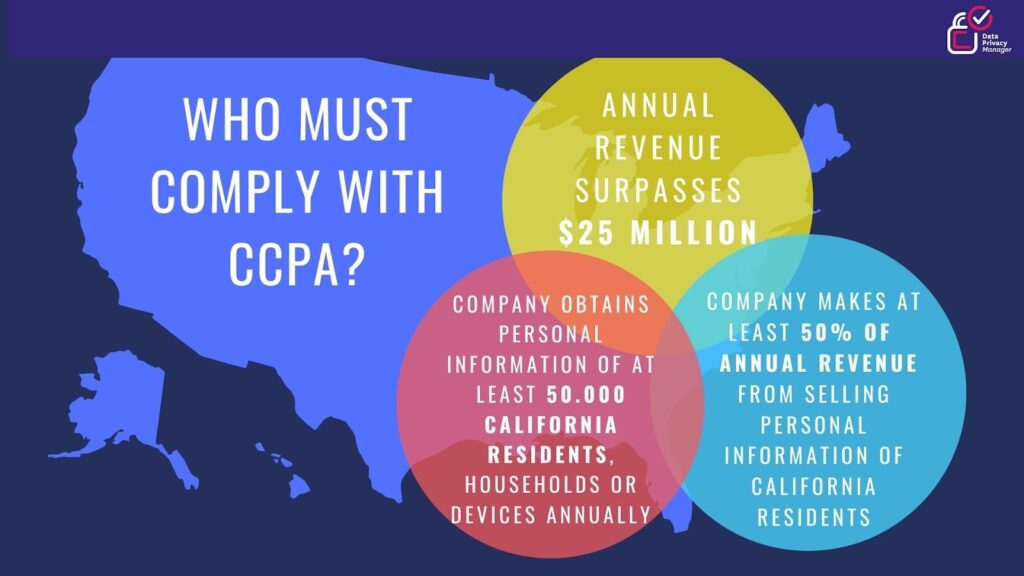
Image Source: dataprivacymanager
How CCPA defines personal data in a labor data context
CCPA focuses on “personal information” linked to California residents. Like GDPR, the definition is broad. It includes identifiers, contact details, online identifiers, and any data that could reasonably be linked to an individual.
Now here’s where job data enters the conversation.
Most labor market data is not about candidates. It is about roles, companies, skills, and demand patterns. That’s good news. But similar to GDPR, the risk shows up when job postings include recruiter contact details, emails, or other identifiers that point to a real person.
Under CCPA, even collecting that data unintentionally can create obligations around disclosure, access, and deletion rights. And unlike GDPR, CCPA explicitly gives individuals the right to ask what data you have collected about them and to request its deletion.
For job data providers, that means the safest path is prevention. If you never store personal identifiers in the first place, you never have to manage downstream rights requests tied to them.
Practical CCPA alignment for job data providers
CCPA compliance in labor data is less about consent banners and more about operational discipline.
A compliant approach usually includes clear internal rules around what data categories are allowed, automated filtering of personal fields during data collection, and documented processes that explain how consumer rights would be honored if applicable.
JobsPikr’s approach follows that logic. The platform is designed to collect job data as market-level intelligence, not as a record of individuals involved in hiring. That distinction keeps the dataset aligned with CCPA expectations while still delivering useful labor market data.
It also simplifies things for customers. If you are an HR or product team using job data for analytics, you do not want to be in the position of responding to deletion requests for recruiter emails you never needed in the first place.
Key differences between GDPR and CCPA for labor market data teams
This is where teams often get confused.
GDPR is principle heavy. It emphasizes lawful basis, purpose limitation, minimization, and proportionality. CCPA is rights driven. It focuses on consumer control, disclosure, and opt-out mechanisms.
In practice, that means GDPR compliance shapes how data pipelines are designed, while CCPA shapes how data usage is explained and governed. For job data providers operating globally, the safest approach is to meet the stricter standard by default.
When gdpr compliance is built into compliance data collection, CCPA alignment usually follows naturally. You are already minimizing personal data, already documenting purpose, and already controlling access. That overlap is intentional and valuable.
Why US buyers increasingly ask about CCPA anyway
Even if your company is not headquartered in California, chances are your customers, partners, or users are. That’s why procurement and legal teams in the US now routinely ask CCPA-related questions during vendor evaluation.
They want to know whether labor market data can introduce hidden privacy risk into their systems. They want confidence that using job data will not trigger consumer data obligations they are not prepared to handle.
This is where transparency matters again. When a provider can clearly explain how job data is collected, what is excluded, and why the dataset avoids personal identifiers, the conversation becomes easier. Compliance stops being a blocker and becomes part of the trust story.
The Global Compliance Landscape Beyond GDPR and CCPA
If GDPR and CCPA were the only rules in play, compliance would already be challenging enough. But the reality for most companies using labor market data is broader. Regulations are spreading, expectations are converging, and “local-only compliance” is slowly becoming a myth.
For job data providers and the teams that rely on them, global compliance is no longer about memorizing every law. It is about understanding the patterns behind them and building data collection practices that hold up everywhere.
How data protection laws are evolving across regions
After GDPR, many countries realized something important. Waiting for problems to surface before regulating data does not work. So instead of copying GDPR word for word, they started building laws that shared the same core ideas.
Brazil introduced the LGPD, which mirrors GDPR principles around lawful processing and data minimization. Canada’s PIPEDA continues to evolve with stronger consent and accountability requirements. Australia’s Privacy Act is being reviewed with tighter enforcement powers. India’s Digital Personal Data Protection Act focuses heavily on purpose limitation and storage controls.
The details differ, but the direction is consistent. Governments want companies to explain what data they collect, why they collect it, and how they protect it. That applies to labor data just as much as consumer or marketing data.
For global talent teams, this means job data sources must be evaluated through a wider lens. Compliance in Europe alone is not enough if the same dataset feeds systems used in North America, Asia, or LATAM.
The shared principles shaping global job data compliance
When you strip away legal language, most modern data protection laws agree on a few core principles. These principles matter a lot for compliance data collection in the job data space.
First, collect only what you need. This directly supports data minimization and reduces the risk of accidentally handling personal data. Second, be clear about purpose. Job data collected for labor market analysis should not quietly become a people-tracking dataset. Third, protect what you store. Security, access controls, and retention policies are no longer optional extras.
Finally, transparency has become non-negotiable. Buyers, auditors, and partners expect clear answers. Vague statements no longer pass procurement reviews, especially for enterprise customers.
These shared principles are why gdpr compliance has become the baseline, even outside Europe. It offers a practical framework that aligns well with most global expectations.
Why global talent teams now demand compliant labor data sources
This shift is coming from buyers, not just regulators.
HR, product, and workforce planning teams increasingly use labor market data to power dashboards, forecasts, and AI-driven tools. Once that data enters core decision systems, its origin matters. If compliance is unclear, adoption slows. Legal teams raise flags. Security teams ask questions. Projects stall.
On the other hand, when a job data provider can clearly demonstrate global compliance standards, the data moves faster internally. It gets approved more easily. It gets reused across teams. It becomes part of long-term planning instead of a one-off experiment.
That is the real business impact of compliance. It turns job data from a risky external input into a trusted internal signal.
Looking for GDPR-Compliant Job Data You Can Rely On
Learn how JobsPikr’s compliance-first data collection supports secure, ethical labor market intelligence at scale.
How JobsPikr Ensures End-to-End Data Compliance Across All Regions
Talking about compliance is easy. Building it into a real job data pipeline is where things usually fall apart.
What makes compliance hard is not the law itself. It is scale. When you are collecting labor market data across thousands of sources and multiple regions, manual checks do not work. Policies alone do not work. You need systems that enforce compliance by default.
This is where JobsPikr’s approach is different. Compliance is not treated as a legal afterthought. It is treated as a design constraint from the first step of data collection.
A compliance-first data collection framework
JobsPikr’s labor data pipeline is built around one simple rule: if a data element creates privacy risk and does not add market intelligence value, it does not belong in the dataset.
That rule shapes everything downstream, from which sources are approved to how fields are parsed, stored, and delivered.
Source approval and vetting
Not all job sources are equal.
Before any source becomes part of the JobsPikr ecosystem, it goes through a vetting process that looks at structure, consistency, and compliance risk. Sources that regularly embed personal contact information or mix job postings with individual profiles are treated very differently from clean, role-focused sources.
This step matters because compliance data collection starts at the source. If you allow high-risk inputs, you spend the rest of the pipeline trying to clean up problems that should never have entered in the first place.
Automated exclusion of personal data
Even vetted sources can contain noise. That is why JobsPikr applies automated filters designed to identify and exclude personal data signals during ingestion.
This includes recruiter emails, phone numbers, personal names tied to contact fields, and other identifiers that do not belong in labor market data. These controls operate continuously, not as one-time cleanups.
The result is job data that stays focused on roles, skills, locations, and demand trends. Not people.
Secure storage and retention controls
Compliance does not end once the data is collected.
JobsPikr applies strict storage and retention logic to job data, balancing historical analysis needs with data compliance expectations. Data is stored securely, access is controlled, and retention policies are designed to support trend analysis without keeping unnecessary fragments longer than needed.
This matters when labor data is used for longitudinal studies, forecasting, or AI training. You want historical depth without compliance drift.
Schema checks and quality gates that support compliance
One thing teams often miss is how closely data quality and data compliance are linked.
If your schema is loose, compliance becomes guesswork. If your fields are well-defined, controlled, and validated, compliance becomes enforceable.
JobsPikr uses schema checks and quality gates to make sure job data conforms to expected structures. Fields are validated, duplicates are handled, and anomalies are flagged early. This reduces the risk of accidental personal data slipping through and makes the dataset safer to use across teams.
It also gives customers confidence. When your labor market data arrives clean and predictable, internal stakeholders trust it faster.
Transparency that works for real buyers
Most buyers do not want a ten-page legal explanation. They want to understand, in plain terms, how data is collected and whether it aligns with their internal policies.
JobsPikr supports this by maintaining clear documentation around data sources, collection methods, exclusions, and compliance safeguards. This documentation is designed to support procurement reviews, security questionnaires, and internal audits without turning into a legal maze.
Why Compliance Builds Trust for HR, Talent Intelligence, and Product Teams
Once compliance is done right, something interesting happens. Conversations change.
Instead of asking, “Is this data safe to use?” teams start asking, “What else can we do with this?” That shift is important, because trust is what turns labor market data from a side project into a core input for decision-making.
Strong gdpr compliance is not only about avoiding problems. It is about giving teams confidence that the insights they rely on are built on solid ground.
Reduced legal and governance friction across teams
In many organizations, labor data touches multiple stakeholders. HR uses it for workforce planning. Product teams use it to understand hiring trends in their market. Strategy teams use it to assess expansion opportunities. Legal and security teams review it to manage risk.
When compliance data collection is unclear, every one of those handoffs becomes slower. Legal asks follow-up questions. Security wants additional controls. Procurement pauses approvals. Momentum gets lost.
When compliance is clear and documented, those conversations move faster. Teams know what the data includes, what it excludes, and why. That clarity reduces internal friction and makes labor market data easier to operationalize across departments.
More reliable insights from cleaner labor market data
There is also a quieter benefit to compliance that often gets overlooked. Compliant data is usually better data.
When a job data provider actively filters out personal identifiers and irrelevant noise, the dataset becomes more consistent. Fields are easier to normalize. Trends are easier to spot. Comparisons across regions and companies become more accurate.
This matters for teams running analytics or feeding labor data into models. Noise creates false signals. Clean inputs create insights you can trust.
In practice, GDPR compliance supports better analysis because it enforces discipline. You stop collecting “just in case” fields and start collecting “what actually matters.”
Confidence in automation and AI-driven use cases
As labor market data increasingly feeds automation and AI systems, compliance becomes even more critical.
AI models do not understand context the way humans do. If personal data slips into training sets or inference pipelines, it can create ethical and legal problems that are hard to unwind later. Many organizations are now explicitly asking whether their data sources are safe for AI use.
This is where strong data compliance becomes a strategic advantage. When job data is designed to exclude personal identifiers and focus on market-level signals, teams can use it more freely in forecasting, classification, and recommendation systems.
The result is faster experimentation without constant compliance anxiety.
Trust as a competitive advantage in data partnerships
Trust is not just internal. It also affects how vendors are evaluated.
Buyers today are cautious. They have seen what happens when data practices are vague or poorly documented. When a provider can clearly explain their gdpr compliance posture and global data compliance approach, it stands out.
For JobsPikr customers, this trust translates into smoother onboarding, fewer follow-up questions, and faster time to value. The data feels safe to use, share, and scale.
JobsPikr’s Compliance Playbook: What Customers Can Expect
Compliance sounds abstract until you are the one filling out a security questionnaire or answering a procurement team’s follow-up email. That is usually the moment when you find out whether a data provider actually has a compliance playbook or just good intentions.
JobsPikr’s approach is built to hold up in those real-world scenarios. It is designed so customers can confidently explain how their labor market data is sourced and governed, without having to translate vague promises into something defensible.
Clear documentation that supports real compliance reviews
Most buyers do not want marketing language when they ask about compliance. They want specifics.
JobsPikr provides clear documentation that explains how job data is collected, what categories of data are included, and what is deliberately excluded. This documentation is written to support internal reviews, not just website checklists.
For HR, product, and data stakeholders, this means fewer internal escalations and faster approvals. For legal and security teams, it means they can assess gdpr compliance and ccpa alignment without chasing down missing details.
Configurable data delivery aligned with internal policies
No two organizations treat data exactly the same way. Some teams have strict internal rules around retention. Others have regional access controls. Some limit who can export or redistribute datasets.
JobsPikr supports this reality by offering configurable data delivery options that align with customer policies. That flexibility matters when labor market data is shared across global teams or embedded into internal tools.
From a compliance perspective, this makes governance easier. Instead of bending your internal rules to fit a dataset, you can align the dataset to your rules.
Access controls that support audit readiness
Compliance is not only about what data you collect. It is also about who can access it and how usage is monitored.
JobsPikr applies access controls that help customers manage permissions at the right level. This reduces the risk of overexposure and supports audit readiness when questions arise about how labor data is being used internally.
Role-based access controls
Different teams need different levels of access. Analysts may need raw feeds. Executives may need dashboards. Not everyone needs everything.
Role-based access helps enforce that separation cleanly, which is a key expectation in modern data compliance reviews.
Region-specific data controls
Global organizations often need to manage data differently across regions. JobsPikr supports region-aware delivery so customers can respect local compliance expectations without fragmenting their entire data strategy.
This is especially important for companies operating in both GDPR-regulated and non-GDPR regions.
Audit-friendly reporting
When compliance questions come up, having clear reporting makes a difference. JobsPikr’s approach supports audit-friendly explanations of data usage, sources, and controls, helping teams respond confidently instead of reactively.
Looking for GDPR-Compliant Job Data You Can Rely On
Learn how JobsPikr’s compliance-first data collection supports secure, ethical labor market intelligence at scale.
Real Examples of Ethical Compliance in the Job Data Ecosystem
Let me make this less “policy deck” and more real.
Compliance only feels boring when nothing goes wrong. The moment a dataset raises a privacy flag, it stops being a background topic and becomes an urgent one. Not because someone is trying to be difficult, but because the stakes are high and the paper trail matters.
In the job data world, the biggest risks usually show up in two places:
- When data is collected at scale without enough controls.
- When “public” data quietly includes personal identifiers and nobody notices until later.
When sloppy data practices turn into expensive problems
The clearest proof that regulators take this seriously is the size and frequency of GDPR enforcement.
CMS’s GDPR Enforcement Tracker Report has documented that GDPR fines have exceeded €5 billion in total since the regulation came into force.
Now, most of those fines are not about job postings specifically. But that’s not the point. The point is that enforcement is active, penalties are real, and “we didn’t mean to” is not a defense when transparency, lawful basis, or security controls are weak.
If you want another signal that enforcement is not slowing down, DLA Piper’s GDPR Fines and Data Breach Survey (January 2025) highlights major fines and ongoing regulatory action across industries. Again, not job-data-specific, but very relevant to any company building a data product that depends on compliant data collection.
The job data takeaway is simple: if your labor market data pipeline accidentally captures personal data, or your retention and access controls are vague, you are playing with the same fire. Different dataset, same expectations.
What web scraping case law teaches job data teams
A lot of job data is collected from the open web, so scraping law always comes up.
The hiQ vs. LinkedIn dispute is one of the most talked-about examples in the US because it put a bright spotlight on scraping of publicly accessible information and what “access” really means. It also shows how long and messy these fights can get, even when the data is public-facing.
Here’s the part job data teams should care about: legal arguments often turn on details. Not the general idea of “scraping,” but what was scraped, how it was accessed, how it was reused, whether terms were breached, and whether personal data was involved.
So, when JobsPikr talks about gdpr compliance and global compliance, it’s not hand-waving. It’s acknowledging that the safest strategy is to design compliant data collection so personal identifiers are excluded, usage is bounded, and the dataset stays focused on labor market signals.
CCPA-style enforcement is getting sharper too
In the US, enforcement conversations are also getting more specific, especially around the data broker ecosystem.
The California Privacy Protection Agency has taken enforcement actions tied to data broker registration requirements under the Delete Act, including public announcements describing penalties and settlement terms.
Again, this is not “job postings law.” But it reinforces something important for any company buying or using labor data: regulators are increasingly looking at how datasets are collected, categorized, and governed. If your vendor story is fuzzy, you inherit that uncertainty.
Why ethical GDPR compliance is a competitive advantage now
This is the shift most people miss.
Compliance is no longer only about avoiding penalties. It’s about whether your dataset is usable inside a modern enterprise without drama.
When your job data is built with compliance data collection rules baked in, a few good things happen:
Your procurement review gets easier because your documentation is clear and consistent.
Your internal teams adopt the data faster because it feels safe to share across HR, product, and analytics.
Your AI and automation projects move with fewer red flags because the dataset is designed to avoid personal identifiers in the first place.
That’s what ethical compliance really buys you. Not a badge. Confidence.
Compliance Isn’t a Checkbox, It’s the Foundation of Trust
By now, one thing should be clear. GDPR compliance in job data is not about ticking a legal box and moving on. It is about whether the data you rely on can stand up to scrutiny tomorrow, not just today.
Labor market data has become a critical input for decision-making. It shapes hiring plans, location strategy, skills forecasting, compensation analysis, and even product roadmaps. When that data is non-compliant or poorly governed, the risk is not abstract. It shows up as blocked projects, stalled approvals, nervous legal reviews, and teams quietly losing confidence in the insights.
Why ethical compliance future-proofs your labor data strategy
Regulations will keep changing. That part is inevitable.
What does not change is the direction. More transparency. Stronger accountability. Less tolerance for vague data practices. GDPR compliance set the tone, CCPA reinforced it, and global data compliance laws are continuing the same story.
The safest long-term strategy is not reacting to each new rule. It is building compliance data collection practices that already meet the highest expectations. When job data is collected with clear purpose, strict minimization, strong security, and documented controls, it adapts far more easily to regulatory change.
This is especially important for companies using labor market data at scale or feeding it into analytics and AI systems. Retrofitting compliance later is painful. Building it in early is far easier.
Trust is what turns job data into intelligence
There is also a human side to this.
Data only creates value when people trust it. When HR teams trust that labor data is ethically sourced, they use it more confidently in planning. When product teams trust compliance, they embed insights into roadmaps and strategy. When legal and security teams trust the pipeline, they stop slowing things down.
That trust does not come from claims. It comes from clarity. From being able to answer simple questions honestly. Where does this job data come from? What does it include? What does it intentionally exclude? How is it protected?
JobsPikr’s approach is built around those answers. Not because compliance is fashionable, but because trust is what allows labor market data to actually be used.
The role of compliant job data in the next decade
Looking ahead, job data will only become more important. Talent markets are changing faster. Skills are evolving quicker. Workforce decisions are becoming more data-driven, not less.
At the same time, scrutiny around data ethics and privacy will increase. Buyers will demand more proof, not fewer promises. AI systems will amplify both the value and the risk of the data they consume.
In that environment, compliant labor market data is not a constraint. It is an enabler. It allows organizations to move faster with fewer regrets.
If there is one takeaway from this guide, it is this: gdpr compliance in job data is not about fear. It is about building intelligence you can rely on, share, and scale with confidence.
Looking for GDPR-Compliant Job Data You Can Rely On
Learn how JobsPikr’s compliance-first data collection supports secure, ethical labor market intelligence at scale.
FAQs
What is GDPR compliance in job data?
GDPR compliance in job data means collecting and processing job postings in a way that respects data protection principles like purpose limitation, data minimization, transparency, and security. Even though job postings are public, they can contain personal data, which must be handled responsibly.
How does CCPA apply to labor market data?
CCPA applies when job data includes personal information linked to California residents. For labor market data providers, this means avoiding the collection of personal identifiers in job postings and maintaining clear documentation around data categories and usage.
Is job scraping legal under GDPR and CCPA?
Job scraping itself is not automatically illegal. The risk comes from how the data is collected, what is collected, and how it is reused. Scraping that captures personal data without controls can create compliance issues under both GDPR and CCPA.
What makes labor market data compliant and safe for enterprise use?
Compliant labor market data focuses on market-level signals rather than individuals. It excludes personal identifiers, applies security and access controls, follows retention discipline, and is supported by clear documentation that holds up during audits and procurement reviews.
How does JobsPikr ensure global compliance for job data?
JobsPikr applies a compliance-first approach to data collection. This includes source vetting, automated exclusion of personal data, schema validation, secure storage, controlled access, and transparent documentation aligned with global compliance standards.