- **TL;DR**
- Core Concepts: Skill Mapping, Skill Gaps, and Workforce Strategy
- Build a Future-Ready Workforce With Skills Data
- Skills Matrix vs Skill Mapping: What's the Difference?
- Artificial Intelligence - The Secret to Skill Mapping
- The Top 5 AI-Era Skill Gap Hurdles Companies Generally Face
- How to Create a Skill Map: An 8-Step Process
- What Skills Should You Map First?
- Skill Mapping in Practice: A Scenario
- Skills-Based Hiring vs Role-Based Hiring
- Why Skills Mapping Software Isn't Just Nice-to-Have
- Skills Intelligence: Your AI-Ready Competitive Advantage
- Skill Mapping as a Competitive Advantage (2026 and Beyond)
- Build a Future-Ready Workforce With Skills Data
- FAQs
**TL;DR**
Skill mapping in 2026 is no longer about static job descriptions or annual competency audits. As AI accelerates skill obsolescence and creates entirely new roles, organizations need continuous, data-driven skill mapping to understand what their workforce can do today, what it must learn next, and how fast those transitions can happen. This article breaks down the five biggest challenges in AI-era skills gap analysis: from predicting future skills and consolidating fragmented data to measuring proficiency, mobilizing action, and earning employee trust. It also explains how modern skills mapping software transforms fragmented signals into actionable workforce intelligence, enabling skills-based hiring, targeted upskilling, internal mobility, and strategic workforce planning that keeps businesses competitive in an AI-driven economy.
Skill mapping has become one of the most urgent strategic priorities in HR in 2026, and the pressure is real. As AI reshapes roles faster than job descriptions can keep up, knowing exactly what capabilities your workforce has (and what it still needs) is the difference between a reactive talent strategy and a proactive one. According to AIHR, only 14% of business executives strongly agree their organisation uses workforce skills to their fullest potential. The gap between what companies know about their people’s capabilities and what the market is demanding has never been wider or more consequential.
This guide breaks down the top five challenges in skill gap analysis and shows how AI and real-time job market data are changing the way forward-thinking HR teams approach them.
Core Concepts: Skill Mapping, Skill Gaps, and Workforce Strategy
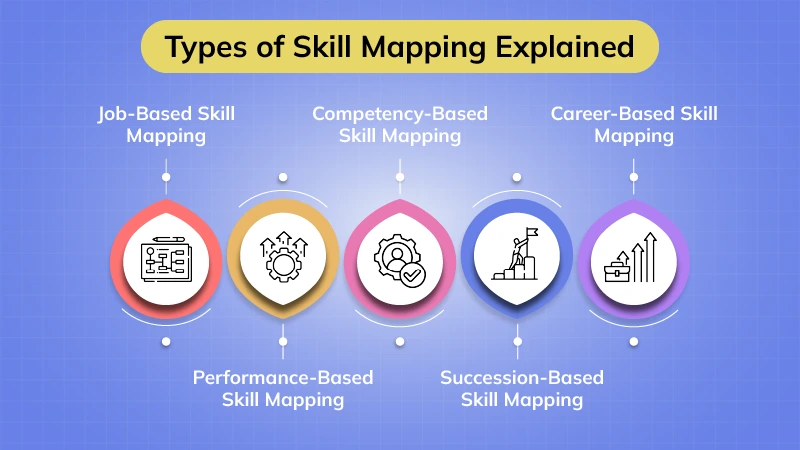
Image Source: Disprz
Think of skill mapping as building a dynamic inventory. It’s about meticulously cataloging the real-world knowledge, practical abilities, essential behaviors, and technical know-how possessed by individuals and teams across your organization. The result? A living “skills landscape.”
Skill gap analysis is the crucial reality check. It involves holding that mapped landscape up against the skills essential for hitting business targets, nailing projects today, and – critically – conquering strategic objectives down the line. The delta between “what we have” and “what we need”? That’s your skill gap.
Understanding Skill Gap Analysis
Skill gap analysis is the comparison between:
- Current skills available in your workforce, and
- Skills required to meet business goals, deliver projects, and execute long-term strategy
The difference between the two is the skill gap. In 2026, these gaps aren’t limited to missing technical expertise. They often include:
- AI collaboration skills
- Critical thinking and judgment
- Cross-functional and hybrid capabilities
- Learning agility
Identifying these gaps early allows organizations to act proactively rather than react too late.

Workforce planning is where strategy meets action. It leverages the insights from mapping skills and spotting those gaps to proactively sculpt your workforce. How? With hiring better, focus programs on upskilling and reskilling employees, ensuring the right allocation of internal resources, and also planning for successions in roles.
The goal here is to ensure that companies have the right talent and the right skills, rather than scrambling to hire people when there are shifts in tech or the workforce.
Build a Future-Ready Workforce With Skills Data
Move beyond static role definitions and use live skills intelligence to guide hiring, upskilling, and workforce planning in a fast-changing job market.
Skills Matrix vs Skill Mapping: What’s the Difference?
These two terms are often used interchangeably, but they describe different things — and the distinction matters for how you build your process.
Skill mapping is the strategic process. It involves identifying the skills your organisation needs to meet its goals, assessing the capabilities your workforce currently has, and analysing the gap between the two. Skill mapping is an exercise in strategy, it answers the question: ‘Do we have what we need, and if not, what do we do about it?
A skills matrix is the visual output of that process. It is typically a table or grid that shows which employees or roles have which skills, often with a proficiency rating (e.g. ‘developing / competent / expert’). The skills matrix is the tool you use to document and communicate the results of your skill mapping exercise.
Think of it this way: skill mapping is the analysis. The skills matrix is the artefact.
Where most organisations go wrong is treating the skills matrix as the goal. They build the grid, document current capabilities, and consider the job done. The problem is that a static matrix becomes outdated within months, especially in roles affected by AI. The organisations that stay ahead treat the matrix as a living document, continuously updated by real market signals about how skill requirements are evolving. That continuous update loop is what transforms a one-off documentation exercise into genuine workforce intelligence.
For HR teams building this capability from scratch: start with the skill mapping process (strategy first), then use a skills matrix to make the outputs visible and actionable across the organisation.
Artificial Intelligence – The Secret to Skill Mapping
AI isn’t just a tool; it’s a dual force reshaping the landscape:
- Skills Expire Faster: Technical and process-driven skills now have shorter shelf lives than ever. AI handles the routine, demanding a premium on higher-order cognitive abilities and nuanced social skills.
- Brand New Skill Sets Emerge: Working with AI isn’t passive. It demands fresh competencies: developing it, deploying it effectively, managing it responsibly (think prompt engineering, grappling with AI ethics, mastering MLOps), and collaborating seamlessly with it.
- Jobs Morph Continuously: Forget rigid job descriptions. Roles are evolving into fluid clusters of tasks – some supercharged by AI, others demanding irreplaceably human traits like creativity and empathy.
- Data Overload: It can be the make or break of identifying the right skills, especially when it has to be combined from HR systems, project trackers, learning platforms, and performance reviews. This task can be paralysing without any robust tools to make sense of it.
- Agility for Survival: The companies that can quickly identify and plug any AI-related skill gaps can dominate the hiring market by being at the helm of any developments in the industry. This agility is now the bedrock of strategic advantage
The Top 5 AI-Era Skill Gap Hurdles Companies Generally Face
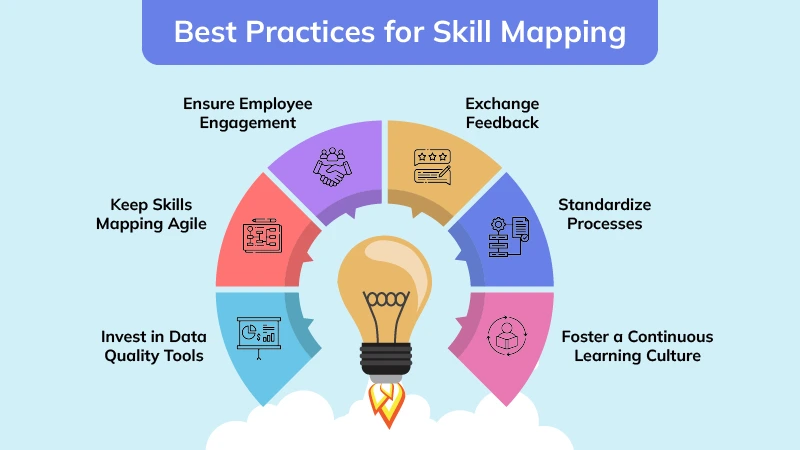
Navigating this complexity means facing down some formidable obstacles:
1. Predicting the Unpredictable: Defining Skills for Jobs That Don’t Exist
- The Reality: The WEF estimates 39% of workers’ core skills will be outdated by 2030. How do you map skills needed for roles that are literally being invented next quarter? Relying solely on yesterday’s competency models is a recipe for irrelevance. Predicting the exact cocktail of human and machine skills needed is inherently messy.
- AI’s Wrench in the Works: AI progress is breakneck and chaotic. New tools drop constantly, upending workflows and skill requirements overnight. Your planning horizon just shrank to months, not years.
- Getting a Grip:
- Think in Scenarios: Ditch the single forecast. Craft multiple plausible futures (e.g., “full AI throttle,” “human-AI partnership focus,” “new regulations reshape everything”). Identify the core skill clusters vital for each (adaptability, critical thinking, data savvy, AI collaboration).
- Bet on Meta-Skills: Double down on durable, adaptable skills – complex problem-solving, genuine creativity, emotional intelligence, rapid learning ability, digital fluency. These are the bedrock future skills are built upon.
- Use AI to See Around Corners: Deploy AI tools to scan job boards, dissect research, track patents, and monitor competitor moves – spotting nascent skill demands before they hit mainstream.
- Talk to the Future: Engage constantly with academics, industry futurists, and consortia obsessed with tomorrow’s skills.
2. The Data Burden: Identifying and Collating Skill Data
- The Current Market: Skill data when gathered across silos like HRIS, LMS, review systems, can be extremely inconsistent and also very subjective. The metrics may not be the same for review, and manual gathering can be a soul-crushing time sink prone to errors. Skills-based organisations are 98% more likely to retain high performers and 57% more likely to respond well to change.
- AI Makes it Trickier: The types of skills that matter have exploded (deep tech + soft skills + AI-specific). Change happens so fast that data spoils quicker. Ironically, AI generates valuable new data signals (project success metrics, collaboration patterns) ripe for mapping skills, but they’re rarely tapped.
- Clearing the Maze:
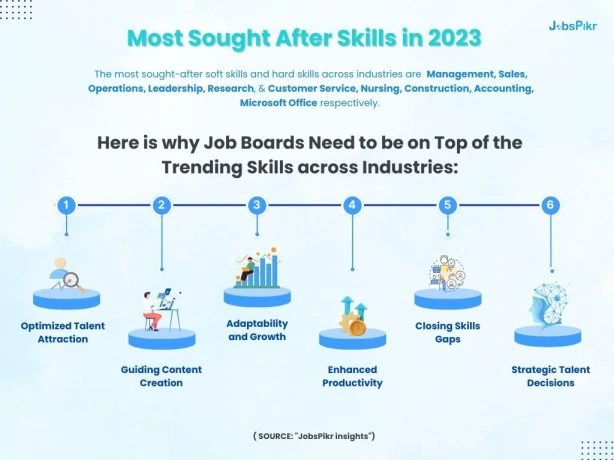
- Embrace Skills Mapping Software: This isn’t optional anymore. Modern skills platforms like JobsPikr act as central hubs, enforce consistent skill languages (taxonomies), and crucially, automatically suck in data from everywhere – email, calendars, Jira, GitHub, learning systems.
- Let AI Infer Skills: Use AI to analyze actual work outputs – reports, code commits, presentation quality, communication styles – to infer skills and levels, adding objectivity to self-reports.
- Keep it Real with Validation: Build in peer shout-outs, manager sign-offs, project-based proof points, and micro-badges. Make skill profiles living documents backed by evidence.
- Build Your Skill Dictionary: Define a clear, adaptable, company-wide language for skills. Borrow from standards like ESCO or O*NET, but make it your own.
3. Beyond the Checkbox: Gauging How Well and How Fast People Can Learn
- The Reality: Knowing someone “has” Python on their profile is meaningless without knowing how proficient they are (can they debug complex issues?) or their potential to pick up adjacent AI skills quickly. This is vital for fluid roles.
- AI Cranks up the Complexity: AI skills (like fine-tuning prompts or understanding model biases) aren’t binary; they exist on spectrums. Assessing someone’s capacity to learn fast-evolving skills is paramount. Old-school annual reviews miss this nuance entirely.
- Measuring What Matters:
- Layer the Assessments: Ditch the yes/no checklist. Blend:
- Self-ratings (with a “confidence” slider).
- Peer/manager feedback focused on observed skill application in real work.
- Proof through project results, simulations, or skill challenges.
- Tracking learning speed – how quickly do they master new things?
- Layer the Assessments: Ditch the yes/no checklist. Blend:
- AI as Proficiency Detective: Leverage skills mapping software with AI smarts to analyze work samples, offering a more objective gauge of true skill level.
- Map Skill Adjacency & Learning Velocity: Look sideways, not just up. Identify folks with foundational skills near emerging needs. Crucially, assess their proven learning agility – not just can they learn, but how fast and effectively?
- Model Potential: Use historical data: How rapidly have they acquired skills before? How versatile have they been across projects? Use this to predict future learning potential.
4. Analysis Paralysis: Turning Gap Insights into Real Action
- The Current Situation: The majority of companies can easily find gaps, but then have issues with bridging those gaps. Identifying skill gaps is the first step, but translating them into concrete, actionable steps with hiring sprees, targeting training, restructuring if needed, can go on the back burner due to budgets, convincing, and misalignment.
- AI Adds the Pressure: The scale and urgency of fixing AI-related gaps immediately across the organization can feel paralyzing. The cost of delay is massive (competitive oblivion), but the price tag for transformation is hefty too.
- Making the Change:
- Ruthless Prioritization Has to Be Important: Start small with impact grids to understand how critical the gap is vs the feasibility to fix it – how expensive or hard is it to do so? Then control on closing any key strategic goals like launching AI products or opting for a software that fixes multiple bottlenecks.
- Weave Gap Analysis into Workforce Strategy: Make it the core fuel for planning. Model scenarios relentlessly: Build (train existing staff), Buy (hire externally), Borrow (contractors, partnerships), Automate (let AI handle it). Skills mapping software provides the data muscle for this modeling.
- Hyper-Personalize the Path Forward: Scrap generic “sheep-dip” training. Use deep mapping skills insights to craft unique learning journeys – AI-curated micro-courses, stretch projects, mentor matches – tailored to individual gaps, learning styles, and aspirations.
- Own the Gap: Assign clear ownership for closing specific, high-priority gaps to business unit leaders. Back them with L&D and HR. Measure success with actual tangible results that ensure C-suite buy-in and continuous budget approvals.
5. The People Puzzle: Beating Fear and Building a Skills-Hungry Culture
- The Reality: Let’s be honest: Employees and managers often see skill mapping as a threat – a prelude to layoffs, Big Brother surveillance, or unfair evaluations. Secrecy and a sense that “this is just HR fluff” breed resistance. Cultivating a genuine culture obsessed with learning is hard graft.
- AI Fuels the Fear Factor: Anxiety about AI taking jobs is palpable. If skill mapping feels like it only serves the company’s bottom line at the employee’s expense, engagement tanks. People need to understand very clearly the benefits to them before they agree to anything new.
- Winning Votes Across the Org:
- Radical Transparency & Constant Chatter: Make sure to keep the ‘why’ at the center of every conversation. Why are we doing this? Why is it beneficial to adopt such systems? Why do we need to improve and adopt AI? It helps build the growth mindset slowly and surely.
- Put Employees in the Driver’s Seat: Ensure that employee skill mapping happens frequently, at least once a year, to give employees a perspective on their growth. Give individuals full access to their profiles, their gap insights, and their personalized development roadmap. Empower them to steer their own growth.
- Sell the Opportunities: Shine enough light on how closing such skill gaps can open doors in the future with exciting new projects, possible promotions, lateral moves, and new developments. Show the path.
- Leaders Must Lead by Example: It’s not enough to only expect employees to be interested in new changes; management must lead the way by sharing their own learning journeys and shortcomings. This helps champion development openly.
- Reward the Learning Journey: Ensure skill acquisition and demonstrable application are written into performance reviews, promotions, and recognition programs. Throw a party for learning milestones!
How to Create a Skill Map: An 8-Step Process
Knowing why skill mapping matters is only half the equation. Here is a practical eight-step process for actually building one, whether you are starting from scratch or refreshing a framework that has drifted from the market.
Step 1: Define the Scope
Are you mapping skills for an individual role, a team, a business unit, or the entire organisation? Start narrow. A focused pilot across two or three critical job families is far more manageable than an enterprise-wide exercise, and it gives you something to show stakeholders before the full rollout.
Step 2: Align With Strategic Business Goals
The skills you map should trace directly to what the business is trying to achieve. If the organisation is investing in AI integration, map AI-adjacent capabilities first. If expansion into a new geography is the priority, map the skills required for that market. Skills mapping that isn’t anchored to a strategic objective tends to become documentation for its own sake.
Step 3: Build or Adopt a Skills Taxonomy
Before you can map skills, you need a shared language for what skills mean. Reference established frameworks like the European Skills, Competences, Qualifications and Occupations (ESCO) taxonomy or O*NET for foundational structure. Layer in your organisation’s specific terminology and validate against real job posting language, which shows how the external market is actually describing the work you care about.
Step 4: Collect Skills Data From Multiple Sources
Internal skills data comes from self-assessments, manager reviews, performance records, learning platform completions, and system-inferred signals from tools like your ATS or LMS. No single source is complete on its own. A combination of declared skills (what employees say they can do) and demonstrated skills (what the data shows they have done) gives you a more reliable baseline.
Step 5: Benchmark Against External Market Demand
This is the step most internal skill mapping exercises skip, and it is the step that matters most for keeping your framework relevant. Comparing your internal skills inventory against what the market is actually demanding (through live job posting data) shows you which skills are rising in importance, which are plateauing, and where your internal definitions are drifting from how employers are hiring. Platforms like JobsPikr surface these signals directly from millions of live job postings, giving your taxonomy a real-time external reference point.
Step 6: Identify and Prioritise Gaps by Business Impact
Not all gaps are equal. A gap in a skill tied to your highest-revenue product line is not the same as a gap in a nice-to-have capability. Once you have identified where shortfalls exist, rank them by business impact and by the cost of not closing them. This prioritisation is what transforms the skill map from a documentation exercise into a planning tool.
Step 7: Build Action Plans: Hire, Train, Redeploy, or Automate
For each prioritised gap, determine the most efficient closing strategy. Some gaps are best closed by hiring externally. Others are better addressed through targeted upskilling or reskilling of existing employees. Some may be addressed by redeploying talent from adjacent functions. And some, particularly in routine or structured task domains, may be candidates for automation. Getting this decision right for each gap is where skill mapping creates real financial value.
Step 8: Set a Refresh Cadence and Assign Ownership
A skill map built once and left alone becomes a liability rather than an asset. Assign clear ownership for maintaining the taxonomy and the skills data. Set a quarterly review cadence at minimum, using live job market signals as the trigger for updates, not just the calendar. The organisations that get the most value from skill mapping are the ones that treat it as infrastructure, not a project.
What Skills Should You Map First?
When every role and every skill looks like a candidate for mapping, the project never starts. Here is a practical framework for deciding where to focus first:
1. Start with skills tied to your top three strategic objectives. If the business has committed to AI integration, international expansion, or a new product line, map the skills those initiatives require. These gaps are the ones with the clearest connection to revenue and growth.
2. Map skills in roles with the highest attrition or the longest time-to-fill. These are the roles where skill gaps are already costing you in turnover cost, delayed delivery, or failed hires. They are also the roles where the market has the most signal, high-demand roles generate more job postings, which means more external data to benchmark against.
3. Focus on roles where the skill requirements are changing fastest. In practice, these tend to be technology-adjacent roles across every function: data, product, operations, marketing. Job posting data is particularly useful here: if the skills appearing in job descriptions for a role have shifted significantly in the last 12 months, that is a signal that your internal framework is already behind.
4. Don’t start with the largest population first. A common mistake is trying to map the most numerous roles (e.g. all individual contributors across every function) as the initial exercise. Start with the roles that matter most to the business, even if they are fewer in number, and expand once the process is proven.
The goal is to produce something useful and defensible in the first 90 days, not to achieve comprehensive coverage immediately. Show business impact with a focused pilot, then scale.
Skill Mapping in Practice: A Scenario
To see how this works end-to-end, consider the following composite example based on a pattern common across mid-sized technology companies in 2026.
A 1,200-person SaaS company had been growing its engineering and product teams aggressively for three years. The L&D team knew — from attrition data and manager feedback, that AI capabilities were becoming a friction point. But ‘AI skills’ is not a useful unit of planning. It could mean anything from Python scripting to prompt engineering to responsible AI governance.
They began a skill mapping exercise focused on three job families: data engineering, product management, and technical customer success. Rather than relying solely on internal self-assessments, the team benchmarked against live job posting data for those roles across their primary competitor set and the broader market. The data revealed something specific: in product management, the skills appearing most consistently in new job postings were not general ‘AI literacy’ as the team had assumed, they were structured around three concrete capabilities: working with LLM APIs, prompt design for internal tools, and AI feature scoping and prioritisation.
The internal skill assessment showed that fewer than 20% of their product managers had any documented exposure to these three capabilities. The gap was real, specific, and measurable.
The action plan that followed was targeted rather than broad: a 6-week structured programme for 34 product managers, built around those three skills specifically, not a generic ‘AI for PM’ course. Three months after completion, the team tracked which programme graduates had applied the skills in live product cycles. The results were specific enough to show the CFO as part of the L&D ROI conversation.
This is what skill mapping enables that generic training programmes cannot: a direct line from market signal to skill gap to intervention to measurable outcome. The specificity is the point.
Skills-Based Hiring vs Role-Based Hiring
One of the biggest shifts in 2026 is the move from role-based to skills-based hiring. Employers are increasingly focusing on capabilities rather than credentials or job titles. Skill mapping enables this transition by making transferable skills visible.
This approach widens talent pools, improves diversity, and reduces dependency on inflated job titles that no longer reflect real work. For fast-changing AI-driven roles, skills-first hiring is becoming the default.
| Aspect | Role-Based Hiring (Traditional) | Skills-Based Hiring (2026 Approach) |
| Core Focus | Job titles and predefined role descriptions | Actual skills, capabilities, and proficiency levels |
| Hiring Criteria | Degrees, past job titles, years of experience | Demonstrated skills, learning agility, and transferable competencies |
| Talent Pool Size | Narrow and restrictive | Wider and more inclusive |
| Relevance to AI-Driven Roles | Often outdated before hiring is complete | Continuously adapts to evolving AI and technology needs |
| Skill Visibility | Limited to what’s written on a resume | Enabled through skill mapping and real-world evidence |
| Diversity & Inclusion | Can reinforce credential and title bias | Reduces bias by focusing on capabilities over pedigree |
| Workforce Agility | Low: roles are rigid and slow to change | High: skills can be recombined as work evolves |
| Internal Mobility | Difficult to assess fit across roles | Easier to match employees to projects and new opportunities |
| Time to Hire | Longer due to rigid role filtering | Faster through skills-based screening |
| Long-Term Workforce Planning | Reactive and role-dependent | Proactive and aligned with future skill demand |
Why Skills Mapping Software Isn’t Just Nice-to-Have
Let’s be blunt: Tackling these challenges with spreadsheets and goodwill in the AI age is a fool’s errand at scale. Modern skills mapping software is the indispensable engine. Look for platforms that deliver:

- One Truth, One Place: A unified, searchable skills database for the whole org.
- Flexible Frameworks: Tools to easily define, tweak, and evolve your skill language.
- Smart Data Pull & AI Insights: Automatic harvesting from disparate systems plus AI analyzing work artifacts to suggest skills/proficiency.
- Intelligent Gap Spotting: Powerful comparison tools matching current skills to future needs, roles, or projects, flagging critical shortages.
- Scenario Planning Power: Modeling “build, buy, borrow, automate” workforce futures based on actual skill data.
- Tracking Progress: Monitoring skill development and enabling validation (endorsements, badges, assessments).
Skills Intelligence: Your AI-Ready Competitive Advantage
Mastering skill gap analysis for the AI age demands a cultural and operational shift:
- Ditch the Project Mentality: This isn’t a one-off. Make mapping continuous. Good software enables near real-time updates.
- Bake it into the Workflow: Integrate skill conversations naturally – when staffing projects, during regular performance chats, in career development discussions.
- Share the Insights Liberally: Put actionable skill data in the hands of managers and employees. Empower them to make smarter talent decisions daily.
- Champion the Growth Mindset: Foster an environment where constant learning isn’t encouraged – it’s expected, celebrated, and resourced at every level.
- Tie it to the North Star: Ensure skill mapping directly feeds and is fueled by the organization’s core strategic objectives, especially its AI and innovation ambitions.
Try JobsPikr’s skills data to stay on top of emerging skills, gaps, and plan your workforce.
Skill Mapping as a Competitive Advantage (2026 and Beyond)
By 2026, skill mapping has evolved from an HR exercise into a strategic business capability. Organizations that still treat it as a one-off audit or documentation task struggle to keep up with the pace of AI-driven change. Those who treat it as a continuous, data-powered system gain clarity, agility, and confidence.
The biggest shift is in mindset. Skill mapping is no longer about identifying what employees lack—it’s about understanding what they can become. When done well, it creates transparency, builds trust, and aligns individual growth with business strategy.
Modern skill gap analysis requires:
- Continuous data collection, not annual reviews
- Integration into daily workflows, not standalone projects
- Shared visibility across leaders, managers, and employees
- A culture that values learning as much as performance
AI will continue to reshape work, but skill mapping gives organizations a way to navigate that uncertainty with intention. It turns disruption into opportunity, and workforce data into workforce intelligence.
Build a Future-Ready Workforce With Skills Data
Move beyond static role definitions and use live skills intelligence to guide hiring, upskilling, and workforce planning in a fast-changing job market.
FAQs
What is skills mapping?
It’s really just about figuring out what people are good at. You take a look at the skills someone already has, then compare that to what a job or project actually needs. That way, you can spot if something’s missing, maybe someone needs training, or maybe you need to bring someone else in. Companies do this kind of thing a lot to make sure their teams are ready for whatever’s coming next. It’s connecting the dots between talent and business needs.
What is a skillmap?
A skillmap is a visual or structured representation of skills within a team, department, or individual. It often includes:
A list of key skills
Skill proficiency levels (e.g., beginner, intermediate, expert)
Assigned team members or roles
Gaps between current capabilities and job requirements
Skillmaps help with talent planning and workforce analytics, and can be built using spreadsheets, HR software, or specialized tools. It’s a way to turn skill data into strategic insight.
What is a personal skills map?
A personal skills map is an individual’s self-assessment or profile that outlines their current skill set. It usually includes:
Technical and soft skills
Proficiency ratings
Areas of interest or future development
Certifications or training history
Basically, you jot down what you’re good at, maybe rate yourself a bit, and note stuff you want to improve. Could include things like certifications or past experience, too.
How often should skill mapping be done?
Skill mapping should no longer be treated as an annual or one-time exercise. Given how rapidly skills evolve—especially with AI and automation—organizations need to approach skill mapping as a continuous process. In practice, this means skills data should be refreshed whenever employees complete key projects, acquire new capabilities, or shift roles. Regular updates ensure that skill gap analysis remains accurate and that workforce planning decisions are based on current realities rather than outdated assumptions.
How does AI improve skill mapping and skill gap analysis?
AI enhances skill mapping by analyzing large volumes of data that would be impossible to process manually. It can infer skills from real work outputs such as project artifacts, code repositories, collaboration patterns, and learning activity. AI also helps assess proficiency levels more objectively, identify skill adjacencies, and predict which skills are likely to become critical in the future. This makes skill gap analysis faster, more accurate, and far more actionable—especially in environments where roles and requirements are constantly changing.
Can skill mapping help reduce employee attrition?
Yes. When employees can clearly see their skills, growth opportunities, and potential career paths within an organization, they are more likely to stay engaged and motivated. Skill mapping supports personalized development, internal mobility, and fairer recognition of capability—all of which contribute to higher retention. In contrast, organizations that lack visibility into skills often miss opportunities to redeploy or develop talent, leading to unnecessary attrition.
What is the difference between a skills matrix and skill mapping?
Skill mapping is the process — the strategic exercise of identifying what capabilities your workforce has, what it needs, and where the gaps are. A skills matrix is the output — the visual grid or table that shows who has which skills and at what level of proficiency. Think of skill mapping as the analysis and the skills matrix as the tool you use to communicate the results. Most organisations do one or the other, but not both: they either do the strategic analysis without documenting it clearly, or they build the matrix without connecting it to a genuine gap analysis. You need both for the exercise to drive decisions.
How long does skill mapping take?
For a focused pilot covering two or three job families, a credible first pass typically takes four to eight weeks — depending on the quality of your existing skills data, the size of the scope, and how much stakeholder alignment is needed upfront. Enterprise-wide exercises across all functions typically take three to six months before the first usable output is ready. The key variable is not the size of the organisation — it is the quality of the underlying data. If skills data is scattered across disconnected systems (HRIS, LMS, performance tools) with inconsistent labels, the data normalisation phase alone can add significant time. Starting with a narrow scope and clean data is almost always faster than starting broad and hoping the data will organise itself.
What are examples of skill mapping in the workplace?
Skill mapping shows up in several practical workplace scenarios. A technology company mapping AI readiness across its product and engineering teams is using skill mapping to identify which employees have the foundational capabilities to work with LLMs and which need structured development before they can contribute to AI-enabled product features. A financial services firm mapping regulatory skills after a compliance framework change is using skill mapping to ensure its workforce meets the new requirements without an over-correction in hiring. A consulting firm mapping billable skills across its practice areas is using skill mapping to optimise project staffing — matching the right people to client engagements faster, with less reliance on a partner’s personal knowledge of who is good at what. In each case, the common thread is the same: turning an implicit, informal understanding of workforce capabilities into something explicit, structured, and usable for planning.