


- **TL;DR**
- Make Smarter Hiring Decisions with JobsPikr
- What is Labor Market Data? Why is it Crucial for Hiring Strategies?
- How Does Labor Market Analysis Help Businesses Understand Job Trends?
- Why Labor Market Data Improves Hiring Outcomes
- Make Smarter Hiring Decisions with JobsPikr
- How Can Companies Use Labor Market Data for Competitive Hiring?
- Labor Market Data vs Traditional Hiring Metrics: Why External Signals Matter More in 2025
- Make Smarter Hiring Decisions with JobsPikr
- How JobsPikr’s Labor Market Intelligence Empowers Recruiters?
- Using Labor Market Data Beyond Recruitment
- How to Start Using Labor Market Data in Your Hiring Process
- Labor Market Data Tools: Free Sources vs. Paid Platforms
- Turning Data into Measurable Hiring Advantage
- Make Smarter Hiring Decisions with JobsPikr
- FAQs
**TL;DR**
Hiring in 2025 is no longer about filling open roles, it’s about reading the labor market before it moves. Labor market data gives recruiters visibility into real-time job demand, skills availability, salary shifts, and regional talent movement. When paired with labor market analysis, it helps organizations plan hiring proactively, reduce risk, and compete for talent with confidence. This guide explains how labor market intelligence shapes modern recruitment and how JobsPikr turns raw job data into actionable hiring insight.
Recruitment is no longer about simply posting job openings and waiting for candidates to apply. In today’s fast-evolving job market, businesses must leverage labor market data to stay ahead of hiring trends, anticipate workforce demands, and create effective recruitment strategies.
Labor market analysis provides organizations with data-driven insights into job trends, salary benchmarks, skill availability, and hiring demand across industries. By leveraging labor market data analysis, businesses can make informed hiring decisions, optimize talent acquisition efforts, and gain a competitive edge.
According to a report by the U.S. Bureau of Labor Statistics, job openings in the U.S. have surged by 22% in the past five years, while skill shortages remain a growing concern. With the increasing complexity of hiring, 78% of HR leaders now consider labor market data essential for shaping their recruitment strategies.
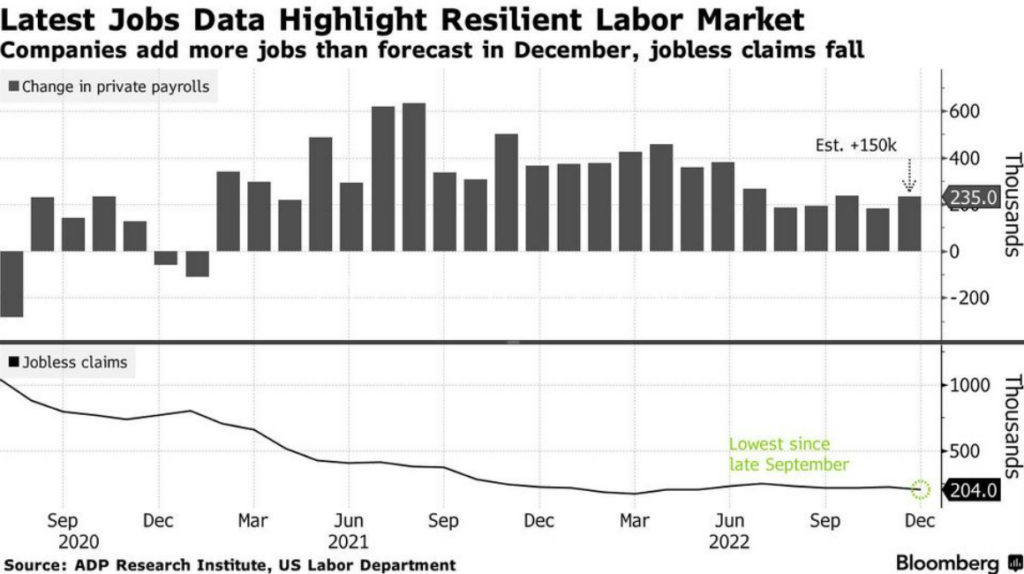
This article explores the importance of labor market data, how labor market analysis helps businesses understand job trends, and how companies can leverage this data for competitive hiring. We also showcase how JobsPikr’s labor market intelligence empowers recruiters with actionable insights.
Make Smarter Hiring Decisions with JobsPikr
Access real-time labor market data, uncover hiring trends, and build recruitment strategies backed by evidence, not assumptions.
What is Labor Market Data? Why is it Crucial for Hiring Strategies?
In an increasingly competitive hiring landscape, understanding labor market dynamics is essential for businesses to attract and retain the right talent. Labor market data provides valuable insights that help recruiters and HR professionals identify hiring trends, assess workforce availability, and make informed decisions. With unemployment rates fluctuating, new job roles emerging, and skill gaps widening, organizations need data-driven hiring strategies to stay ahead.
Companies that leverage labor market analysis can align their recruitment efforts with industry demands, optimize hiring budgets, and create strategic workforce plans. As more businesses adopt real-time labor market intelligence, those that fail to integrate data into their hiring strategies risk falling behind in attracting top talent.?
What is Labor Market Data?
Labor market data refers to employment-related information that helps businesses understand workforce trends, hiring patterns, job demand, salary expectations, and talent availability. It encompasses data from multiple sources, including:
- Job postings and hiring trends across industries.
- Salary and compensation benchmarks for different job roles.
- Unemployment rates and workforce participation metrics.
- Regional labor market dynamics influencing hiring strategies.
- Skill supply and demand trends impacting recruitment.
According to a LinkedIn Talent Solutions Report, 65% of businesses using labor market data improve their hiring efficiency by 30% and reduce talent acquisition costs by 20%.
Why Labor Market Data is Essential for Hiring Strategies?
Businesses that integrate labor market data analysis into their hiring strategies can:
- Identify high-demand job roles and adjust hiring plans accordingly.
- Forecast future workforce needs based on industry trends.
- Optimize recruitment spending by targeting regions with better talent supply.
- Reduce hiring risks by ensuring salary and skill alignment with market standards.
- Improve diversity hiring efforts by analyzing talent distribution across demographics.
A Harvard Business Review study found that companies leveraging real-time labor market intelligence achieve 50% faster hiring cycles and 35% better candidate quality.
Types and Sources of Labor Market Data
Not all labor market data is created equal. Understanding the different types — and their respective strengths and limitations — is essential for building a recruitment strategy that’s both accurate and timely.
Government and public sources The U.S. Bureau of Labor Statistics publishes several datasets that are foundational to labor market analysis. The JOLTS report tracks monthly job openings, hires, quits, and layoffs across industries and regions. The Current Population Survey (CPS) provides unemployment rates and labour force participation figures. O*NET, maintained by the Department of Labor, maps skill requirements across thousands of job categories. These sources are free, authoritative, and widely cited — but they lag the real market by four to six weeks and don’t reflect what individual employers are actually posting and paying today.
Aggregated platform data LinkedIn Workforce Insights, Indeed Hiring Lab, and Glassdoor Economic Research publish regular reports on hiring trends, salary ranges, and in-demand skills. These are more current than government reports and often industry-specific, but they represent averages across large populations and may not reflect conditions in your specific sector, region, or competitor set.
Real-time job posting data The most granular and timely source of labor market intelligence comes from live job posting feeds — the actual postings that employers are publishing across thousands of job boards, company career pages, and aggregators at any given moment. This is what platforms like JobsPikr provide: structured, normalised job data that shows what roles are being hired for right now, what skills are being required, what salaries are being advertised, and which companies are hiring aggressively in which markets. Unlike lagging government surveys, job posting data reflects current employer intent — making it the most actionable signal available to recruitment teams.
Internal workforce data Your own ATS data, HRIS records, time-to-fill metrics, and offer acceptance rates form the internal half of the picture. Alone, they only show you how your process is performing in a vacuum. Combined with external labor market data, they explain why your process is performing that way — and what would need to change to improve it.
| Source | Timeliness | Granularity | Cost | Best for |
|---|---|---|---|---|
| BLS / JOLTS | 4–6 week lag | National, industry-level | Free | Macro trend analysis |
| O*NET | Updated annually | Role and skill-level | Free | Job description benchmarking |
| LinkedIn / Indeed reports | 2–4 week lag | Industry and role-level | Free / freemium | Sector trend monitoring |
| Real-time job posting data | Live / daily | Role, skill, region, employer | Paid platform | Operational hiring decisions |
| Internal ATS / HRIS | Real-time | Company-specific | Internal | Process performance tracking |
For most HR teams, the most effective approach combines free government data for macro context, platform reports for industry benchmarking, and real-time job posting data for day-to-day hiring decisions.
How Does Labor Market Analysis Help Businesses Understand Job Trends?
In an ever-changing job market, businesses need to stay informed about labor trends to make effective hiring and workforce planning decisions. Labor market analysis enables organizations to assess employment patterns, industry demands, and workforce availability in real time. By understanding job trends, businesses can identify emerging job roles, track hiring cycles, and anticipate skill shortages.
With access to accurate labor market insights, HR professionals and recruiters can develop strategies that align with market realities, reducing hiring risks and ensuring a steady flow of qualified candidates.
What is Labor Market Analysis?
Labor market analysis is the process of evaluating workforce trends, employment patterns, and job market conditions to make informed recruitment and workforce planning decisions. It enables businesses to:
- Analyze employment growth trends across industries.
- Track skill shortages and emerging job roles in various sectors.
- Monitor competitor hiring patterns to refine talent acquisition strategies.
- Assess economic conditions impacting workforce availability and hiring challenges.
A McKinsey Global Survey reported that over 70% of executives believe labor market analytics improve workforce planning efficiency, leading to higher talent retention rates and lower hiring costs.
Key Insights from Labor Market Analysis
1. Industry-Specific Job Demand
Different industries experience varying hiring cycles. For example, the tech sector has seen a 45% rise in demand for AI specialists, while the healthcare industry faces a 30% nursing shortage.
2. Geographic Hiring Trends
Labor market data highlights regional workforce availability. Companies can target talent hubs with higher skill concentrations and lower hiring costs.
3. Salary Benchmarking and Compensation Trends
By analyzing wage trends, organizations can offer competitive salaries, reducing hiring delays caused by mismatched expectations.
4. Skill Gaps and Emerging Workforce Trends
Labor market analysis helps identify skill shortages, enabling companies to invest in upskilling initiatives and talent development programs.
Why Labor Market Data Improves Hiring Outcomes
Faster, More Confident Hiring Decisions
Recruiters using labor market data don’t need to guess whether a role is “hard to hire.” They can see:
- How many similar roles are open
- How long those roles stay unfilled
- How competitive salaries have become
This reduces internal friction and speeds up approvals.
Smarter Workforce Planning
Long-term hiring plans often fail because they assume stability. Labor market analysis introduces realism into workforce planning by showing:
- Where talent pipelines are shrinking
- Which roles are becoming cost-prohibitive
- How external demand may affect internal attrition
This allows organizations to plan hiring, upskilling, or outsourcing strategies with fewer blind spots.
Reduced Hiring Risk
Hiring risk doesn’t just come from bad candidates—it comes from flawed assumptions.
Labor market data reduces risk by ensuring:
- Salary bands align with market reality
- Skill expectations are achievable
- Hiring timelines are realistic
As a result, companies experience fewer stalled searches and lower early attrition.
Stronger Candidate Experience and Offer Acceptance
There is a less obvious benefit of labor market data that rarely appears in HR strategy conversations: it improves the candidate experience. When recruiters enter a conversation already knowing what the market rate for a role looks like, what competing offers in that metro are landing at, and how long similar candidates typically take to accept, the entire process moves faster and with less friction.
Candidates notice when a company’s offer reflects genuine market knowledge. A salary offer that’s clearly benchmarked to current conditions signals that the organisation respects both the candidate’s time and the market’s reality. Conversely, offers that come in 15–20% below live market rates — because the compensation team last updated their bands from a survey published 14 months ago — signal the opposite. In a tight labor market, that signal alone is enough for a strong candidate to decline and move to the next offer waiting in their inbox.
Make Smarter Hiring Decisions with JobsPikr
Access real-time labor market data, uncover hiring trends, and build recruitment strategies backed by evidence, not assumptions.
How Can Companies Use Labor Market Data for Competitive Hiring?
Staying ahead in today’s hiring landscape requires more than just traditional recruitment strategies. Labor market data analysis allows companies to gain a competitive advantage by identifying talent trends, optimizing hiring efforts, and refining workforce planning. Organizations that leverage labor market insights can make strategic hiring decisions based on real-time data, improving efficiency and reducing recruitment costs.

Businesses that leverage labor market data analysis for Strategic Recruitment can:
- Develop Data-Driven Hiring Strategies
- Companies using labor market insights experience a 25% improvement in candidate quality by aligning job descriptions with real-time talent availability.
- Enhance Workforce Planning and Talent Mapping
- 80% of HR professionals using labor market analytics can forecast hiring needs more accurately, reducing last-minute recruitment challenges.
- Optimize Candidate Sourcing and Recruitment Marketing
- By understanding regional hiring trends, organizations can focus on talent-rich locations, improving hiring speed and reducing costs by 15-20%.
- Benchmark Salary Expectations and Compensation Plans
- Companies leveraging wage intelligence data see 40% lower employee turnover rates due to competitive salary offerings.
- Improve Hiring Diversity and Inclusion
- Labor market analysis enables businesses to identify underrepresented talent pools, helping HR teams build equitable recruitment strategies.
Labor Market Data vs Traditional Hiring Metrics: Why External Signals Matter More in 2025
For years, recruitment teams have relied on traditional hiring metrics to evaluate performance and guide decisions. Metrics like time-to-hire, cost-per-hire, and applicant volume are familiar, easy to track, and useful—for looking backward.
But in 2025, backward-looking metrics alone are no longer enough.
Traditional hiring metrics tell you what happened inside your hiring funnel. Labor market data explains why it happened and what will happen next. Without external labor market context, teams risk optimizing internal processes while missing larger market shifts that directly impact hiring success.
This distinction has become critical as skills evolve faster, competition intensifies, and talent pools fragment across regions and work models.
Where Traditional Hiring Metrics Fall Short
Traditional hiring metrics are inherently reactive. They surface problems only after those problems have already affected outcomes. For example:
- A rising time-to-hire doesn’t explain whether the delay is due to skill scarcity, salary misalignment, or competitor pressure.
- Low applicant volume doesn’t reveal whether the issue is employer branding—or simply a shrinking talent pool.
- High offer rejection rates don’t clarify whether compensation is uncompetitive or market expectations have shifted.
Without labor market data, recruiters are forced to guess at root causes, often relying on anecdotal feedback rather than evidence.
How Labor Market Data Changes the Decision Framework
Labor market data brings external intelligence into hiring decisions. It shows what’s happening outside your organization—across industries, regions, and competitors—before those shifts impact your hiring pipeline.
When paired with labor market analysis, this data allows teams to:
- Anticipate skill shortages instead of reacting to them
- Adjust salary bands before offers start getting rejected
- Shift sourcing strategies based on real talent availability
- Re-prioritize roles based on market competitiveness
In effect, labor market data turns recruitment from an operational function into a strategic one.
Labor Market Data vs Traditional Hiring Metrics: Side-by-Side Comparison
| Dimension | Traditional Hiring Metrics | Labor Market Data & Analysis |
|---|---|---|
| Primary Focus | Internal hiring performance | External workforce and talent market |
| Typical Questions Answered | How long did hiring take? How much did it cost? | How competitive is this role? Where is talent available? |
| Time Orientation | Backward-looking | Real-time and forward-looking |
| Scope | Company-specific | Industry, region, role, and competitor level |
| Decision Value | Operational optimization | Strategic planning and risk reduction |
| Ability to Predict Hiring Challenges | Limited | High |
| Use in Workforce Planning | Minimal | Core input |
| Response to Market Shifts | Reactive | Proactive |
| Example Insight | Time-to-hire increased by 15% | Skill demand has outpaced supply by 30% in this region |
| Best Used For | Measuring process efficiency | Shaping hiring strategy and priorities |
Make Smarter Hiring Decisions with JobsPikr
Access real-time labor market data, uncover hiring trends, and build recruitment strategies backed by evidence, not assumptions.
How JobsPikr’s Labor Market Intelligence Empowers Recruiters?
JobsPikr is a leading provider of real-time labor market intelligence, helping businesses:
- Track global hiring trends and job postings.
- Analyze workforce demand and skill supply across industries.
- Monitor competitor hiring strategies for better recruitment decisions.
- Access salary benchmarking data to create competitive compensation plans.
Case Studies: Companies Using JobsPikr for Labor Market Analysis
- Technology Sector: A Fortune 500 company used JobsPikr to optimize tech hiring, reducing time-to-hire by 35%.
- Healthcare Industry: A hospital network leveraged JobsPikr’s workforce data to predict staffing shortages, improving recruitment efficiency by 30%.
- Retail Industry: A global retail chain used JobsPikr’s labor market analysis to refine seasonal hiring strategies, cutting recruitment costs by 25%.
- Financial Services: A leading investment firm optimized hiring decisions using JobsPikr’s talent intelligence, reducing workforce planning errors by 40%.
Using Labor Market Data Beyond Recruitment
While labor market data is most often associated with recruitment, its real value in 2025 extends far beyond filling open roles. When analyzed at scale, labor market data becomes a strategic signal that informs decisions across workforce planning, skills development, finance, and business expansion.
Organizations that limit labor market data to recruiting workflows are leaving significant value untapped.
1. Workforce Planning and Long-Term Talent Strategy
Workforce planning has traditionally relied on internal headcount data and historical growth assumptions. In volatile labor markets, this approach breaks down quickly.
By integrating labor market data into workforce planning, organizations gain visibility into:
- Which roles are becoming harder to hire over time
- How talent supply is shifting across regions and industries
- Whether future workforce needs can realistically be met through hiring
Labor market analysis allows leaders to model different scenarios—such as expansion, automation, or reskilling—based on real external constraints, not optimistic assumptions. This reduces the risk of workforce gaps appearing after growth plans are already underway.
2. Skills Intelligence and Learning & Development (L&D)
One of the most powerful non-recruiting uses of labor market data is skills intelligence.
Job postings are a real-time reflection of how skills evolve in the market. By analyzing skill demand trends, organizations can:
- Identify emerging skills before they become critical shortages
- Detect declining skills that no longer justify heavy training investment
- Align L&D programs with market-relevant capabilities
Instead of guessing which skills employees should learn next, labor market data helps L&D teams prioritize training that protects long-term employability and business relevance.
3. Compensation Planning and Financial Forecasting
Compensation decisions are increasingly complex in a market shaped by remote work, regional pay variation, and skill scarcity.
Labor market data supports finance and HR teams by:
- Providing real-time salary benchmarks by role, skill, and location
- Identifying cost pressures before they impact offer acceptance
- Supporting accurate hiring budget forecasts
When paired with labor market analysis, compensation planning becomes proactive. Organizations can adjust salary structures before attrition rises or hiring stalls—rather than reacting after the fact.
4. Location Strategy and Market Expansion Decisions
Where a company hires can be just as important as who it hires.
Labor market data helps organizations evaluate:
- Talent availability in new or emerging regions
- Competition intensity in existing markets
- Cost-to-hire differences across locations
For companies considering expansion—whether opening a new office, building a delivery center, or shifting to remote-first hiring—labor market analysis provides evidence-based clarity. It answers a critical question: Can we realistically build and sustain talent in this market?
5. Risk Management and Workforce Resilience
Labor market disruptions rarely happen overnight. Skill shortages, hiring freezes, or sudden demand spikes usually show early warning signs in labor market data.
Organizations using labor market intelligence can:
- Spot roles with rising attrition risk due to market competition
- Identify over-dependence on shrinking talent pools
- Prepare contingency plans for hard-to-replace roles
In this sense, labor market data acts as a risk radar—helping businesses strengthen workforce resilience before disruptions escalate.
6. Strategic Leadership and Board-Level Decision Support
In 2025, labor is no longer just an HR issue—it’s a business risk and growth driver discussed at the leadership level.
Labor market data enables executives to:
- Ground workforce decisions in external market reality
- Justify investments in automation, outsourcing, or upskilling
- Align talent strategy with long-term business objectives
When leaders can clearly see how labor market trends affect revenue, growth, and competitiveness, workforce strategy becomes an integral part of business planning—not an afterthought.
Recruitment is only one touchpoint in the talent lifecycle. The organizations that outperform their peers in 2025 are those that treat labor market data as enterprise intelligence, not just a hiring input.
Platforms like JobsPikr make this possible by transforming raw job postings into structured, analysis-ready labor market insights, usable across HR, finance, strategy, and leadership teams.
When labor market data informs decisions beyond recruitment, businesses move from reacting to talent challenges to actively shaping their workforce future.
How to Start Using Labor Market Data in Your Hiring Process
Understanding the value of labor market data is one thing. Building it into how your team actually makes decisions is another. Here is a practical five-step framework for HR teams at any stage of analytics maturity.
Step 1: Identify your hardest-to-fill roles Start with your ATS data from the past 12 months. Which roles took longest to fill? Which had the highest offer rejection rates? Which roles, when left open for more than 30 days, had measurable impact on team output or revenue? These are your highest-priority roles for external market intelligence. You don’t need to track everything to start — tracking the 10–15 roles that matter most will generate 80% of the strategic value.
Step 2: Pull market vacancy and salary data for those roles For each priority role, gather two data points from external sources: (1) how many similar roles are currently posted in your target hiring markets, and (2) what salary ranges those postings are advertising. Government sources like JOLTS give you macro context, but for role-level and market-level specificity, you need a live job posting data source. This step alone will often surface a salary gap or a competition intensity problem that wasn’t visible from internal data.
Step 3: Benchmark your job descriptions against live market postings Pull 10–15 current job postings for each of your priority roles from competitors and comparable employers. Compare the skills they’re requiring, the benefits they’re advertising, and the seniority level they’re targeting against your own job descriptions. Are you requiring credentials that the market has moved away from? Are you missing skills that have become standard expectations? Are competitors leading with benefits or flexibility terms that your JD doesn’t mention? This audit typically takes two to three hours per role and regularly uncovers why application quality has been lower than expected.
Step 4: Set a review cadence — and stick to it Labor market conditions for in-demand roles can shift meaningfully in 60–90 days. A salary band that was competitive in Q1 may be 10% below market by Q3. Build a quarterly review into your workforce planning calendar where priority roles are re-benchmarked against current posting data. For your most critical roles — the ones where a vacancy directly impacts operations — a monthly check is appropriate.
Step 5: Integrate market data into your ATS and hiring workflow The final step is making labor market data accessible to the people making hiring decisions in real time — not just to the workforce planning team that reviews it quarterly. This means connecting your job data feed or workforce intelligence platform to the tools your recruiters and hiring managers actually use. When a recruiter can see current market salary ranges and competitor posting volume without leaving their workflow, they make better real-time decisions on offer levels, sourcing investment, and timeline management.
Labor Market Data Tools: Free Sources vs. Paid Platforms
One of the most common questions HR teams ask when starting with labor market data is which tools to use. The honest answer is that free and paid sources serve different purposes — and the best setups use both.
Free sources — strong for context, weak on timeliness and granularity
The BLS and JOLTS reports are the gold standard for macroeconomic labor data and are essential for understanding long-term trends. O*NET is excellent for understanding the skill architecture of a role category. LinkedIn Workforce Reports and Indeed Hiring Lab publish regular free insights that are more current and industry-specific than government data. For teams with limited budget or early-stage analytics needs, these sources provide a solid foundation.
The limitation is precision. These sources tell you what happened at an industry or national level — they don’t tell you what a specific competitor in your metro is paying for a senior data engineer right now, or that a rival company just posted 30 new sales roles which may start pulling from your pipeline within 60 days.
Paid platforms — operational intelligence for active hiring decisions
Platforms like JobsPikr aggregate, normalise, and structure live job posting data from thousands of sources — job boards, company career pages, aggregators — into a consistent, analysis-ready format. This is what enables role-level, market-level, and employer-level analysis that simply isn’t possible with public datasets.
Lightcast (formerly Burning Glass) is another well-known provider in this space, with a strong focus on skills taxonomy and educational institution partnerships. The key differences between platforms typically come down to data freshness, geographic coverage, normalisation methodology, and pricing structure — all of which matter depending on your specific use case.
| Tool | Type | Best use case | Limitations |
|---|---|---|---|
| BLS / JOLTS | Free government | Macro trend context | 4–6 week lag, no role-level detail |
| O*NET | Free government | Role and skill benchmarking | Updated annually |
| LinkedIn Workforce Insights | Free / freemium | Industry trend monitoring | Aggregated, not granular |
| Indeed Hiring Lab | Free | Hiring velocity benchmarking | Platform-specific data |
| JobsPikr | Paid platform | Real-time vacancy, salary, competitor data | Requires integration setup |
| Lightcast | Paid platform | Skills taxonomy, education alignment | Higher price point |
For most mid-to-large HR teams making active hiring decisions, the right configuration is free sources for quarterly strategic reviews and a real-time platform for operational hiring decisions. The ROI case is straightforward: a single offer rejection caused by an out-of-date salary band typically costs more in time, recruiter hours, and delayed productivity than a month of platform subscription.
Turning Data into Measurable Hiring Advantage
The role of labor market data in recruitment has never been more significant — but its value isn’t in the data itself. It’s in the decision quality that data enables. A recruiter who knows that similar roles in their market are taking 52 days to fill doesn’t set a 3-week hiring timeline and then scramble when it slips. A compensation team that updates salary bands against live posting data every quarter doesn’t lose offers to competitors who updated theirs last month. A workforce planning leader who can see competitor hiring activity as it happens doesn’t get blindsided when attrition spikes in a team that’s been quietly getting recruited.
The transition from reactive to proactive hiring isn’t a technology problem — it’s an information problem. Most teams already have the decision-making capability. What they lack is the external market visibility to apply it at the right moment.
That’s what labor market data provides: the context to make better decisions before circumstances force a worse one. Whether you start with free government sources and work toward a real-time platform, or you’re already using job posting data and want to extend it into workforce planning and compensation strategy — the direction is the same. Better data, earlier in the decision cycle, applied to the roles that matter most.
For businesses looking to build this capability, JobsPikr’s labor market intelligence platform provides live job posting data, skills demand trends, salary benchmarks, and competitor hiring signals — structured for HR teams and talent strategists who need actionable intelligence, not just reports.
Make Smarter Hiring Decisions with JobsPikr
Access real-time labor market data, uncover hiring trends, and build recruitment strategies backed by evidence, not assumptions.
FAQs
What is labor market data?
Labor market data includes information on job demand, skills, salaries, locations, and hiring activity that reflects how the workforce market operates in real time.
How is labor market analysis different from workforce analytics?
Labor market analysis focuses on external market signals, while workforce analytics focuses on internal employee data. Together, they provide a complete hiring picture.
Why is labor market data important for recruiters in 2025?
Because hiring conditions change rapidly, labor market data helps recruiters anticipate challenges instead of reacting to them.
Can labor market data improve hiring speed?
Yes. By setting realistic expectations around talent availability and compensation, recruiters reduce delays and stalled searches.
How does JobsPikr collect labor market data?
JobsPikr aggregates and normalizes job postings from global sources, transforming them into structured, analysis-ready labor market intelligence.