
- **TL;DR**
- What the Latest BLS Numbers Actually Tell Us About 2025 Hiring
- Want a clearer view of what’s actually happening in the job market?
- 2025 Job Openings - What Positions Are Available?
- Where the Job Openings Are (And Where They’re Getting Scarce)
- Remote Work Job Openings
- Global Hiring Giants - Amazon Job Openings
- Where Talent Shortages Are Becoming a Real Problem in 2025
- Want a clearer view of what’s actually happening in the job market?
- The Big Picture Trends Shaping 2025 Hiring
- Inflation’s Grip on Job Openings and the Job Market
- Your Game Plan for 2025 – Job Seeker or Hirer
- How Real-Time Job Openings Data Is Helping Employers Navigate 2025
- The Matchmaker – Why Job Board Software Can’t Be Ignored
- Finding Your Way in the 2025 Job Maze
- Want a clearer view of what’s actually happening in the job market?
- Frequently Asked Questions
**TL;DR**
The 2025 job market is still sending mixed signals. The U.S. is adding job openings at a steady pace, unemployment is hovering just above 4%, and there are still more than seven million open roles nationwide. But the picture isn’t uniform. Healthcare, clean energy, skilled trades and AI-driven tech roles continue to see strong demand, while interest-rate-sensitive sectors like retail, mortgage finance and some corporate functions remain cautious. Inflation has eased compared to the last two years, but it’s still shaping how companies hire and how workers negotiate.
The past few years have seen a turbulent US job market. With multiple layoffs from global companies followed by hiring sprees, job openings have been hard to figure out. For companies and candidates alike, finding out about open roles is crucial to know where the market is at and what positions are available.
Let’s understand what the 2025 US labor market looks like today.
What the Latest BLS Numbers Actually Tell Us About 2025 Hiring
The headline labor numbers for 2025 look steady, but they reveal a more nuanced market once you dig in. In June, U.S. employers added 147,000 job openings and the unemployment rate held at 4.1%, according to the Bureau of Labor Statistics.
It’s not a hiring boom, but it’s also not a sign of a cooling economy. Job growth has settled into a slower, more predictable pattern — the kind you see when companies are being careful, not panicked.
Job openings tell a similar story. As of April 2025, the BLS reported 7.4 million unfilled roles across the country.
That number is lower than the peak of the labor shortage, but it’s still high enough to show that employers haven’t solved their talent gaps. What’s shifted is where those gaps live. Broad, company-wide hiring isn’t happening the way it did in 2021–2022. Instead, job openings are clustering in roles that require specialized skills or certifications: healthcare, advanced tech, skilled trades, and occupations tied to infrastructure or clean energy projects.
The takeaway from the current BLS data is simple: The U.S. isn’t in a hiring frenzy, but it’s also nowhere near a contraction. It’s a cautious, skills-focused labor market where the biggest challenges sit in specific sectors, not across the board.
Want a clearer view of what’s actually happening in the job market?
If you’re trying to understand hiring demand, salary shifts, or where talent is really concentrated, real-time job data makes the picture a lot sharper.
2025 Job Openings – What Positions Are Available?
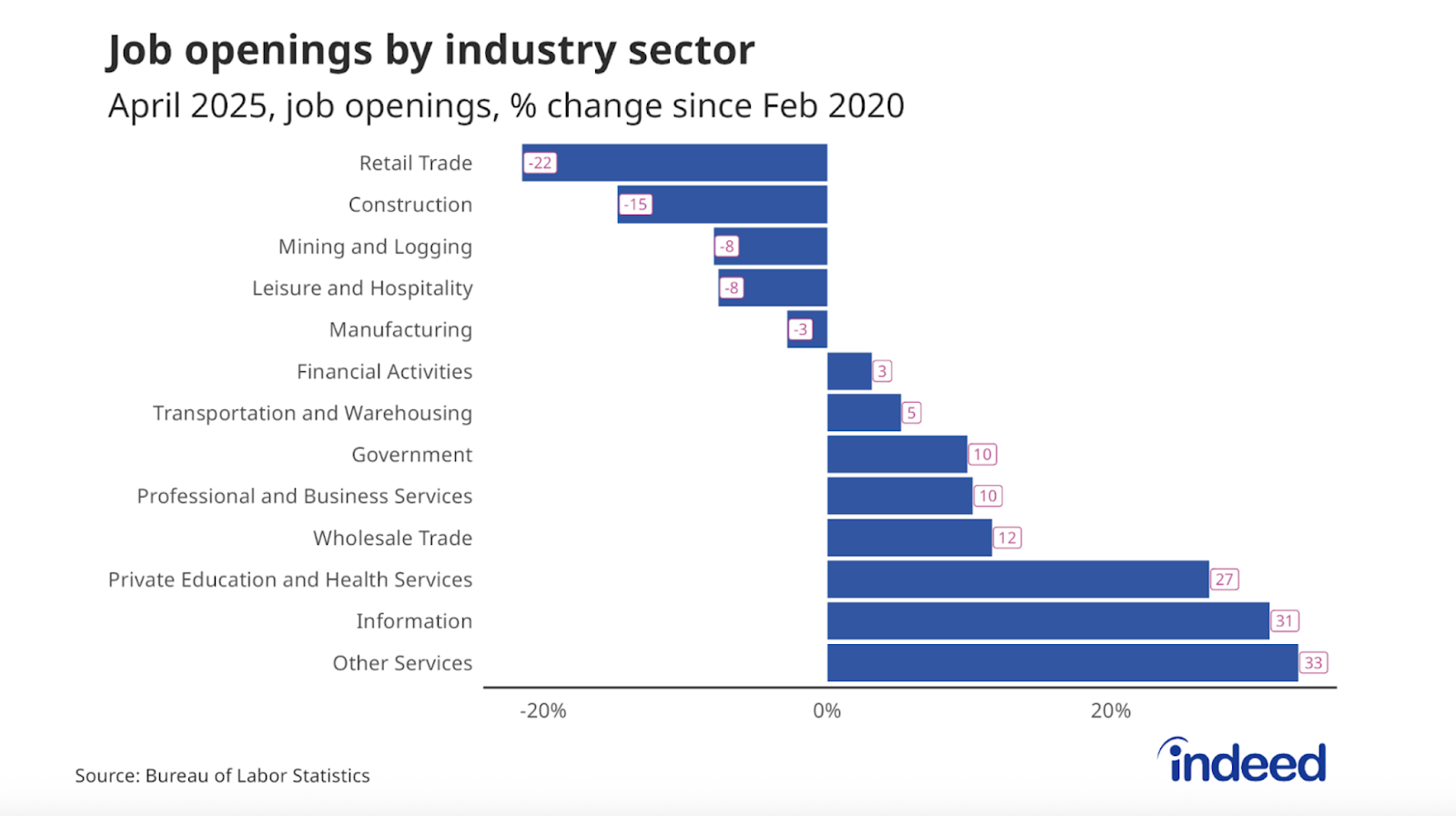
Image Source: Indeed
We’re still shaking off the economic hangover from the last few years. Remember the Great Resignation? While that cooled down, there’s another shift currently in the market, let’s call it the ‘Great Adjustment’.
People don’t just want a job to pay the bills anymore. The workforce has shifting in the past few decades from looking at roles as only an end to the means to actually wanting a happy, balanced worklife. They want flexibility, meaning in their work, and pay that doesn’t get swallowed whole by rising bills. Meanwhile, businesses are wrestling with inflation that’s sticky (though maybe easing a bit), higher interest rates making loans pricier, and this nagging sense of uncertainty in some corners.
The result? A job market that’s all over the map. Some industries are absolutely booming and begging for people. Others are hunkering down, leading to some cuts.
Where the Job Openings Are (And Where They’re Getting Scarce)
Alright, down to brass tacks. Where are the doors wide open in 2025? Even with all the ups and downs, millions of job openings exist. The trick is knowing which neighborhoods – both the kind made of brick-and-mortar and the kind defined by industry.
Healthcare: Seriously, They Can’t Hire Fast Enough: Needing more healthcare workers isn’t just a trend; it’s a full-blown sprint. An older population plus ongoing health needs mean spots for nurses, home health aides, medical techs, and specialized doctors are constantly, desperately open. The Bureau of Labor Statistics (BLS) has been shouting this for years – healthcare jobs are projected to grow way faster than most other fields. And it’s not just hospitals anymore. Think urgent care clinics, telehealth companies, and places caring for seniors – huge drivers of these open positions.
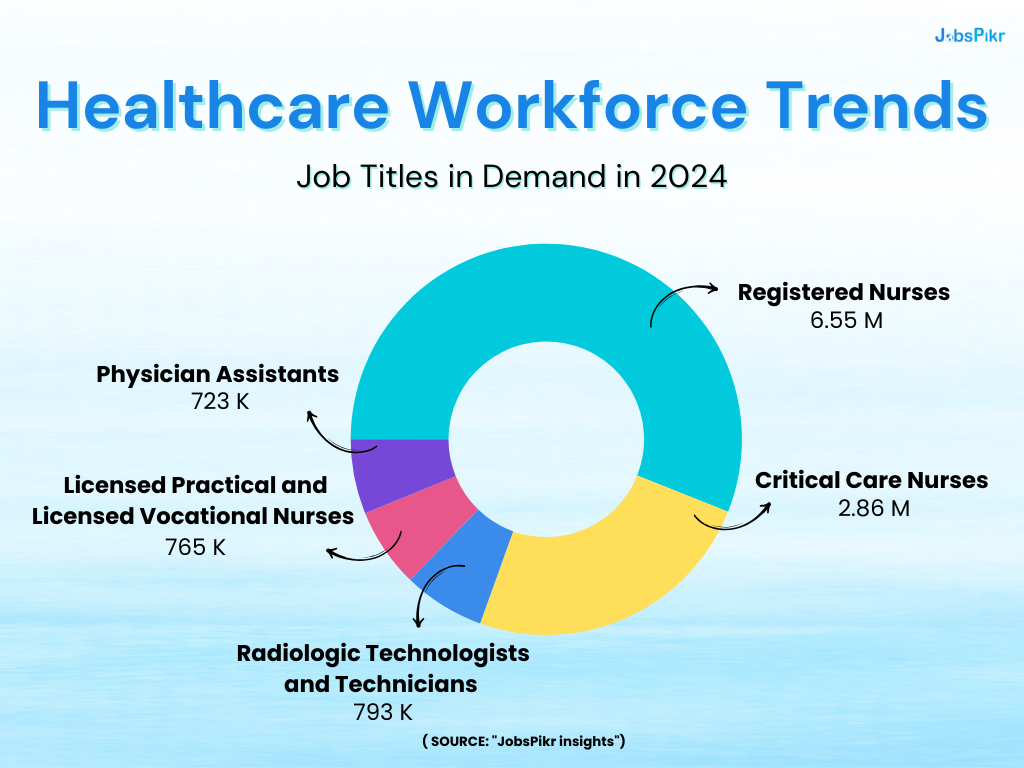
Image Source: Healthcare Report by JobsPIkr
Tech’s Shifting Sands (But Still Hiring): Yeah, tech had some splashy layoffs. That made everyone nervous. But dig a little deeper. Often, those cuts hit areas that got a bit too big too fast, like certain marketing teams or moonshot projects. The core stuff? Cybersecurity gurus, people building and guiding AI, cloud computing experts, data scientists? Companies are still fighting tooth and nail for that talent. Tech spending isn’t dead; it’s just more focused. Finding folks with these specific skills? Still a massive headache for employers.
Building America (and a Greener Future): Seriously big money is pouring into fixing roads, bridges, pipes, and wires, plus speeding up the switch to solar, wind, and cleaner energy. This means real, tangible job openings for skilled hands – electricians, welders, plumbers – plus engineers (civil, environmental), project managers, and techs who know solar panels or wind turbines inside out. This sector has some serious backbone; it’s fueled by long-term government cash and private investment, so it doesn’t wobble as much with short-term economic hiccups.
Feeling the Pinch: Sectors where people spend money on things they want but don’t need, or areas super sensitive to loan costs, are having a rougher time. Think parts of retail (especially the non-essential stuff), some services linked to tech, and specific finance roles (like folks handling mortgages). This doesn’t mean hiring stops completely, but expect it to be pickier, maybe slower, and possibly even some targeted trimming in these spots.
Remote Work Job Openings
The “remote work or I walk” ultimatum vibe has mellowed. But don’t be fooled: flexibility is absolutely here to stay, and it’s totally reshaping the job openings you see.
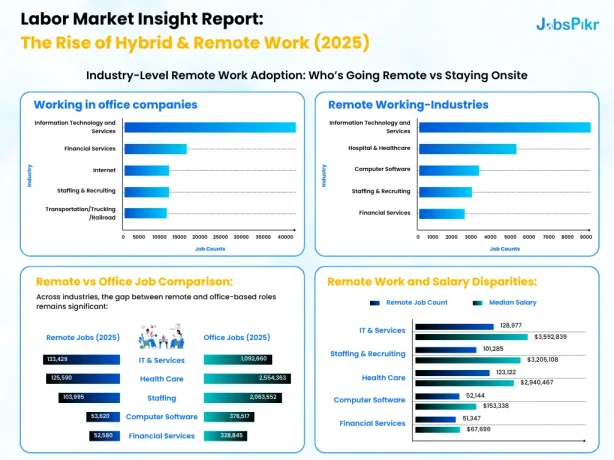
Image Source: Remote Work Trends by JobsPikr
Hybrid is King (or Queen): The big winner? Hybrid work. Splitting time between your home office and the actual office. Businesses crave some face-to-face magic; workers love ditching the soul-crushing commute and having some control. What this means: pure remote job openings (100% virtual) might not be falling from the sky like they were in 2021-2022, but roles offering solid chunks of remote time? Plentiful and highly coveted. A Pew Research Center survey back in 2024 found that 41% of folks whose jobs could be done remotely were working hybrid, compared to 35% fully remote.
“Remote-First” vs. “Remote-Allowed”: This matters! Truly remote-first companies are built from the ground up for distributed teams – it’s in their DNA. Remote-allowed companies? They permit it, but it might depend on your boss, your team, or how the wind blows that day. When you’re hunting for remote job openings, figuring out which camp a company is in is crucial for knowing if you’ll actually fit long-term.
Geography? Less Important. Flexibility? Way More Important. Remote and hybrid work blew up the old map. Companies in pricey cities can now find talent in more affordable towns. Workers aren’t stuck only looking at jobs within a miserable drive. This makes competition for the best people fiercer but also flings open doors for folks living where local options are slim. This is where smart job board software becomes gold – helping employers reach way further and letting job seekers filter specifically for “remote” or “hybrid” gems.
Global Hiring Giants – Amazon Job Openings
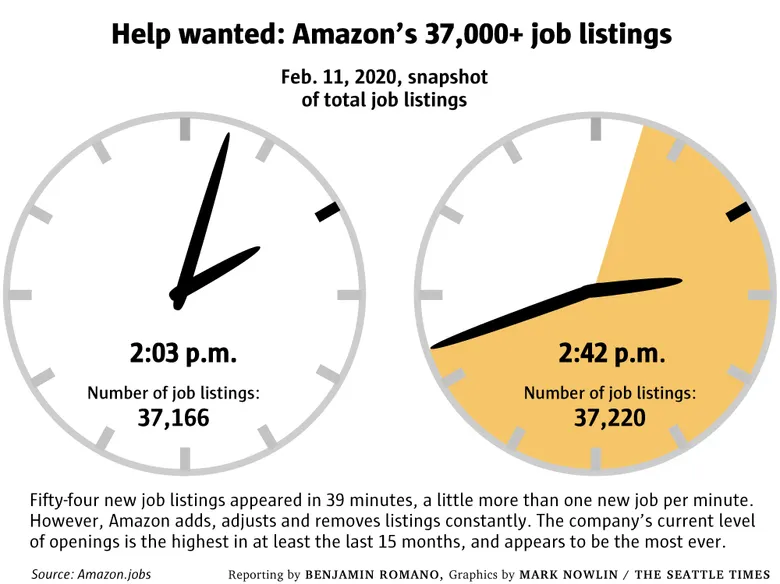
Image Source: The Seattle Times
Talking US job openings without mentioning Amazon is like talking pizza without cheese. They’re a colossal employer, and how they hire tells us a lot about the bigger picture of labor market trends.
Warehouses & Delivery: Steady Ship, Changing Course: Amazon’s insane warehouse growth spurt during the pandemic has calmed. But moving stuff around? Still a massive hiring machine. The twist? More robots and automation mean the kinds of roles are shifting. Think more tech operation, maintenance, and specialized logistics planning. Finding folks for the really physical warehouse jobs? Still a challenge in some places.
As Amazon has become such a massive behemoth in the tech space, any drastic changes from the company can cause one of two things –
- Panic – if Amazon starts laying off people in batches, other companies may follow suit
- Prosperity – The opposite is also true; a hiring surge in specific tech may signal an industry-wide boom
Where Talent Shortages Are Becoming a Real Problem in 2025
Even with job growth slowing, certain roles continue to be difficult — sometimes extremely difficult — for employers to fill. These shortages aren’t new, but they’ve sharpened in 2025 because the supply of trained workers simply isn’t catching up with demand.
1. Healthcare Roles That Require Certification
Shortages in nursing, mental health services, and specialized medical support roles have been building for years. The BLS continues to report strong, steady job gains in health care and social assistance through mid-2025.
But those gains highlight a deeper issue: employers are hiring, but they’re not hiring fast enough to close the gap. Hospitals, clinics, and long-term care facilities continue to report long time-to-fill cycles for registered nurses, licensed practical nurses, behavioral health providers, and diagnostic techs. These are roles that require licensing — something you can’t accelerate with short-term training.
2. Skilled Trades — Especially Electricians and HVAC Specialists
Infrastructure spending, clean-energy expansion, and building upgrades have pushed demand higher for electricians, plumbers, pipefitters, and HVAC technicians. JOLTS data for 2025 shows that job openings in construction remain elevated relative to pre-2020 levels.
The challenge here isn’t attracting interest — it’s the limited supply of people entering these trades. Employers report that retirements are outpacing new entrants, which keeps competition high and hiring timelines long.
3. Cybersecurity and AI-Adjacent Tech Roles
Despite news about tech layoffs, roles tied to cybersecurity, cloud infrastructure, and AI implementation remain some of the hardest to fill. Industry surveys from ISC2 and CompTIA continue to point toward persistent cybersecurity workforce shortages, with employers competing heavily for mid-career talent.
This tracks with broader BLS trends showing that professional and technical services — the category that includes many of these roles — continues to post job gains across 2024–2025.
It’s not a hiring surge, but it is steady enough to signal ongoing demand.
4. Roles Tied to Caregiving and Community Support
Another less-publicized shortage sits in community-based job openings: social workers, case managers, early childhood educators, and home health aides. These roles often have lower pay relative to the responsibilities, making hiring and retention difficult even when unemployment is low. The BLS categorizes many of these positions under “social assistance,” one of the sectors that has added job openings throughout the year.
Why These Shortages Matter
For employers, these shortages translate into longer hiring cycles, higher wage competition, and greater pressure to widen their talent search. For job seekers, roles in these categories often come with stronger job security, faster callbacks, and clearer career paths.
From an analysis perspective, these shortages shape how the broader market behaves — even if headline numbers look stable — because they drive wage pressure, training initiatives, and policy discussions around workforce development.
Want a clearer view of what’s actually happening in the job market?
If you’re trying to understand hiring demand, salary shifts, or where talent is really concentrated, real-time job data makes the picture a lot sharper.
The Big Picture Trends Shaping 2025 Hiring
Beyond specific industries or companies, a few mega-trends are defining the game this year:
The Skills Gap Just Keeps Yawning Wider: Here’s the paradox: millions of job openings, yet bosses can’t find people with the right skills. Especially in tech, advanced manufacturing, and healthcare. This mismatch is a massive roadblock. It means workers must keep learning and upskilling, and employers need way smarter ways to find talent. Good job market analysis shines a light right on these gaping holes.
Wages Up, Costs Up – The Tug-of-War: Paychecks are getting bigger, thankfully. But for a good chunk of 2023 and 2024, inflation basically ate those raises for lunch. As inflation (hopefully) chills out a bit in 2025 (though still higher than the old normal), the spotlight shifts. Workers will laser-focus on employers offering pay that truly beats the cost-of-living hike. Companies will be sweating to balance paying competitively with controlling their own costs. Expect some intense salary stand-offs.
AI as a Teammate: Freeing up people for the stuff humans do best – strategy, creativity, dealing with other humans. It’s less about robots firing everyone and more about jobs changing shape. New roles are popping up focused on managing, training, and ethically using AI tools.
Treating Candidates Right Isn’t Optional Anymore: In a fragmented market, how a company treats job applicants makes or breaks them. Dragging out the hiring process, ghosting people, or making them jump through broken online hoops? Top talent just walks away. Companies investing in smooth, fast, respectful hiring journeys will win the talent wars. Modern job board software is a key player here, making applications easier and communication clearer.
Inflation’s Grip on Job Openings and the Job Market
Inflation isn’t just hitting your wallet at the store; it’s a major puppeteer pulling strings in the 2025 job market:
Businesses Feeling the Squeeze: Soaring costs for materials, energy, software, and even half-empty office space chew through company budgets. This forces hard choices. Some businesses tap the brakes on hiring, freeze pay, or sadly, cut jobs to protect their bottom line. Others might delay opening that new branch, meaning fewer potential job openings.
Habits Change: When inflation hits homes and people, shopping habits change. Vacations, eating out, fancy gadgets – spending drops. This directly hits sectors like travel, restaurants, luxury retail, and some general stores, potentially leading to fewer hours, hiring pauses, or even cuts. On the flip side, demand for stuff people have to buy – healthcare, basic food, keeping the lights on – stays much steadier.
Your Game Plan for 2025 – Job Seeker or Hirer
Whether you’re hunting or hiring, winning in 2025 means being proactive and sharp: If You’re Looking for a Job:
Never Stop Leveling Up Your Skills: Figure out what skills are gold in your field right now (use job market analysis tools – seriously!) and invest in learning them. Online courses, certifications, bootcamps – they pay off.
Flexibility = More Options: Be open to hybrid setups. Look at growing industries, even if it means a slight career nudge. Really sell those transferable skills you have.
Network Like It’s Your Job (Because It Kinda Is): Work LinkedIn, hit up (virtual or real) industry meetups. A ton of job openings get filled because someone knew someone before the job even got posted publicly.
If You’re Hiring Talent:
Polish Your Pitch (Beyond Salary): What makes you awesome besides the paycheck? Flexibility? A great vibe? Real growth opportunities? Benefits that actually help with inflation (think commuter help, childcare support)? Shout it from the rooftops in your job ads.
Skills Over Pedigrees: Look past fancy degrees and brand-name schools. Focus on what people can actually do and their potential to learn. This opens up a much bigger talent pool.
Keep Your Stars Happy: Losing a good employee costs way more than keeping one. Offer real development chances, recognize good work, build a positive environment, and make darn sure pay keeps up with the cost of living. Check regularly that you’re paying fairly across the board.
Fix Your Hiring Tech: If applying is a nightmare, great candidates bail. Invest in job board software and Applicant Tracking Systems (ATS) that don’t suck. Make the process smooth and transparent. Write clear, concise job openings that actually talk about flexibility and culture.
Use Data, Not Guesses: Leverage job market analysis to understand what competitive salaries look like, where the talent actually is, and how your hiring stacks up against others. Flying blind is a bad strategy.
How Real-Time Job Openings Data Is Helping Employers Navigate 2025
One of the clearer takeaways from this year’s labor market is that hiring is no longer just about posting a job and waiting. The gap between where employers think the market is and where it actually is has widened. Real-time job data is becoming the bridge between the two.
Seeing Where Talent Really Is — Not Where It “Should” Be
Many employers still plan hiring based on assumptions: which cities “should” have talent, which roles “should” be competitive, which skills “should” cost more. But the shifts in remote work, relocation patterns, and industry movement over the past few years have scrambled those assumptions.
Live job openings data shows where candidates are actually looking, where employers are competing heavily, and which regions have the most (or least) supply for specific skills. This helps hiring teams stop guessing and start targeting.
Understanding Salary Expectations Before You Post the Role
A lot of hiring stalls because the compensation bands don’t match the market. Live salary signals — pulled from active postings rather than outdated surveys — help companies price roles correctly from the start. In competitive fields like cybersecurity, clean energy, nursing and software engineering, this can be the difference between filling job openings in weeks versus months.
Spotting Demand Spikes Before They Hit Your Pipeline
When hiring surges in a particular skill set — for example, a wave of job openings in AI implementation or battery manufacturing — companies relying on anecdotal signals tend to realize it too late. Real-time data shows those spikes as they happen, giving employers time to adjust job descriptions, widen sourcing channels or shift incentives before the market tightens.
Prioritizing Roles That Will Take Longer to Fill
Not all job openings carry the same level of difficulty. Market data makes it easy to see which roles routinely sit open longer across the country. Employers then know which positions to start earlier, which require broader sourcing, or where to invest in upskilling programs instead of external hiring.
A Clearer Picture of Competitor Activity
Real-time postings show not only your own job openings, but everyone else’s. Seeing which competitors are hiring aggressively, which are slowing down, and how they’re framing similar roles can give you a major strategic advantage when planning your own workforce moves.
The Matchmaker – Why Job Board Software Can’t Be Ignored
In a messy, fast-moving job market, just throwing job openings online and crossing your fingers doesn’t cut it. Smart job board software is basically essential gear now:
Getting Seen is Step One: Good software plugs your job openings straight into big aggregators (Indeed, Google for Jobs). Boom – instant visibility on the sites where people actually look. Critical whether you need a unicorn specialist or a bunch of customer service reps.
Finding the Needle in the Haystack: Advanced tools let you target like crazy – specific skills, exact locations (including “remote OK”), experience levels, even people who aren’t actively looking but might be perfect. This means your job openings land in front of the most likely great fits, saving everyone time.
Smooth Sailing = Happy Candidates: From easy-peasy mobile applications to automated “we got your application” emails and simple interview scheduling, modern software cuts the admin headache and keeps candidates feeling informed and valued. A good experience starts right here.
Knowledge is Power (and Saves Money): Track which job openings get clicks, where your best applicants come from, how long hiring takes, and where people drop off. This micro-level job market analysis is pure gold for tweaking your hiring strategy and spending your recruitment budget wisely. Knowing what works is priceless.
Finding Your Way in the 2025 Job Maze
Yeah, the 2025 US job openings market is complex. Volatility from prices, tech shifts, and changing worker wants creates fog. But fog doesn’t mean you’re stuck. By grasping the core currents – where the real job openings are (in booming healthcare, strategic tech, and evolving remote job openings), the pressure points like inflation, and the big labor market trends like the skills gap and AI teamwork – you get a serious edge.
For job seekers, it means smart skill-building, strategic searching (especially for flexible roles), and negotiating with confidence. For employers, it means crafting offers people actually want, using modern tools powered by effective job board software, and staying ahead with sharp job market analysis.
Try JobsPikr today to see how job data can help your business.
Want a clearer view of what’s actually happening in the job market?
If you’re trying to understand hiring demand, salary shifts, or where talent is really concentrated, real-time job data makes the picture a lot sharper.
Frequently Asked Questions
How is the current U.S. labor market?
The U.S. labor market is currently stable but cooling. Job growth continues at a moderate pace, and the unemployment rate remains relatively low, around 4%. However, hiring activity has slowed in several industries compared to the aggressive recovery seen after the pandemic. While sectors like healthcare and education continue to expand, others, such as technology and manufacturing, are more cautious with new hires.
Employers are still competing for skilled workers, but with more restraint, and job seekers may find that hiring timelines are longer and openings more competitive, especially in white-collar roles.
Why is the U.S. labor market so tight?
The U.S. labor market is considered “tight” when there are more job openings than available workers. This tightness is driven by several key factors:
- Demographic shifts – Aging Baby Boomers are retiring faster than they’re being replaced.
- Skill mismatches – There’s a gap between the skills employers need and the qualifications many workers have.
- Lower labor force participation – Many people have left the workforce altogether, whether due to early retirement, caregiving responsibilities, or health concerns.
- Reduced immigration – Stricter immigration policies and global disruptions have lowered the influx of foreign workers in key industries.
Together, these factors create a labor environment where many employers struggle to find and retain qualified talent.
Is there a labor shortage in the USA?
Yes, the U.S. is experiencing a labor shortage, though it varies by industry and region. The shortage is especially acute in:
- Healthcare and elder care
- Skilled trades (electricians, plumbers, machinists)
- Hospitality and food service
- Transportation and logistics
- Childcare and education
This shortage is not just about the number of people available, but also about the right people with the right skills in the right locations. Employers are responding by raising wages, offering flexible work options, and investing in training to attract and retain talent