

- **TL;DR**
- Evaluating the Benefits of a Global Workforce
- Turn Global Labor Market Complexity into Clarity
- Overcoming the Challenges of Cross-Border Employment
- Strategic Planning for International Labor Engagement
- Turn Global Labor Market Complexity into Clarity
- Compliance with Legal and Ethical Standards
- Best Practices for Managing a Multinational Workforce
- How Real-Time Labor Market Data Changes Decision-Making
- Turn Global Labor Market Complexity into Clarity
- Remote Work and the Re-Bordering of Labor Markets
- Building Sustainable Advantage in Global Labor Markets
- Turn Global Labor Market Complexity into Clarity
- FAQ
**TL;DR**
Global labor markets now are more data-driven, regulated, and competitive than ever. Multinational corporations that succeed are the ones using real-time labor market intelligence, ethical hiring practices, and location-aware workforce planning to balance cost, skills, compliance, and growth. This guide breaks down how MNCs can build resilient global labor market strategies that align talent decisions with long-term business outcomes.
Global labor markets concern the extensive arena wherein labor supply and demand meet across national boundaries. A significant element in this context is multinational corporations (MNCs), which operate in various countries, dealing with intricate regulatory systems, diverse cultures, and fluctuating economies to acquire top-tier global talents.
By formulating efficient global labor market strategies, MNCs can effectively manage their workforces, maintaining a balance of necessary abilities and assets to stay competitive. This dynamic global labor market environment is influenced by several components, including but not limited to technological progression, alterations in population distributions, and prevailing worldwide economic patterns.
To successfully integrate their human resource efforts with international corporate objectives, it is imperative that MNCs recognize and adapt to these influential elements.
Evaluating the Benefits of a Global Workforce
A global workforce offers multinational corporations (MNCs) a diverse array of advantages. Key among these are:
- Increased Market Insight: Local employees bring a nuanced understanding of their markets, helping MNCs tailor strategies to regional preferences.
- Broadened Talent Pool: By sourcing talent globally, MNCs access a wider range of skills and competencies, fostering innovation.
- Round-the-Clock Productivity: Time zone differences enable continuous business operations, improving response times and service delivery.
- Cost Optimization: Global labor markets allow for strategic relocation of certain business functions to regions with cost advantages.
- Cultural Diversity: A multicultural team can boost creativity and provide multiple perspectives in problem-solving processes.
Together, these benefits contribute to the competitiveness and success of MNCs in the global market.
Turn Global Labor Market Complexity into Clarity
See how JobsPikr helps enterprises track, compare, and act on real-time labor market data across regions.
Overcoming the Challenges of Cross-Border Employment
Cross-border employment management presents several difficulties for multinational corporations. It is essential that these companies familiarize themselves with and adhere to the labor regulations of every nation where they have a presence to effectively handle the legal intricacies involved. This requires robust legal frameworks and frequent consultation with local labor experts.
In terms of cultural barriers, corporations should implement diversity and inclusion programs to ensure a respectful and integrated workplace. For taxation issues, proactive planning and international tax advice are crucial to optimize tax efficiency and compliance.
Additionally, establishing clear communication channels and utilizing technology for virtual collaboration are vital for managing a geographically dispersed workforce. By addressing these challenges with informed strategies, corporations can leverage global talents and maintain competitive advantage.
Strategic Planning for International Labor Engagement
Multinational corporations must establish meticulous strategic plans to navigate global labor markets effectively. Key elements include:
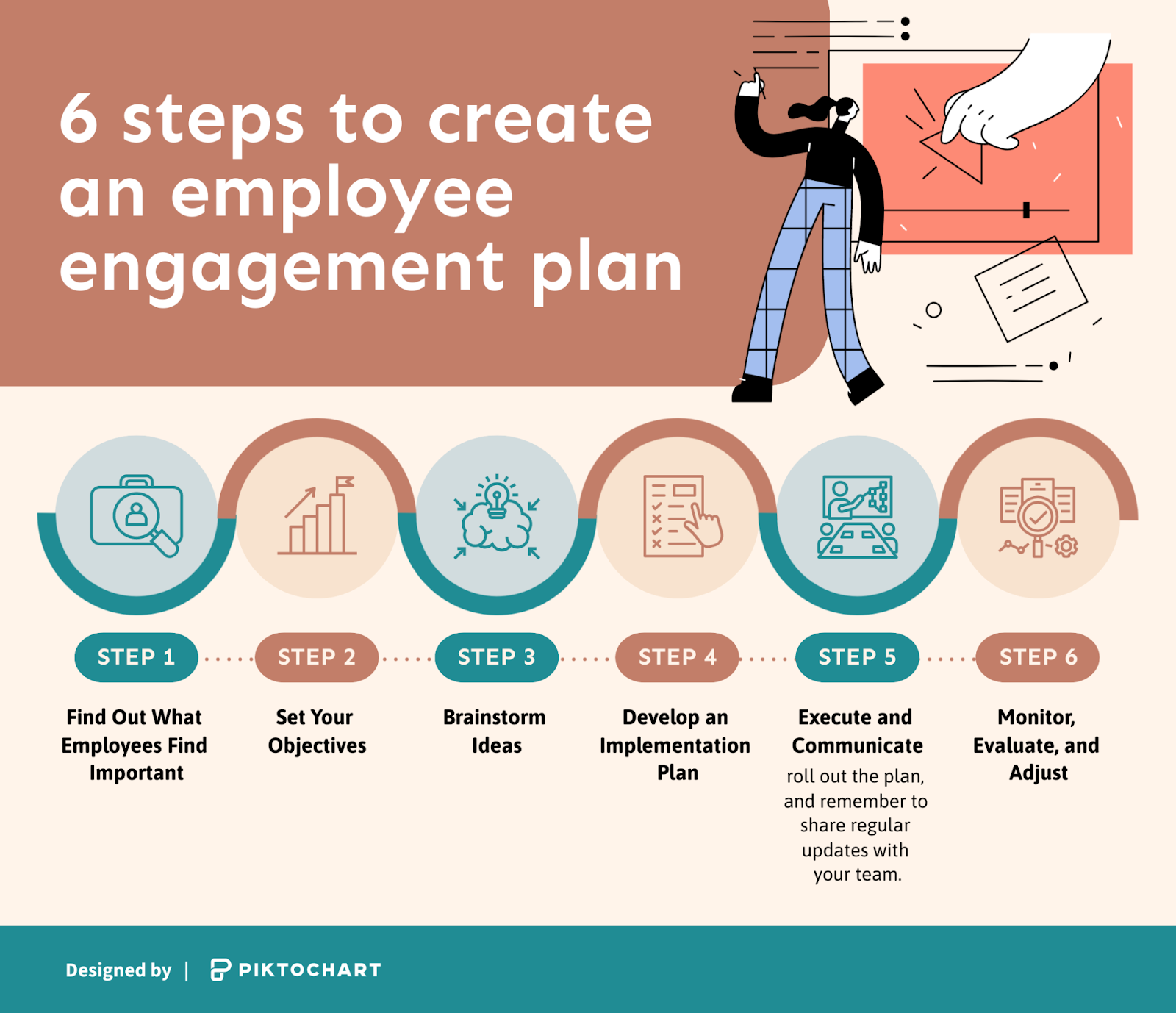
Image Source: 6 Steps to Develop an Employee Engagement Plan
- Assessing geopolitical stability and labor laws in potential markets to ensure regulatory compliance and risk mitigation.
- Identifying skill shortages and surpluses globally to align workforce planning with market dynamics.
- Building robust relationships with local stakeholders, including unions and government bodies, fosters positive labor relations.
- Implementing culturally sensitive training programs that enhance skill sets and bridge cultural differences within diverse workforces.
- Leveraging technology to manage and integrate international labor resources, improving collaboration and productivity across borders.
Turn Global Labor Market Complexity into Clarity
See how JobsPikr helps enterprises track, compare, and act on real-time labor market data across regions.
Compliance with Legal and Ethical Standards
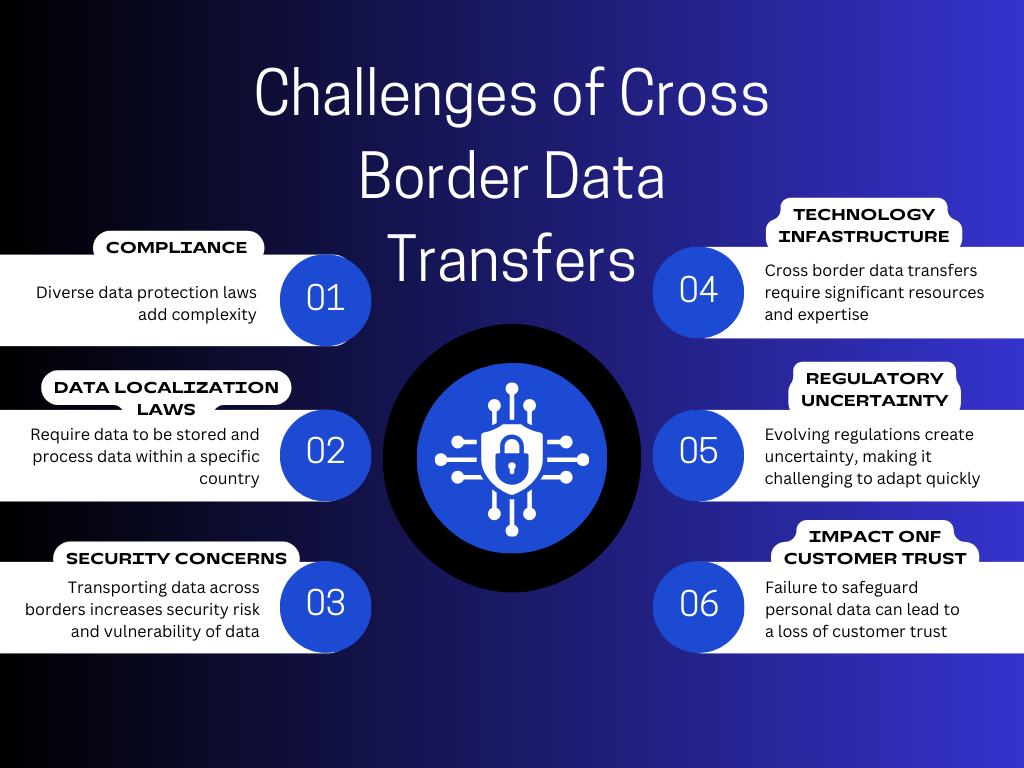
Image Source: https://dualitytech.com/blog/cross-border-data-transfer/
Multinational companies encounter the difficulty of abiding by multiple national legal systems. Compliance with globally recognized labor norms, such as those defined by the International Labour Organization, is vital for businesses to evade legal complications and sustain a desirable corporate brand. Going beyond mere compliance and adopting elevated ethical practices enables corporations to exhibit their commitment to social responsibility and establish themselves as enlightened entities within society.
Strictly implementing fair labor practices and equality policies helps multinationals gain the trust and loyalty of their worldwide employees, leading to smooth operations and lasting success. Establishing consistent corporate standards that meet the top legal and moral criteria is vital when creating global labor market strategies.
Best Practices for Managing a Multinational Workforce
- Understand cultural differences by providing intercultural training and promoting awareness.
- Implement a global human resources management system to streamline processes and maintain compliance.
- Foster communication by leveraging technology for collaboration across different time zones.
- Encourage global mobility with policies that support international transfers and assignments.
- Develop leadership that is skilled in navigating diverse cultural landscapes and managing remote teams.
- Establish a clear vision and shared corporate culture to unify employees under common goals.
- Provide equitable benefits and compensation, adjusted for local standards and cost of living.
- Ensure legal compliance by keeping up-to-date with labor laws in each country of operation.
- Invest in continuous learning and development programs to upskill the workforce globally.
- Promote employee well-being through work-life balance initiatives and mental health support.
How Real-Time Labor Market Data Changes Decision-Making
For years, workforce decisions inside multinational corporations were driven by lagging indicators—annual labor reports, historical surveys, and internal headcount data that reflected the past more than the present. In 2025, that approach is no longer sufficient. Global labor markets now shift in weeks, not years, and decision-making has moved decisively toward real-time labor market data.
Real-time labor market data captures live signals from job postings, hiring velocity, skill demand, employer activity, and geographic movement. Instead of asking, “What did the market look like last year?”, leaders can now answer, “What is changing right now—and where?” This shift fundamentally alters how organizations plan, hire, and compete.
One of the most immediate impacts is faster and more confident workforce planning. When demand for a skill spikes in one region and cools in another, real-time labor market data reveals the shift before it shows up in traditional reports. MNCs can adjust hiring targets, open new delivery centers, or rebalance teams before talent scarcity turns into delayed projects or rising costs.
Another critical change is in location strategy. Instead of choosing locations based purely on historical cost advantages, companies can evaluate labor markets based on current talent availability, employer competition, hiring intensity, and wage momentum. This allows organizations to identify emerging talent hubs early—often before they become saturated and expensive.
Real-time labor market data also improves risk management. Sudden regulatory changes, hiring freezes, or economic slowdowns leave immediate traces in job market activity. By monitoring these signals, enterprises gain early warnings that allow them to pause hiring, shift workloads, or accelerate reskilling efforts in other regions.
Perhaps the biggest transformation is in strategic alignment between HR and the business. When talent leaders can show live labor market evidence—such as declining skill supply or increasing hiring competition—it becomes easier to justify investment decisions, adjust timelines, or rethink growth plans. Labor market conversations move from opinion-based debates to data-backed strategy discussions.
In global labor markets, speed matters. Organizations that rely on static insights react late. Those that leverage real-time labor market data make decisions while options are still open. In 2025, this capability is no longer a competitive edge—it is the baseline for operating effectively across global labor markets.
Turn Global Labor Market Complexity into Clarity
See how JobsPikr helps enterprises track, compare, and act on real-time labor market data across regions.
Remote Work and the Re-Bordering of Labor Markets
For a brief moment, remote work created the illusion of a borderless world of work. Companies believed they could hire anyone, anywhere, without worrying about geography. In reality, by 2025, remote work has not eliminated borders—it has reshaped them. Global labor markets are not disappearing; they are being re-defined.
Instead of physical office locations, legal, regulatory, and compliance boundaries now determine how remote hiring works. This shift has led to what many organizations experience as the re-bordering of labor markets.
What Re-Bordering Really Means
Remote work still expands access to talent, but it does so within clearer constraints:
- Employment laws still apply locally: Workers are governed by the labor laws of the country where they reside, not where the company is headquartered.
- Tax and permanent establishment risks increase: Hiring remotely without proper structure can trigger tax liabilities or regulatory scrutiny.
- Data privacy rules vary by region: Employee data handling must comply with local regulations such as GDPR and its global equivalents.
- Benefits and worker protections remain location-specific: Compensation, leave policies, and social security obligations differ widely across labor markets.
As a result, remote work no longer flattens global labor markets—it reorganizes them around compliance and risk.
How Remote Work Is Reshaping Global Labor Markets
The impact of remote work is uneven across regions and roles:
- High-demand digital skills travel easily across borders, intensifying competition for the same talent pools.
- Mid-level and early-career roles often remain tied to local labor markets due to training, compliance, or wage regulations.
- Emerging economies see increased participation in global labor markets, but also face rising wage pressure as international employers compete locally.
This creates micro labor markets defined by skills, not just geography.
The Strategic Shift for Multinational Corporations
To succeed, MNCs are moving away from “hire anywhere” thinking toward location-aware remote strategies:
- Defining approved hiring geographies based on compliance readiness
- Using labor market data to compare remote vs local talent availability
- Structuring remote roles through local entities, EOR models, or hybrid contracts
- Aligning compensation with regional labor market benchmarks
These approaches allow companies to benefit from remote work without exposing themselves to hidden risks.
Why Labor Market Intelligence Matters More Than Ever
Remote work decisions made without labor market visibility often backfire. Without understanding:
- where talent supply is tightening,
- where hiring competition is accelerating, and
- where regulatory complexity is increasing,
organizations risk building fragile workforce models.
By grounding remote hiring decisions in real-time labor market data, enterprises can identify regions where remote work is sustainable, scalable, and compliant.
In 2025, remote work does not remove borders from global labor markets. It redraws them. The companies that recognize this shift—and plan for it—gain flexibility without sacrificing control.
Building Sustainable Advantage in Global Labor Markets
Multinational corporations have the responsibility to engage with global labor markets by adhering to ethical conduct and promoting lasting progress. By maintaining labor regulations, fostering fair hiring policies, and contributing to employee training programs, businesses can generate beneficial outcomes. Effective strategies involve:
- Fostering diverse and inclusive work environments
- Prioritizing the well-being and fair treatment of workers
- Collaborating with local communities for mutually beneficial relationships
- Adhering to international labor laws and guidelines
Balancing profit motives with social responsibility leads to a robust, respected global presence.
Turn Global Labor Market Complexity into Clarity
See how JobsPikr helps enterprises track, compare, and act on real-time labor market data across regions.
FAQ
What are global labor markets?
Global labor markets refer to the interconnected systems of workforce supply and demand across countries, shaped by economic, regulatory, and demographic factors.
Why are global labor markets more complex in 2025?
Increased regulation, remote work, skill shortages, and geopolitical uncertainty have added new layers of complexity to labor markets worldwide.
How can MNCs reduce risk in global labor markets?
By diversifying hiring locations, maintaining compliance visibility, and using real-time labor market data to anticipate disruptions.
What role does labor market data play in workforce planning?
Labor market data reveals hiring trends, skill demand, and wage movement, enabling predictive and evidence-based workforce decisions.
How does JobsPikr support global labor market analysis?
JobsPikr provides clean, compliant job data that helps enterprises monitor labor markets, track skill demand, and inform strategic workforce planning.