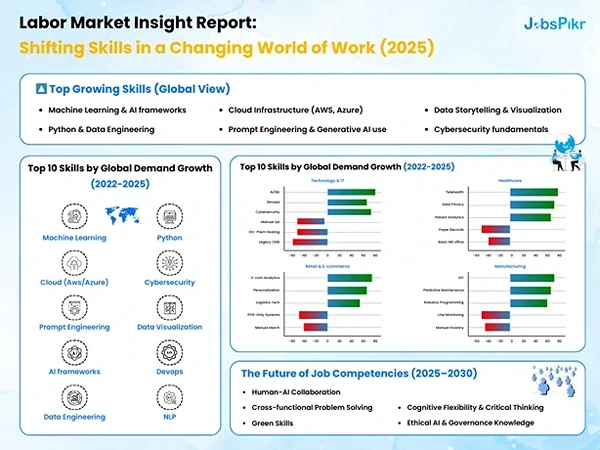
People are learning a lot, but not always the right things for today’s jobs. Schools and colleges are trying, but they often struggle to keep up with how quickly the job market changes. That’s where Coursera is making a real difference. By using real-time labor market data, Coursera designs workforce development programs that actually match what companies are looking for today—and tomorrow.
From partnering with state governments and universities to building digital-first training programs, Coursera is helping thousands of people gain skills that lead directly to jobs. Whether it’s cloud computing, data analytics, or cybersecurity, Coursera’s curriculum evolves with the market.
This article explores how Coursera addresses workforce development challenges by aligning its content with market demand, leveraging partnerships, and utilizing labor market intelligence to bridge skill gaps. We also explore why tools like JobsPikr are essential in making this kind of smart education possible.
If you care about the future of work, building a stronger workforce, or creating more efficient workforce systems, this teardown will show you how Coursera is setting the standard.
Why Education and Jobs Often Don’t Line Up
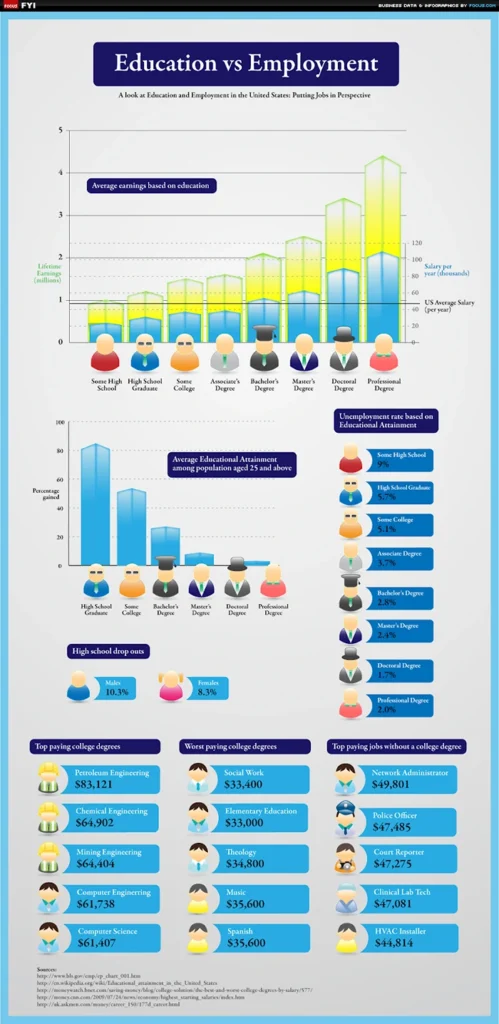
Image Source: recruit2
A lot of people finish school thinking they’re ready for work. But when they start applying for jobs, they realize something’s missing. Maybe it’s a skill employers expect. Or maybe the role has changed since they last checked. It happens more often than you’d think.
At the same time, employers say they can’t find fully prepared workers. Not because there aren’t enough people, but because the training doesn’t always match the work. It’s not just a minor issue. It shapes how teams are built, how well work gets done, and even how much a business can take on as it grows.
Education systems are doing their best. But many programs take years to update. The job market doesn’t wait. New tools, roles, and technologies show up quickly. Before a course can be revised, the market may already have moved on. That creates a clear gap.
One way to fix this is by looking at job data. Real data from real markets. It shows what skills are in demand, which jobs are growing, and where people are being hired. This kind of data helps education providers plan better. Instead of guessing what learners need, they can respond to facts.
This is exactly what Coursera is doing. It partners with universities, governments, and other groups to create training that meets the needs of today’s job market. Not just broad topics, but focused skills people can use right away. Coursera is not just offering courses. It’s working to solve a deeper problem: helping people learn what leads to actual employment.
We’ll take a closer look at how they do this—and why it matters. Because when education and employment work together, everybody wins.
The Skills Gap Is Real and It’s Getting Wider
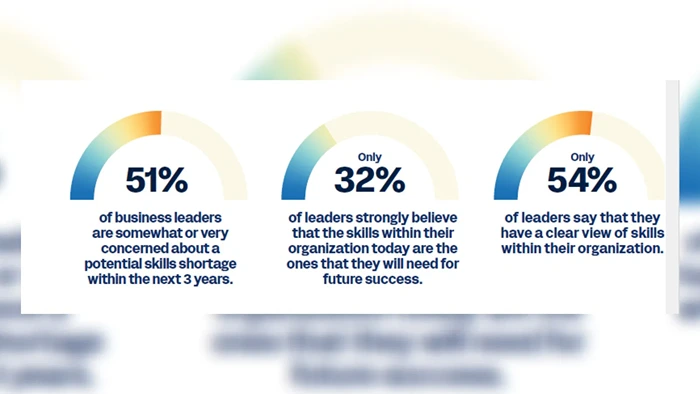
Image Source: humanresourcesonline
Talk to anyone involved in hiring, and you’ll hear the same thing: finding people with the right skills is harder than ever. There are plenty of applicants, but too few are actually ready to step into the roles companies need to fill today, not the jobs from a few years ago.
People are looking for work, but they’re often not landing the jobs they hoped for. Sometimes it’s because they’re missing a specific experience. Other times, the roles have changed since they last trained, and what they know doesn’t quite line up anymore. On the employer side, there are open positions that stay unfilled longer than they should. Not because there aren’t people out there, but because finding the right match, someone who’s ready for that job today, is harder than it sounds. According to a report from the World Economic Forum, there’s a risk that over 85 million jobs could go unfilled by 2030. That number is huge. And the truth is, we’re already seeing signs of it now. People are being overlooked not for lack of effort, but because the requirements have shifted, and their skills haven’t caught up.
In short, we have workers without the right jobs, and jobs without the right workers. That’s the heart of the skills gap.
The problem isn’t that people don’t want to learn. And it’s not that educators aren’t trying. The challenge is timing. New tools and job roles show up fast. But course revisions and program updates can take years. A university might recognize the need for cloud computing or data analytics in its curriculum, but getting it approved and launched is a slow process. By the time it’s in place, the job market may have already moved again.
Employers, on the other hand, need people now. They’re hiring for real-world skills—hands-on experience with platforms and practices that are current. But they often have to settle for candidates who are smart and willing, yet underprepared. That slows down teams, raises training costs, and puts pressure on the business.
What makes a difference here is data. Sometimes, looking at broad job trends isn’t enough. What ends up helping more is having real data, like the exact jobs that are opening up in a certain region or which tools keep showing up in listings. That kind of detail makes it easier for training providers to figure out what to focus on. Without it, a lot of decisions are based on assumptions, and that’s where things start to miss the mark.
We don’t need to change everything we’ve built. What’s missing is shared visibility. When both sides—those building courses and those hiring—are using live job market data, it’s easier to make decisions that line up. Without that, everyone’s just making educated guesses.
And when that understanding is in place, the path from learning to employment becomes a lot more direct.
How Coursera Builds Curriculum That Follows the Job Market
Coursera often gets lumped in with other online learning platforms. People think “courses,” maybe “certifications.” But the way it’s structured tells a different story. There’s intent behind it. At its core, it’s built around one question: what does someone need to learn to land a job?
That’s where real-time labor market data comes in. Coursera doesn’t just build content and hope it’s useful. It watches what’s happening in the job market—what roles are growing, what skills show up in postings, which tools companies are starting to require—and uses that to decide what should be taught.
Image Source: software centrix
Following the Signals: Skills That Employers Are Actively Hiring For
Most people assume learning platforms simply guess what to teach based on general trends. Coursera doesn’t do that. It uses data—real job listings, job board activity, and hiring signals—to track which skills are showing up again and again.
Say, for instance, there’s a spike in listings asking for SQL, Python, and data visualization. Coursera sees that, and doesn’t just offer generic programming courses. It builds a sequence of training tied directly to those skills. And not just the tools, but the way those tools are being used in actual jobs.
This isn’t about trends. It’s about evidence. And that’s a big reason why learners who finish these programs are more likely to land jobs where those skills are needed.
Industry-Led Certifications That Mean Something to Employers
Coursera doesn’t try to be the expert in everything. For certifications, it leans on companies like Google, IBM, and Meta—organizations that already know what they want in a candidate.
Instead of having instructors guess what might matter, these companies help shape full learning tracks that mirror the way they onboard and train employees. A certificate in IT Support from Google, for example, isn’t theoretical—it’s based on how they prepare people to work in those roles.
That’s part of why these certificates carry weight. Hiring managers have seen them. Some helped design them. So when a job seeker lists one, it’s not just an online course—it’s a credential that reflects something closer to job readiness.
Learning Paths That Adjust as Roles Change
One of the more practical things Coursera has done is move away from one-off courses. Instead, it creates full pathways built around actual job titles—things like UX Designer, Data Analyst, Cybersecurity Associate.
These aren’t just bundles of courses. They’re sequences that reflect what someone would need to know if they wanted to move into a specific role. And here’s the key: these paths change. If a certain skill fades out or a new tool becomes standard in that field, the content can be updated. Sometimes within months.
Traditional academic programs struggle with this. Coursera doesn’t. It’s not perfect, but it’s faster and in today’s market, speed matters.
Built to Scale: Governments and Universities Use Coursera for Workforce Goals
It’s not just individuals signing up for these programs. Governments and universities have started to use Coursera to build workforce training at scale. In the U.S., India, and parts of the Middle East and Africa, Coursera is part of national and regional upskilling efforts.
These partnerships aren’t just about access. They’re about precision. If a state government sees growth in cloud computing or advanced manufacturing, Coursera can align content around that. It’s a way to quickly give large groups of people access to practical training that speaks directly to where jobs are headed.
That’s especially useful in regions going through economic transitions—places where new industries are growing and older ones are shrinking.
How Coursera Works with Governments and Schools to Train People for the Jobs That Exist
It’s one thing to put learning online. It’s another to make sure what’s being taught is useful—and tied to real work. That’s been a struggle for both public agencies and universities. Most want to prepare people for jobs, but the job market moves quickly, and education often moves slowly.
Coursera didn’t just offer courses and stay on the sidelines. They got more involved. Lately, they’ve been working alongside schools, workforce boards, and even some state agencies. The goal seems to be helping those groups move faster and get training to match what employers are asking for now, not two years ago
Public Agencies Use Coursera to Upskill at Scale
A lot of government leaders are asking the same question right now: how do we prepare people for jobs that didn’t exist five years ago?
In some regions, traditional jobs have faded. In other areas, tech is growing fast, but there aren’t enough local workers trained to take those roles. Coursera has been working with agencies in both types of places. They help launch broad training programs built around data, not guesswork.
In India, a few states have worked with Coursera to train thousands of people in areas like business analytics and IT support. The point wasn’t to hand out certificates—it was to help people get comfortable with tools that show up in job listings. For a lot of learners, it was a step toward roles they hadn’t had access to before. Not in theory. In practice.
Some Colleges Now Use Coursera to Fill the Gaps
Not every university has the time or resources to build new programs from scratch. That’s where Coursera fits in. Schools use it to offer industry-designed learning inside their existing systems. This means students get exposure to tools and skills that hiring managers expect, without the school needing to overhaul its curriculum.
One example: a public university in the U.S. wanted to expand its adult learning options. It didn’t just create new courses. It brought in Coursera’s certificate programs and let learners follow paths that led toward specific job categories like UX design or cloud computing.
It’s not a shortcut. It’s a way to meet the market where it is.
Local Workforce Boards Use Coursera for Practical Retraining
In cities where industries are shifting, job centers often face a hard task. How do you help someone move from a declining sector—like manufacturing or retail—into something new?
Some regional workforce boards are now turning to Coursera for help with this. They’re not just pointing people to general content. They’re setting up targeted programs. Logistics. Cybersecurity. Remote-friendly jobs in customer success. All based on what employers in the area are hiring for.
Because the content is online and already built, these programs roll out fast. And because they’re tied to real roles, people finish them and have a clearer path to employment.
It Works Because It’s Not Just One Thing
Coursera isn’t trying to replace universities or government systems. It’s trying to work with them. What makes it different is that it offers both the content and the coordination. It knows what the job market looks like because it tracks labor trends. It knows how to build learning paths because it’s done it in dozens of regions. And it knows how to scale, which is something not every partner can promise.
When the goal is to help large numbers of people get ready for work that’s changing quickly, that combination matters more than ever.
Coursera in Action
It’s easy to talk about education and jobs in theory. But the real test is whether people are getting hired, whether governments and schools can respond to change, and whether learners see a real return from the time they put into training.
That’s where case studies help. They show how these programs actually work on the ground—who’s using them, why they chose Coursera, and what the results look like when it’s done right.
New York State’s Response to Pandemic Job Loss
In 2020, when the COVID-19 pandemic caused massive unemployment across the U.S., New York State launched a partnership with Coursera to provide free access to online training. The state’s Department of Labor selected Coursera as part of its strategy to help residents retrain for in-demand roles. It wasn’t just about general education—it was targeted.
Courses focused on high-growth areas: IT support, business analytics, and digital marketing. These weren’t long academic programs. Most certificates took weeks, not years. Learners could build new skills quickly and apply for jobs in sectors that were still hiring.
India’s Andhra Pradesh Government Scales Tech Training
In Andhra Pradesh, one of India’s southern states, Coursera partnered with the state’s skill development agency to offer training to around 50,000 people. Most of the courses focused on tech and business. That made sense, since those were the sectors seeing the most growth, both in new startups and in larger companies expanding their teams.
The program helped learners access Coursera’s certificate tracks in areas like machine learning, Python, and cloud fundamentals. What made this partnership stand out wasn’t just the content—it was the way it was embedded into regional workforce goals. APSSDC made it part of their broader effort to improve employability among youth in both urban and rural areas.
Google’s IT Certificate and Community College Integration
Image Source: blog.jakelee.co.uk
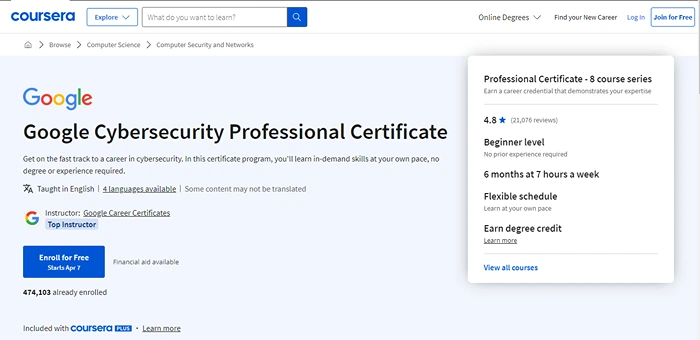
Coursera’s partnership with Google has been one of its most recognized workforce programs. But what’s interesting is how it has been integrated into public education systems. Colleges across the U.S. have adopted the Google IT Support Professional Certificate, delivered on Coursera, into their continuing education and associate degree pathways.
This isn’t just online learning. It’s now part of local economic development. Community colleges in states like California and Illinois use it to prepare learners for entry-level roles in tech, especially in places where traditional four-year degrees are less accessible or less affordable.
In 2022, Egypt’s Ministry of Communications and Information Technology (MCIT) expanded its partnership with Coursera to offer tech training to thousands of learners. The government saw digital skills as a cornerstone of its national workforce strategy—and used Coursera to help deliver that at scale.
Learners were given access to career-focused learning in data science, software engineering, and cloud. The training supported Egypt’s broader digital transformation plan and gave many participants their first exposure to structured online learning tied directly to tech employment.
Illinois Workforce Board Uses Coursera for Manufacturing Reskilling
In one of Coursera’s more targeted U.S. partnerships, a local workforce board in Illinois used the platform to help retrain workers from the manufacturing sector. As roles in logistics and automation began to replace older factory jobs, there was a need to help people pivot.
Coursera offered tracks in warehouse technology, project management, and technical customer support. These weren’t random offerings—they were tied to job openings that employers in the region already had on the table.
Each of these examples shows the same pattern: when workforce programs use labor market data, partner with industry, and deliver content through flexible platforms like Coursera, the results tend to reach more people, faster, and in ways that are easier to measure.
Why Labor Market Intelligence Is Central to Coursera’s Approach
There’s a lot of talk in education circles about being “industry-aligned.” That sounds good in theory, but without clear signals from the labor market, it’s easy to guess wrong.
This is where labor market data becomes essential. It’s not just about knowing that tech is growing or that healthcare is hiring. It’s about seeing exactly what jobs are open, what skills keep showing up in job descriptions, and how those needs change over time. That level of visibility is what allows training providers to actually stay relevant.
Without Data, You’re Planning in the Dark
Imagine designing a training program for entry-level IT roles. If you don’t know what tools are being used right now—whether companies want Linux, Windows Server, or Google Cloud—you risk building a program that’s out of date the day it launches.
Labor market data answers that. It shows, for instance, that Python appears in more than 70% of entry-level data analyst roles posted in the U.S. Or that customer support jobs requiring technical chat tools have doubled since 2021. These aren’t general trends. They’re specific, measurable facts that can guide curriculum decisions.
This kind of insight is what Coursera leans on when deciding which certifications to update, which to retire, and where to develop new ones.
Making Labor Market Signals Easier to Access
Coursera’s model works, in part, because it’s powered by access to real-time labor market intelligence. But not every organization has a full data science team to gather and interpret that information. That’s where platforms like JobsPikr come in.
JobsPikr pulls structured job postings and hiring trend data across countries, regions, and industries. It lets curriculum designers, workforce planners, and training leaders see exactly what the demand looks like, down to the skill level. It even shows soft skills and certifications that are gaining traction.
Rather than relying on national reports or outdated surveys, program designers can use JobsPikr to build courses and training models that respond to the market as it exists right now. That saves time, money, and guesswork.
From Reaction to Readiness
The most effective workforce programs aren’t just reacting to change. They’re preparing people for what’s coming next. That’s only possible when decisions are made with strong data behind them. When labor market data is used well, learning becomes more than education—it becomes strategy.
And in a world where industries shift quickly, that kind of strategy makes a real difference.
Building a Future-Ready Workforce
If the last few years have shown anything, it’s that the labor market can shift faster than anyone expects. Entire industries have restructured. New job titles have emerged. Remote work, once a niche option, is now a central part of how many teams operate. In all this change, one thing is clear: learning can’t be separate from work anymore.
To build a workforce that’s ready for what comes next, education has to be tied more closely to hiring. That means not only focusing on skills, but also paying close attention to the direction industries are moving in.
The Future of Work Will Reward Agility
No one can predict exactly what the job market will look like ten years from now. But we already know a few things. Automation will reshape how repetitive work is done. AI tools will become standard in industries far beyond tech. And most careers will require people to learn new skills several times over, not just once at the start.
That puts pressure on the systems we use to train people. If learners have to wait years for new programs to appear, or if workers can’t access short, practical courses mid-career, the system won’t hold up. Workforce Agility—the ability to learn something quickly, apply it, and move forward—will be one of the most valuable traits in the modern workforce.
This is where Coursera’s model stands out. It’s not built around long timelines. It’s built for constant change. Courses update regularly. New certificates roll out based on live market signals. Learning paths are tied to roles, not just subjects.
A New Kind of Collaboration Between Educators and Employers
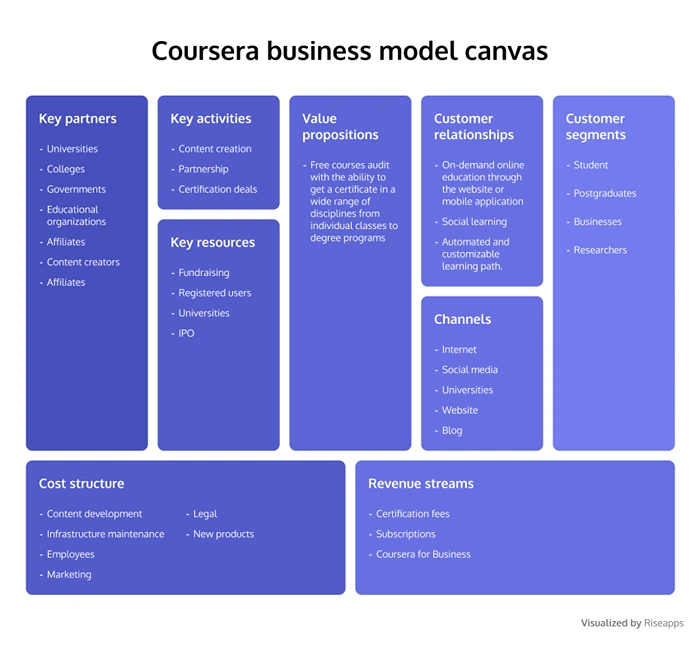
Image Source: Coursera
In the past, schools and employers often worked in isolation. One taught, the other hired. But those boundaries are starting to fade. What’s happening now is more collaborative. Companies are helping shape training programs. Educators are building content around job descriptions. And workforce agencies are acting as the link between the two.
This shift isn’t just about convenience. It’s about survival. If training doesn’t match demand, both job seekers and employers lose.
Programs built on real labor market data—like the ones supported by Coursera and informed by tools like JobsPikr—make this collaboration easier. They give everyone involved a common language. Instead of assuming what the market needs, you can show it. In some ways, it’s less about innovation and more about finally making training practical again.
What Comes Next Depends on How We Use What We Know
The tools are there. We can now see what skills are rising, where jobs are growing, and which roles need better preparation. The next step is to keep using that knowledge across sectors, across systems.
Whether it’s a community college updating its programs, a state building a re-skilling initiative, or an EdTech startup designing new content, the question stays the same: Are we training people for the jobs they can get?
If we are, we’re not just educating. We’re building something better, a workforce that’s ready, not just qualified.
From Curriculum to Career: The Way Forward
There’s a growing understanding across education, government, and industry: if we want learning to lead to opportunity, it has to reflect what the world of work actually looks like.
That means the old way of designing curriculum—years in the making, based mostly on academic tradition—can’t stand on its own anymore. The market changes too fast. The roles evolve. The tools update. Learners need more than credentials—they need relevance.
Coursera’s model offers one way forward. By building learning paths around real labor market data, partnering with companies who know what skills matter, and working directly with public institutions to deliver training at scale, Coursera has shown that it’s possible to keep education in sync with employment. Not perfectly. Not everywhere. But consistently enough to make a difference.
The bigger idea here isn’t about any one platform. It’s about what’s possible when we combine accessible technology, smart partnerships, and real-time insight into the job market. Tools like JobsPikr make that last part possible—surfacing the signals that show where demand is growing, what skills are in short supply, and how training programs can close the gap.
If we want to build a future-ready workforce, this is the model to watch—and to learn from. Education that’s aligned, data-informed, and built to move at the pace of change isn’t a bonus anymore. It’s the baseline.
FAQs
1. How does Coursera decide what skills to include in its courses?
Coursera doesn’t guess. It looks closely at job market trends—real-time hiring data, skills listed in job posts, and feedback from employers. It also works directly with companies like Google and IBM when building certificates, so the skills reflect what those companies are actually hiring for.
2. What makes labor market data so important for workforce development?
Labor market data shows where the real demand is. It helps planners, educators, and training providers understand which roles are growing, what skills are needed, and how those needs change over time. Without that data, it’s too easy to build programs that miss the mark—even with good intentions.
3. Can governments and public institutions really scale training with Coursera?
Yes, and many already have. States in the U.S., countries like Egypt and India, and local workforce boards have all used Coursera to offer large-scale training. The key is that the programs are flexible and tied to real job categories, not just general learning goals.
4. How do platforms like JobsPikr support this kind of education planning?
JobsPikr gives access to labor market signals that might otherwise be hard to find or slow to gather. It pulls structured data from live job postings across industries and regions. That helps people who build curriculum or design training programs see exactly what’s trending—and act on it before the market moves again.
5. Are Coursera certificates really valued by employers?
In many cases, yes. Especially the ones built with industry partners. Employers recognize the names—Google, Meta, Salesforce—and they know the content was designed with actual roles in mind. For job seekers without a traditional degree, these certificates often provide a strong, practical alternative that gets noticed.